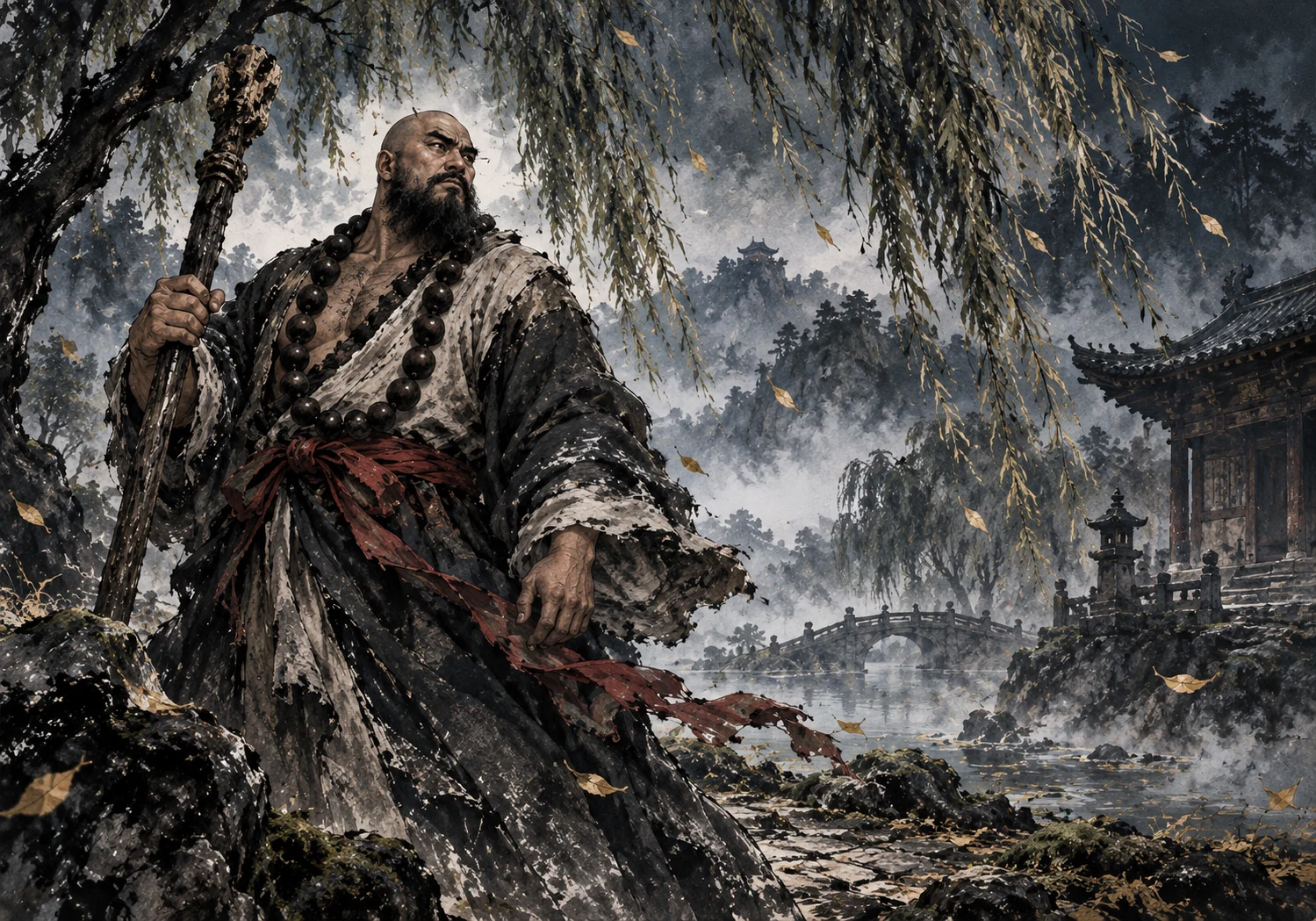
Lu Zhishen鲁智深
Flower Monk
He cannot walk past cruelty.
Before he confronts the butcher, he gets the woman and her father out of town. The rescue starts before the fight.
A cry from the next room
Lu Da is eating in a tavern when he hears crying. Jin Cuilian and her father have been mistreated by Zheng Tu, a local butcher who holds power over them. Lu Da hears their account and starts gathering money to help them leave.
The next morning, he sees them safely on their way before going to Zheng Tu’s shop. By the time the butcher realizes he has a problem, the people he has hurt are already beyond his immediate reach.
Three punches, then a monk’s robe
Lu Da provokes Zheng Tu into a confrontation. Three punches leave the butcher dead. The result is more than the punishment he meant to deliver. Realizing the danger, he accuses the dead man of pretending and walks away before others can stop him.
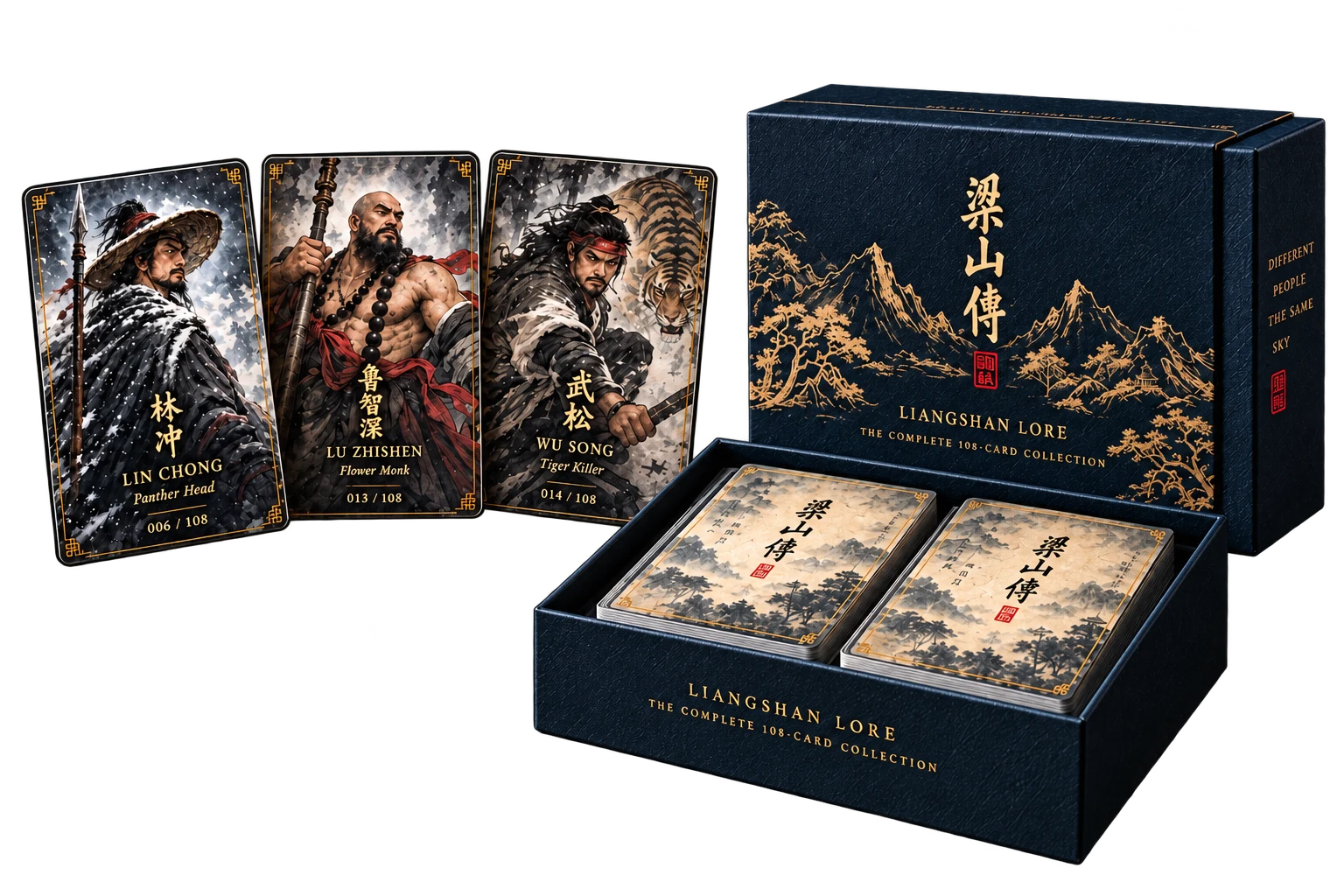
Flight eventually brings him to a Buddhist monastery. He receives the name Zhishen. His tattoos give him the nickname Flower Monk, also translated as Tattooed Monk. The robe changes his name more easily than it changes his habits. He drinks, loses his temper, and strains the monastery’s rules.
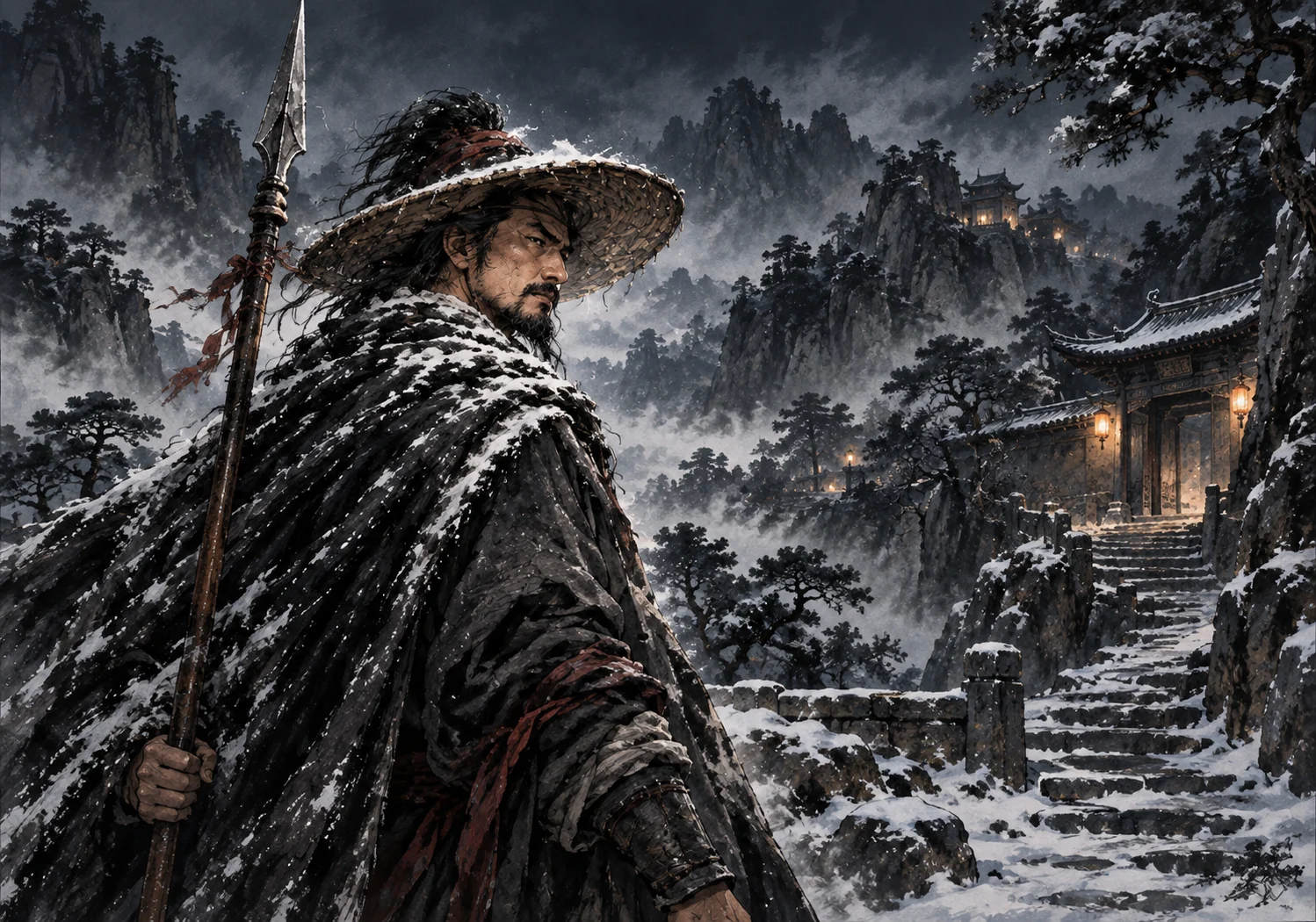
Later, he befriends Lin Chong in the capital. When Lin Chong is sent into exile, Lu Zhishen follows. In Wild Boar Forest, he finds the escorts preparing to murder their prisoner and stops them.
Lin Chong asks him to spare the men. Lu Zhishen listens. Then he stays with the party on the road, making sure that the rescue will last beyond the moment when his staff interrupts the killing.
He stays after stepping in
Lu Zhishen’s strength is spectacular. The quieter acts explain why we care about him: money for the father and daughter, time spent helping them escape, a journey made to keep a friend alive.
His temper has already killed a man. We cannot turn every blow into compassion simply because he cares. But when he escorts Lin Chong onward, we see help with a duration. He does more than arrive in time for the dramatic part.
What does it mean to act for someone else?
What part of Lu Zhishen’s story stays with you?
Reading Lu Zhishen.
Why is Lu Zhishen called Flower Monk?
The nickname refers to his tattooed body. It does not mean that he is a gentle or conventionally disciplined monk.
How does Lu Zhishen know Lin Chong?
They meet in the capital around the monastery’s vegetable garden. Lu Zhishen later follows Lin Chong’s exile journey and prevents his murder in the forest.
Written by Liangshan Lore, based on Water Margin (Shuihu Zhuan), traditionally attributed to Shi Nai’an. The novel follows an outlaw brotherhood in a fictionalized Song-dynasty setting. It is literature, not a record of each character’s historical life.
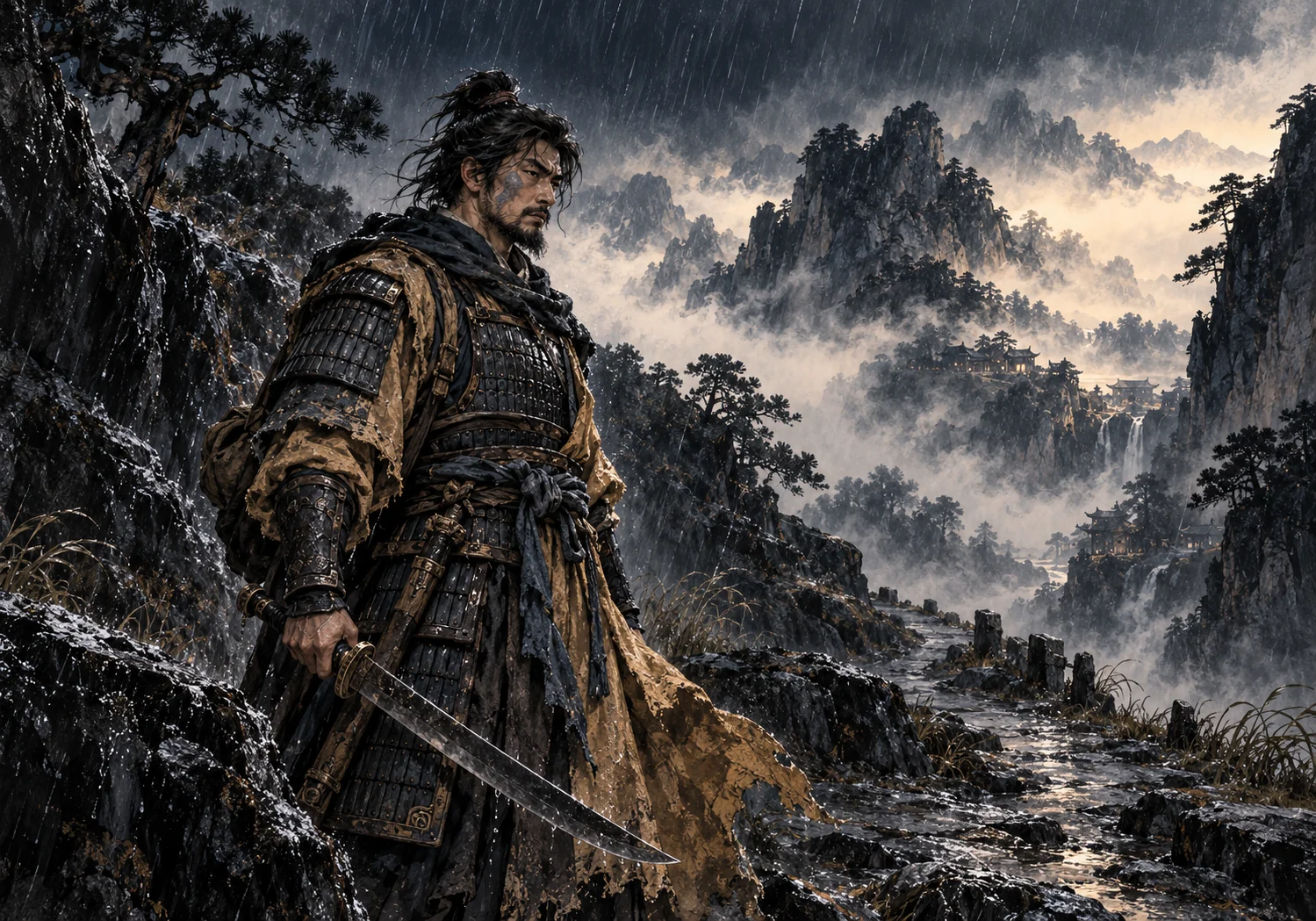
Chapter references below follow the 120-chapter Chinese edition. Other editions and English translations differ in chapter numbering, names, and endings. These are original English summaries, not quotations from a modern translation. The reflection above is our interpretation. Artwork is a concept illustration.
Read & listen in English.
John Zhu’s podcast offers his own English retelling, with readable transcripts and audio. Podcast episode numbers differ from the novel’s chapter numbers.
Chinese original · text & chapter references
Primary-text references for checking the plot and edition. These pages are in Chinese.