What Is Water Margin?
An instructor loses his home. An officer becomes a troublesome monk. A traveler meets a tiger. Their roads lead to the same refuge—and to people they would never have met in ordinary life.
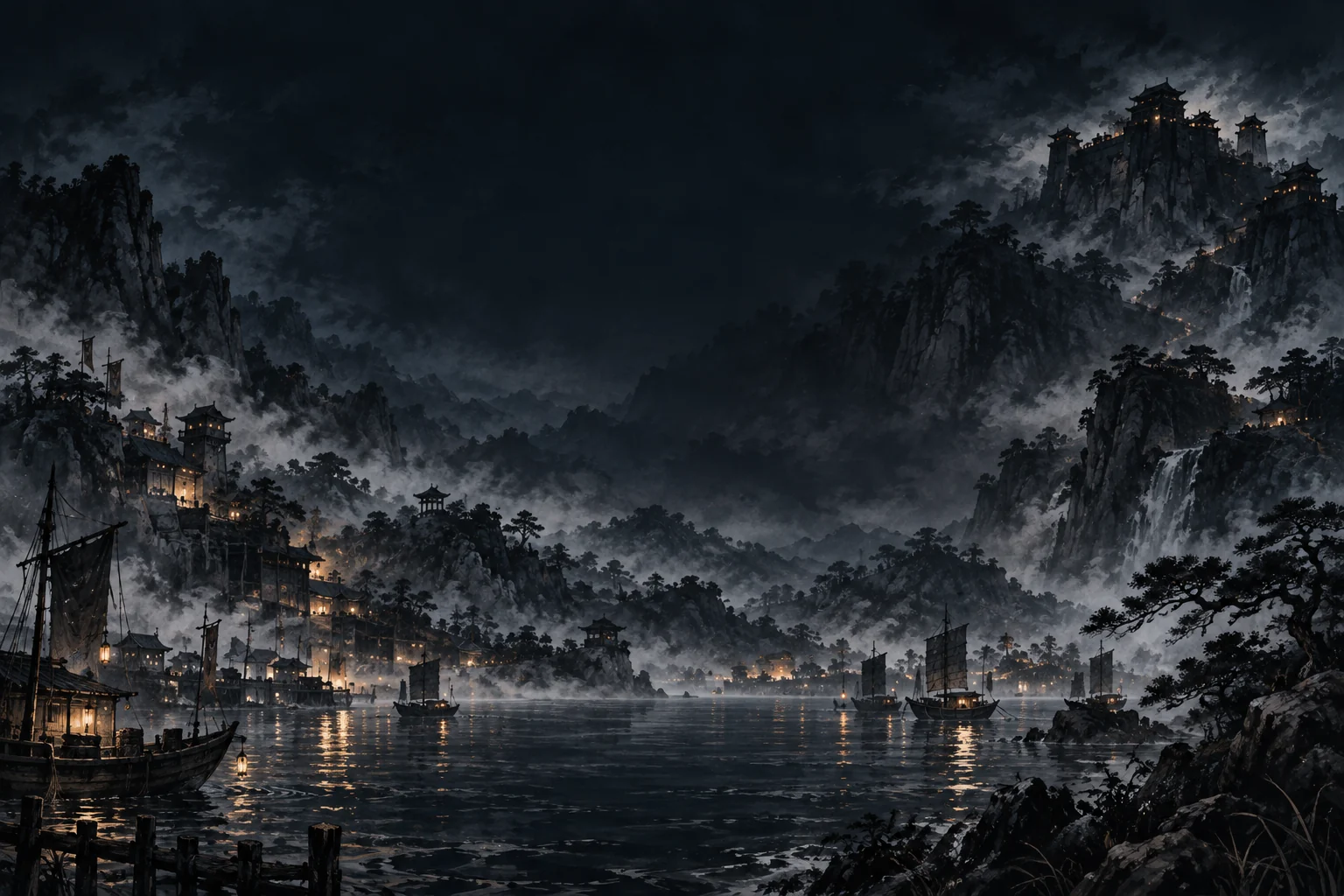
A Chinese classic with several English names
Water Margin is a Chinese novel about the outlaws who gather at Liangshan, a stronghold beside a marsh. Its Chinese title is Shuihu Zhuan (水浒传). In English, you may also find it as Outlaws of the Marsh or All Men Are Brothers. The names vary with the translation; they point to the same sprawling story world.
Traditionally attributed to Shi Nai’an, the book grew out of a long storytelling tradition. It is set in a fictionalized Northern Song dynasty. That historical setting does not make its 108 leaders a set of documented biographies.
It is usually counted among China’s Four Great Classical Novels, alongside Romance of the Three Kingdoms, Journey to the West, and Dream of the Red Chamber. If those are unfamiliar too, you can start here without studying the others.
People first, brotherhood later
The opening releases 108 spirits into the world. After that mythic beginning, the novel spends much of its time in places people can recognize: a workplace, a tavern, a family home, a prison, a road with nowhere safe to sleep.
It follows one person for a stretch, then picks up another. Lu Zhishen helps a stranger and has to flee. Lin Chong tries to keep his job and marriage, only to be sent into exile. Wu Song kills a tiger and returns to his brother. Friends appear in one another’s episodes, disappear, and meet again.
Liangshan becomes the place where those roads converge. Fighters need food, boats, scouts, medical care, and repaired weapons. The company grows into an organized force. Its 108 named leaders are a culmination of many smaller stories, rather than 108 people introduced at once.
You can admire them and still be troubled
Lu Zhishen risks his life for a friend. Wu Yong ruins another man’s life to recruit him. Li Kui races to rescue Song Jiang and kills people in his path. Such episodes make the word “hero” less comfortable than it first sounds.
That discomfort is part of the pleasure of reading. The outlaws offer shelter where official protection has failed, but their own community also deceives and coerces. Song Jiang still wants recognition from the state his companions have escaped.
Our reading keeps those contradictions open. You do not have to excuse someone’s cruelty to be interested in their courage, or stop caring about a character because their next decision disappoints you.
Check the edition before comparing endings
There are major 70-, 100-, and 120-chapter versions. The 70-chapter version associated with Jin Shengtan ends around the brotherhood’s assembly and a closing dream. The longer versions continue through imperial amnesty and military campaigns; the 120-chapter text includes campaigns absent from the 100-chapter text.
This changes the journey you are reading. One edition largely follows the rise of Liangshan. Another takes you into what happens after the brotherhood enters imperial service. A summary of one ending may not describe the book in your hands.
Our chapter links follow the 120-chapter Chinese edition. For English reading, check whether a translation is complete or abridged and which edition it uses. CUHK Press publishes the 120-chapter translation The Marshes of Mount Liang by John and Alex Dent-Young. Chinese Lore offers an English podcast retelling of the 100-chapter version.
Start with one road into the book
Try Lu Zhishen if you like a character who cannot leave another person’s trouble alone. Follow Lin Chong if you want to see how a respectable life comes apart. Start with Wu Song’s tiger if you want to begin inside an action scene.
Keep a name list nearby, but do not make memorizing it a condition of enjoying the story. Notice a friendship, a debt, or a warning someone ignores. Those connections will help when the same person appears again.
Our short original retellings introduce selected episodes. The English reading links below offer ways to continue into a longer retelling or published translation.
When the law fails someone, what should justice look like?
Which part of the story speaks to you? Tell us as we shape the complete 108-card collection.
Original English writing by Liangshan Lore, based on the Chinese novel Water Margin, traditionally attributed to Shi Nai’an. Plot references follow the 120-chapter Chinese edition; names, chapter numbering, and endings can vary between editions and translations. Sections marked “Our reading of the story” offer our interpretation. The characters and events belong to fiction; concept illustrations are not historical portraits.
Read & listen in English.
John Zhu’s podcast offers his own English retelling, with readable transcripts and audio. Podcast episode numbers differ from the novel’s chapter numbers. The publisher pages below introduce published English translations.
Chinese original · text & chapter references
Primary-text references for checking the plot and edition. These pages are in Chinese.
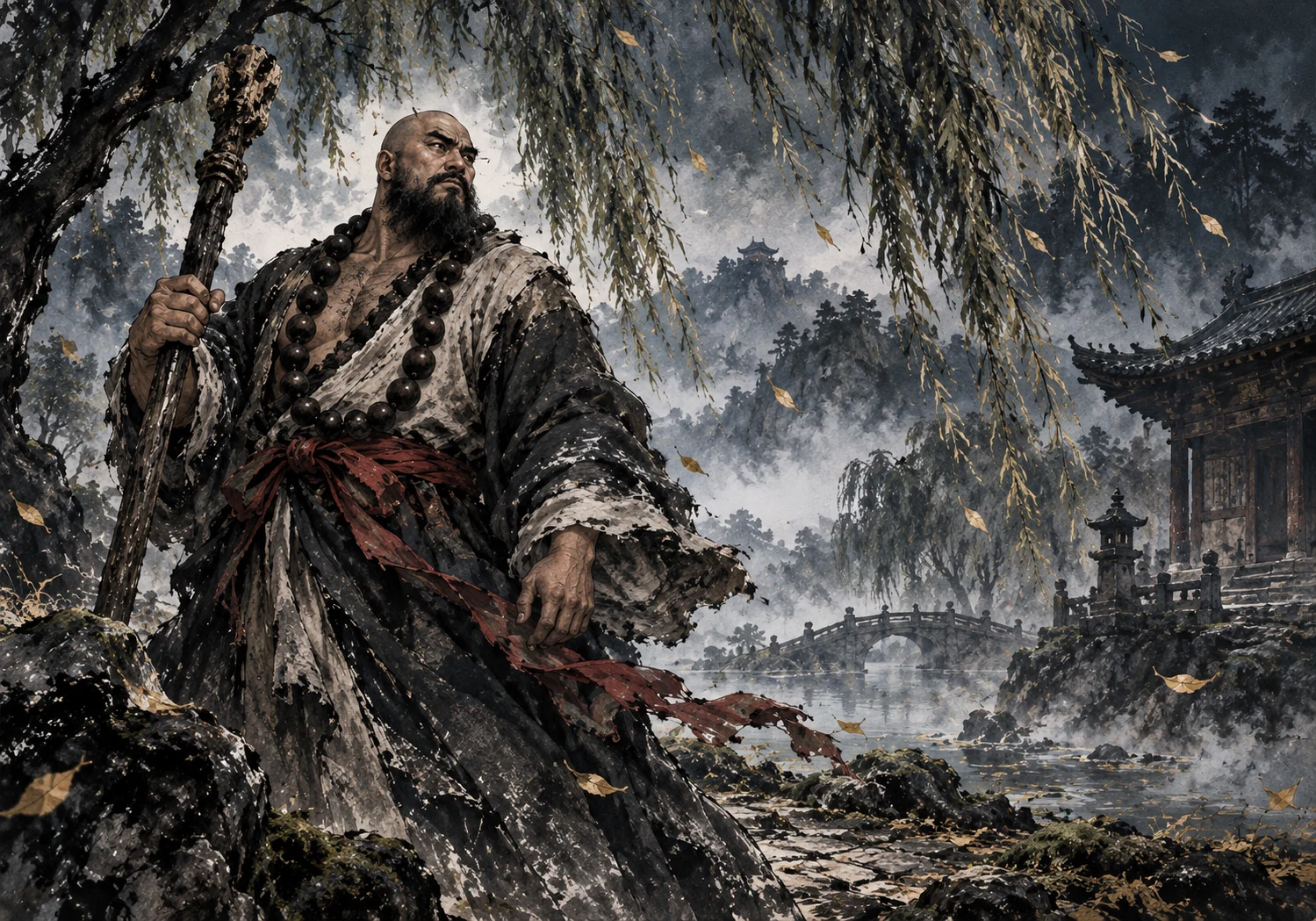 Lu ZhishenFlower Monk · illustrated character story
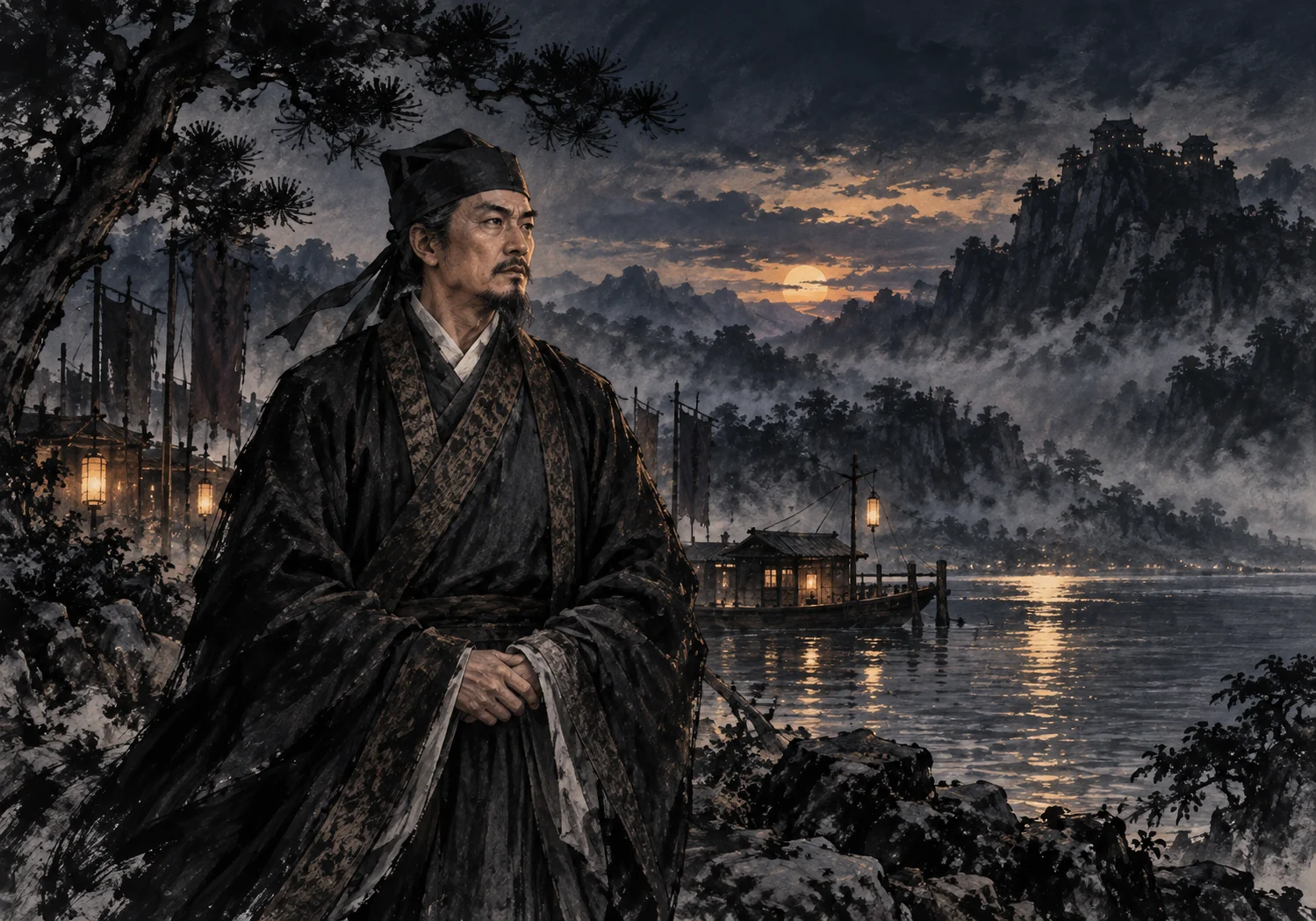 Song JiangTimely Rain · illustrated character story