The Other Outlaw Strongholds of Water Margin
Liangshan becomes the largest refuge, but it is not the only one. Across the novel, smaller bands hold mountain passes, raid roads, protect friends, threaten travelers, and eventually choose—or are pushed—to merge.
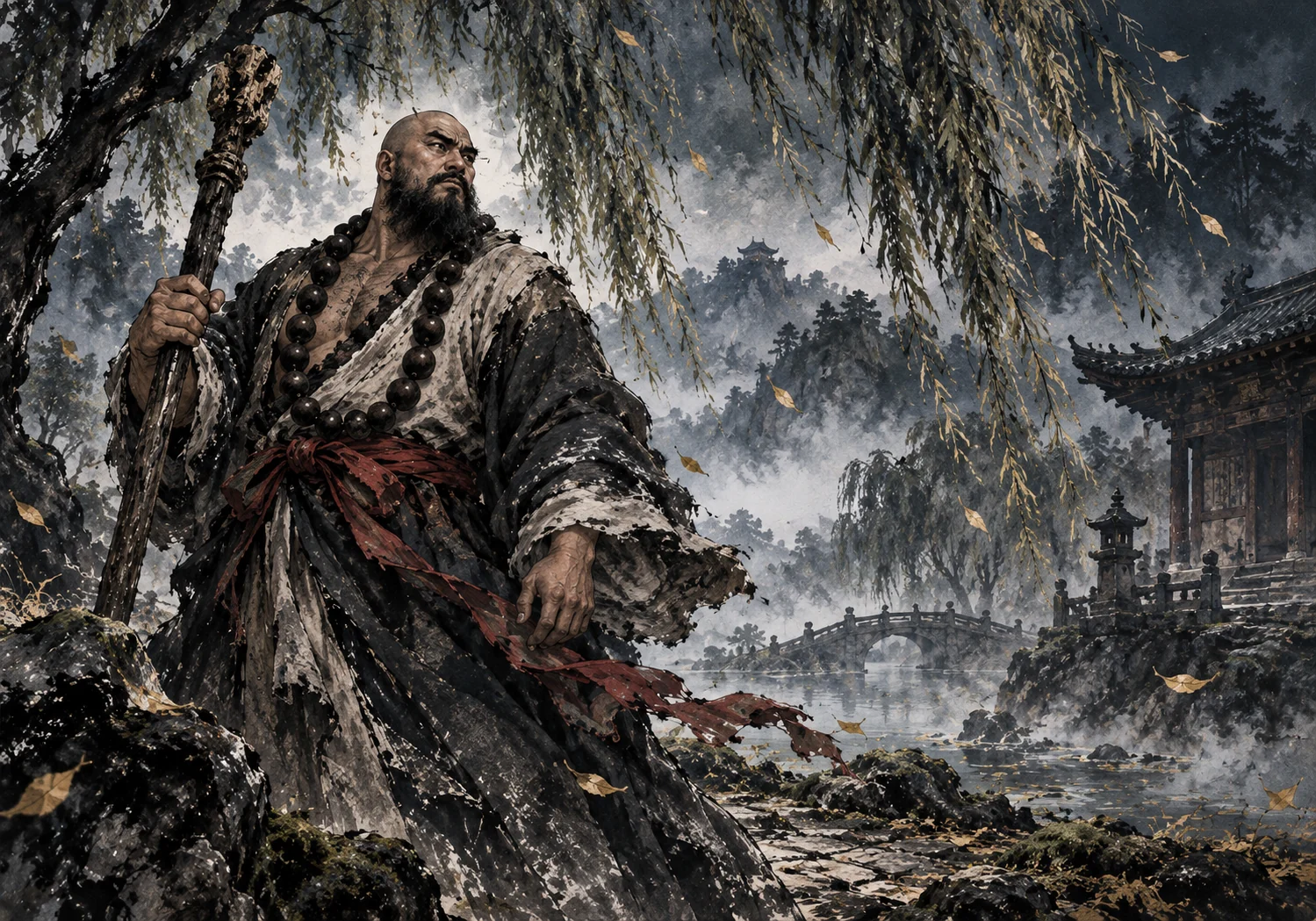
A mountain band can be refuge, toll gate, or local power
Peach Blossom Mountain enters the story when Zhou Tong attempts a forced marriage and Lu Zhishen intervenes. Two Dragon Mountain later gathers figures including Lu Zhishen, Yang Zhi, and Wu Song. Qingfeng Mountain shelters a different network around Yan Shun, Wang Ying, and Zheng Tianshou.
These groups are not miniature copies of the final Liangshan organization. Their scale, leadership, discipline, and relationship to surrounding villagers differ.
Mount Shaohua and Mount Mangdang keep separate stories alive
Mount Shaohua connects back to Shi Jin and the opening chapters. Its people later need help when official power threatens them. Mount Mangdang brings a company associated with Fan Rui and supernatural skill into conflict with Liangshan before incorporation.
The novel uses these places to reintroduce people, join earlier plot lines, and show that outlaw life is already distributed before Song Jiang centralizes it.
The Three Mountains campaign turns alliance into consolidation
In the Qingzhou sequence, forces from Two Dragon, Peach Blossom, and White Tiger mountains converge with Liangshan. The campaign creates a larger military coalition and brings many named leaders into the marsh.
Joining offers greater safety and resources. It also ends the independence of smaller groups. Their stories continue, but their commands and identities are absorbed into Liangshan’s ranking system.
The outlaw world is a network before it is an institution
Letters, shared enemies, hospitality, reputation, and personal recognition connect strongholds before any single authority governs them. This explains why a fugitive can cross a wide area and still encounter someone who knows a friend’s name.
Liangshan’s achievement is not creating outlaw society from nothing. It is concentrating many existing local worlds—and inheriting their debts and violence.
What is gained and lost when small refuges join a power large enough to protect them?
Which part of the story speaks to you? Tell us as we shape the complete 108-card collection.
Original English writing by Liangshan Lore, based on the Chinese novel Water Margin, traditionally attributed to Shi Nai’an. Plot references follow the 120-chapter Chinese edition; names, chapter numbering, and endings can vary between editions and translations. Sections marked “Our reading of the story” offer our interpretation. The characters and events belong to fiction; concept illustrations are not historical portraits.
Continue in English.
These credited resources offer further reading, listening, publication context, or museum evidence. Chinese Lore is an English retelling with transcripts and audio, not a line-by-line translation; podcast episode numbers differ from novel chapters. CUHK Press links introduce published English translations.
Chinese original · text & chapter references
Primary-text references for checking the plot and edition. These pages are in Chinese.
Lu ZhishenFlower Monk · illustrated character story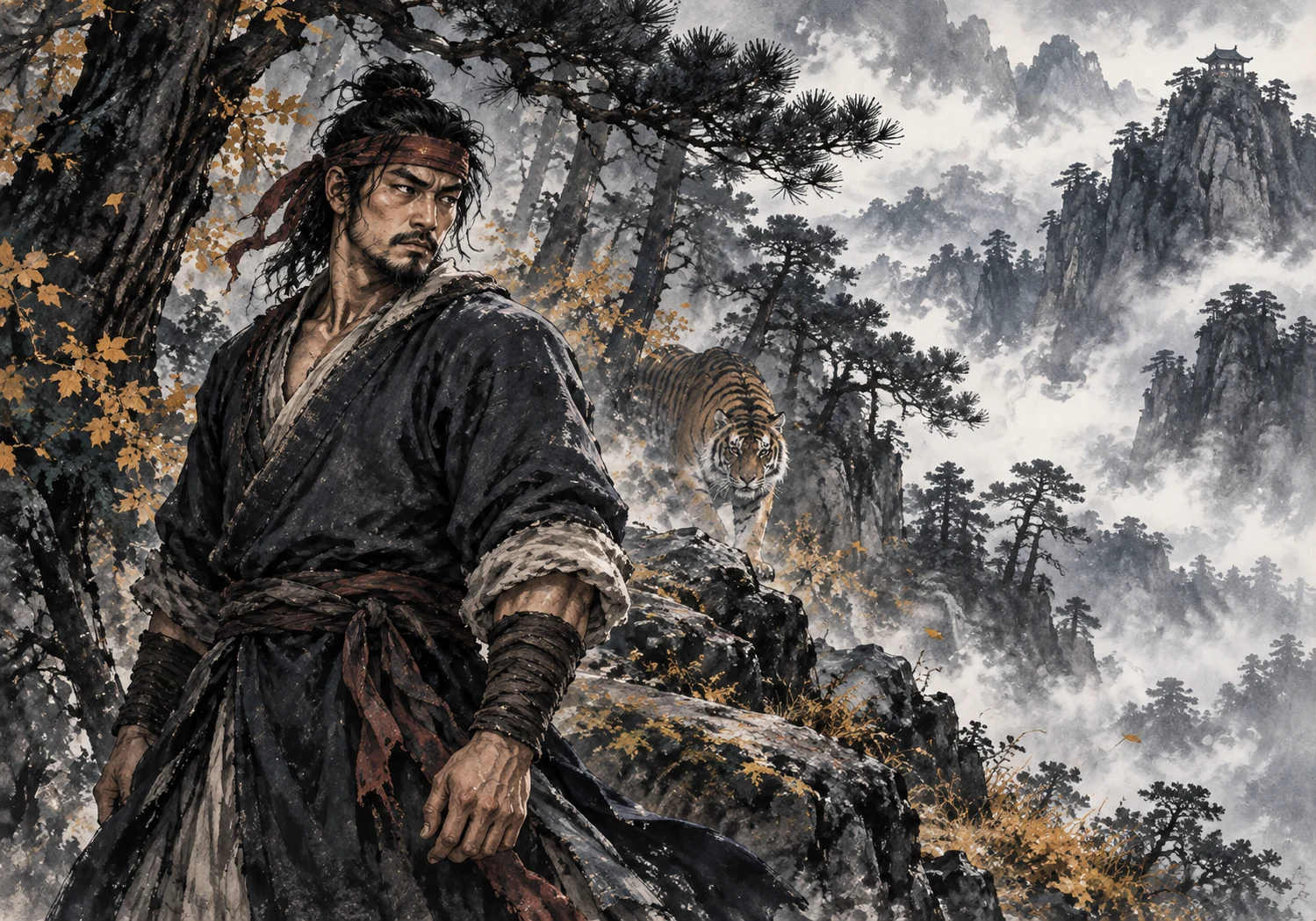 Wu SongTiger Slayer · illustrated character story