What Does “Haohan” Mean in Water Margin?
A man pays for strangers to escape. Another protects a wanted friend. A rescue kills bystanders. The novel’s language of worthy people and righteous bonds is powerful because it never produces simple saints.
“Haohan” names stature, not moral perfection
The Chinese word haohan (好汉) is often translated as hero, brave fellow, or gallant. In Water Margin, it can recognize courage, force of character, reputation, generosity, or membership in the world of rivers and lakes. It does not certify that every act a person commits is good.
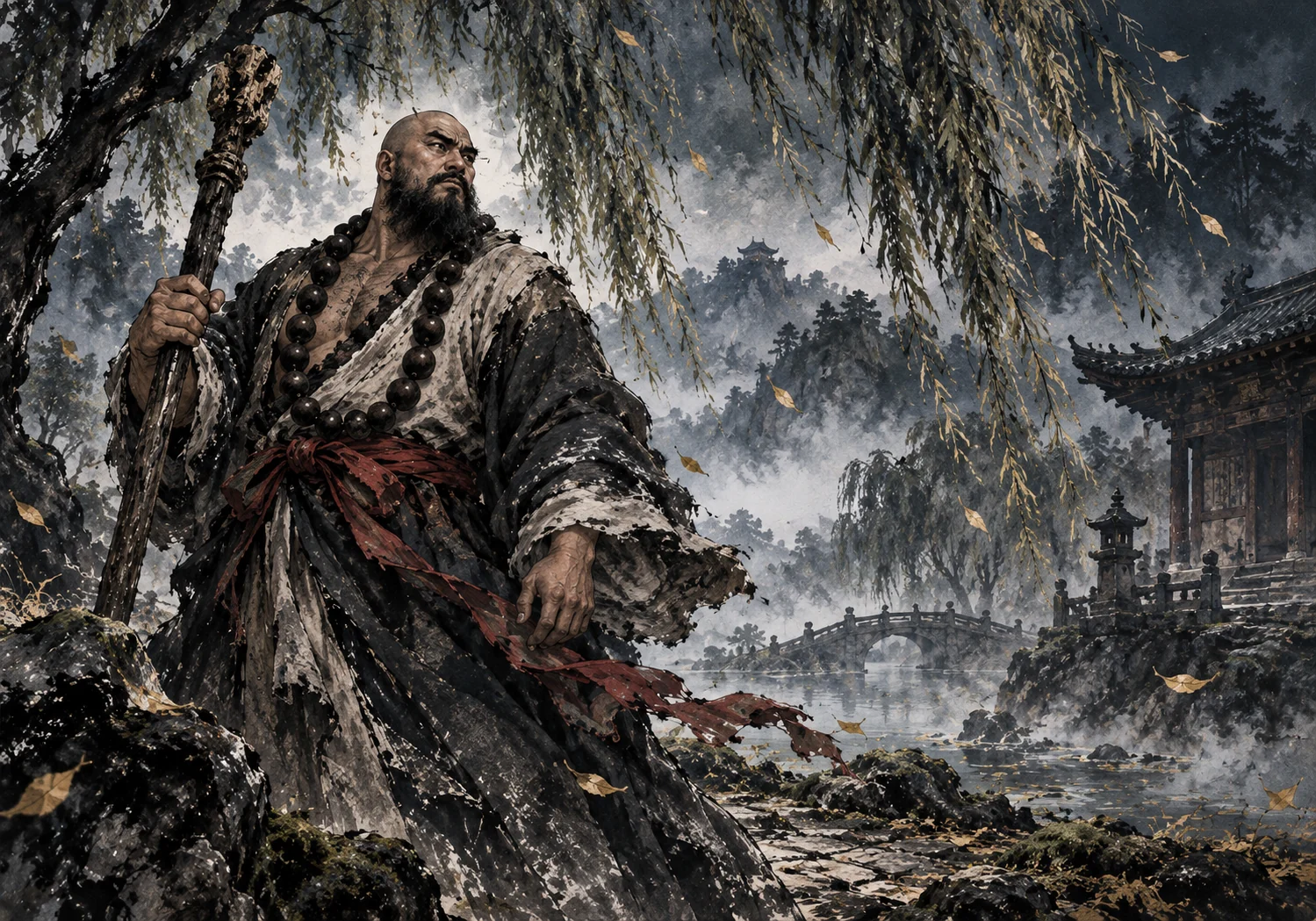
That distinction is essential for reading the 108. Lu Zhishen gives away money and risks himself to help people with less power. Li Kui is fiercely loyal and repeatedly kills people who are not responsible for his grievance. Both can be praised within the novel’s heroic vocabulary, but the praise does not make their actions ethically equal.
Yi is shown through costly obligations
Yi (义) is commonly translated as righteousness, justice, or loyalty to what is right. The novel makes it concrete through actions: warning a friend despite official duty, returning to help someone in danger, hosting a fugitive, sharing money, or refusing to abandon a companion.
These obligations form an alternative network when formal institutions fail. A reputation for generosity can open doors across great distances. Song Jiang’s name often reaches a room before he does, and strangers become willing to shelter him because of stories about what he has done for others.
Yet yi can narrow moral attention. Devotion to a sworn brother may push harm outward onto servants, villagers, enemies, women, or an unwilling recruit. Loyalty answers “Whom must I help?” more readily than “Who else will pay?”
Nicknames turn a life into public memory
Timely Rain, Flower Monk, Panther Head, Black Whirlwind: nicknames compress a body, skill, temperament, or reputation into something memorable. They help a huge cast travel through oral storytelling and through the reader’s memory.
A nickname can also become a demand. Once someone is known for courage or generosity, other people expect the next performance of that identity. Reputation brings protection and followers, but it can make retreat feel like failure.
Brotherhood does not remove hierarchy
The leaders address one another with kinship language, share feasts, and present themselves as a loyal company. Chapter 71 nevertheless gives every person a fixed rank and specialist duty. Decisions come through leaders and strategists; not every member has the same voice.
Some join freely. Others accept after capture, deception, or the destruction of their homes and careers. Calling everyone brother describes the relationship the organization claims. It does not prove that everyone entered it under equal conditions.
Admiration and judgment can remain together
A useful reading does not need to choose between celebrating the outlaws and condemning the book. Instead, follow the radius of each action. Who is saved? Who is bound by gratitude? Who is absent when the brotherhood tells its version of the event?
Water Margin lasts partly because heroism is unstable inside it. Courage can protect a stranger, defend a friend, or make violence more efficient. The task is not to strip the characters of heroic force, but to see exactly where that force lands.
When loyalty protects your own group, what do you owe everyone outside it?
Which part of the story speaks to you? Tell us as we shape the complete 108-card collection.
Original English writing by Liangshan Lore, based on the Chinese novel Water Margin, traditionally attributed to Shi Nai’an. Plot references follow the 120-chapter Chinese edition; names, chapter numbering, and endings can vary between editions and translations. Sections marked “Our reading of the story” offer our interpretation. The characters and events belong to fiction; concept illustrations are not historical portraits.
Continue in English.
These credited resources offer further reading, listening, publication context, or museum evidence. Chinese Lore is an English retelling with transcripts and audio, not a line-by-line translation; podcast episode numbers differ from novel chapters. CUHK Press links introduce published English translations.
Chinese original · text & chapter references
Primary-text references for checking the plot and edition. These pages are in Chinese.
Lu ZhishenFlower Monk · illustrated character story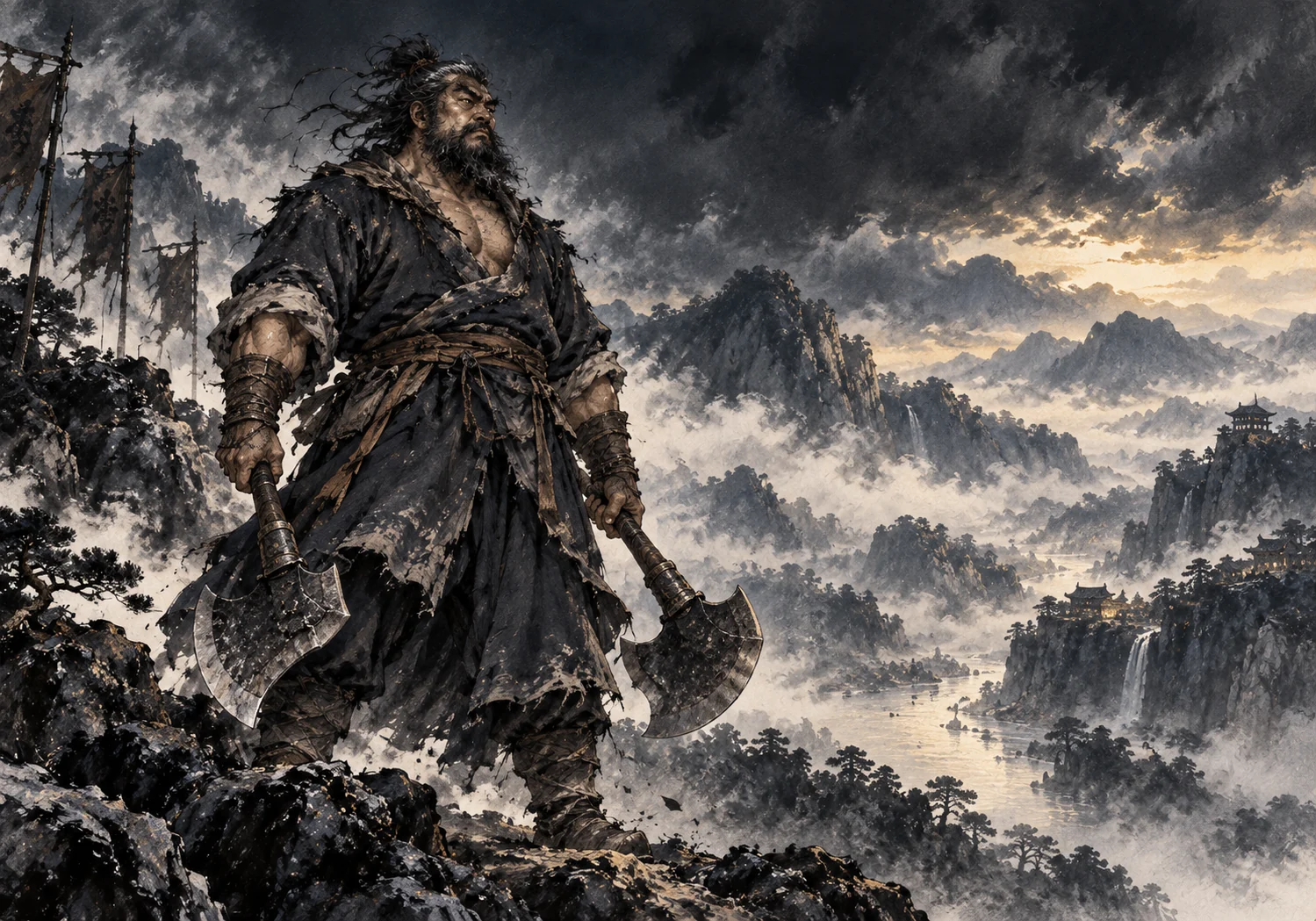 Li KuiBlack Whirlwind · illustrated character story