Water Margin’s Adaptations and Cultural Legacy
The 108 are unusually easy to carry out of their chapters. A nickname, weapon, pose, rank, or famous scene can become a print, stage role, screen character, game unit, or card.
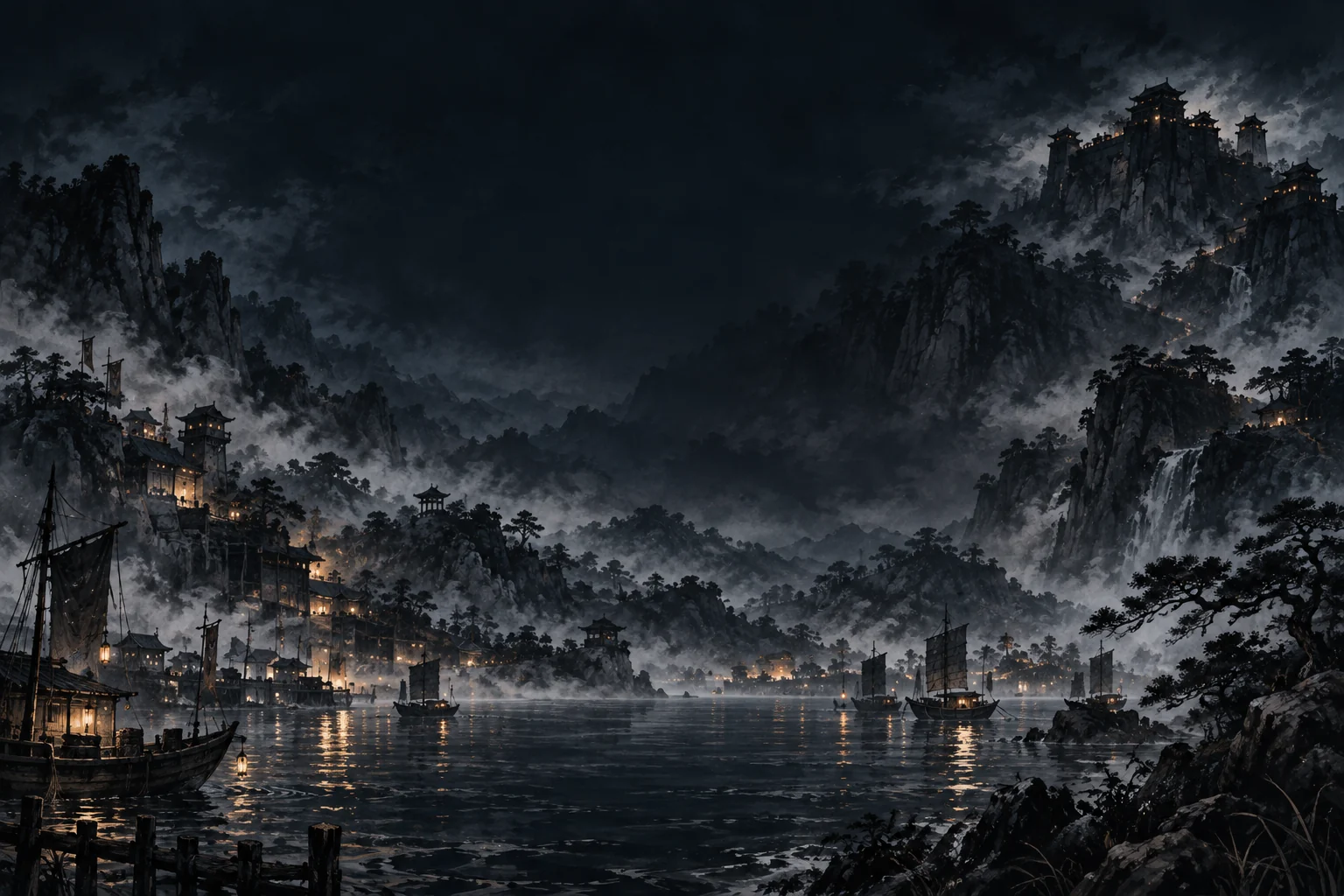
Performance and image were never secondary to the story
Water Margin grew in a culture of oral tale, dramatic performance, illustration, and print. Character poems interrupt action to present a figure as an image. Lists and ranks let readers compare people outside the order of the plot.
This modular quality helps one episode—Wu Song and the tiger, Lin Chong in snow, Lu Zhishen with the willow—circulate without requiring the whole novel.
In Japan, Suikoden created another visual afterlife
Water Margin is known in Japanese as Suikoden. Utagawa Kuniyoshi’s nineteenth-century series portrayed individual heroes with dramatic bodies, tattoos, weapons, and action. Museum collections preserve prints from the series One of the 108 Heroes of the Popular Water Margin.
Later theater prints, books, manga, and games continued adapting names and structures. A Japanese work called Suikoden may transform the source heavily; the shared title is not proof that its plot retells the Chinese novel directly.
Film, television, comics, and games choose different centers
A screen adaptation may compress dozens of chapters, combine roles, or focus on a famous sequence. Games are especially drawn to gathering a large cast, assigning abilities, and forming teams—structures already suggested by the ranked 108.
Adaptation is interpretation. Costume, casting, censorship, episode limits, and audience expectations determine which violence, humor, gender relations, and political tensions remain visible.
A collection can invite comparison without pretending to replace the book
Cards and prints let people arrange characters side by side, notice visual contrasts, and begin with one person. They can also reduce a difficult life to rank, weapon, or power level.
Liangshan Lore’s planned 108-card set belongs to this long practice of taking figures out of the narrative. Its responsibility is to reconnect each image to a human predicament, source chapters, and consequences—not to claim that a card contains the whole novel.
What must an adaptation preserve when it changes nearly everything about the form?
Which part of the story speaks to you? Tell us as we shape the complete 108-card collection.
Original English writing by Liangshan Lore, based on the Chinese novel Water Margin, traditionally attributed to Shi Nai’an. Plot references follow the 120-chapter Chinese edition; names, chapter numbering, and endings can vary between editions and translations. Sections marked “Our reading of the story” offer our interpretation. The characters and events belong to fiction; concept illustrations are not historical portraits.
Continue in English.
These credited resources offer further reading, listening, publication context, or museum evidence. Chinese Lore is an English retelling with transcripts and audio, not a line-by-line translation; podcast episode numbers differ from novel chapters.
Chinese original · text & chapter references
Primary-text references for checking the plot and edition. These pages are in Chinese.
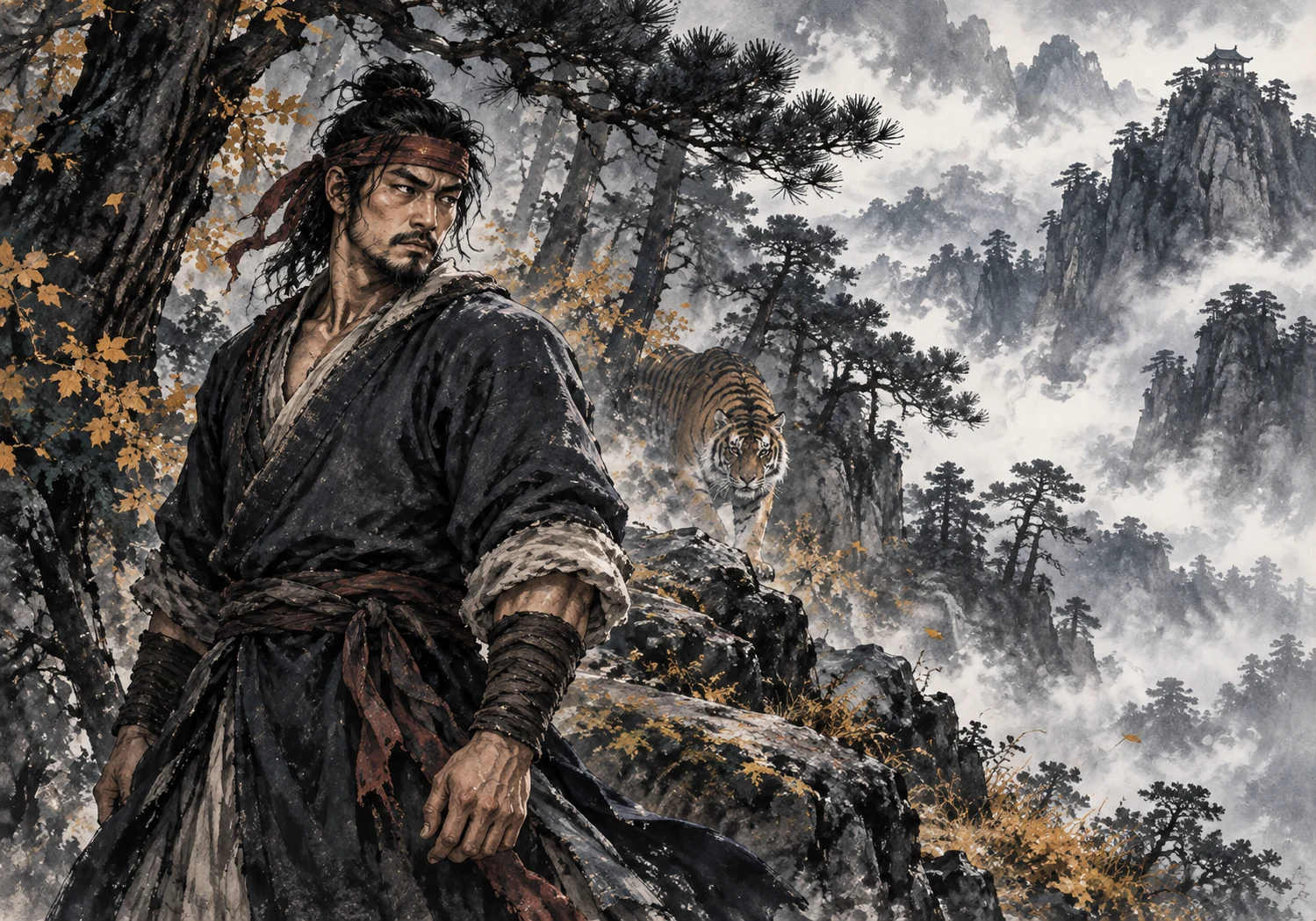 Wu SongTiger Slayer · illustrated character story
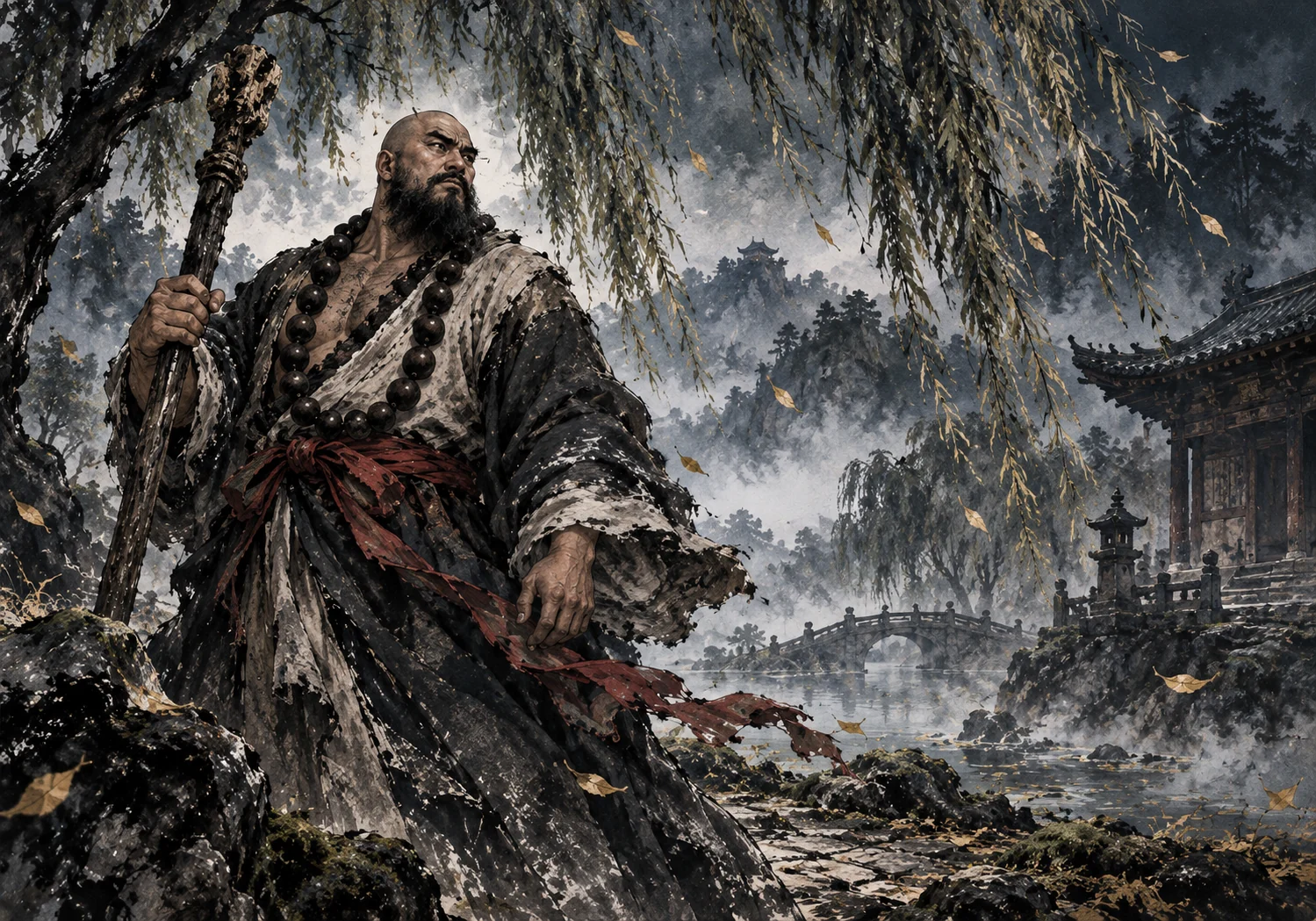 Lu ZhishenFlower Monk · illustrated character story