Buddhism, Daoism, and Religion in Water Margin
A fugitive receives a monastic name. A Daoist master authorizes a disciple to return to war. A dying warrior hears language that changes the meaning of release. Religion enters through institutions and through wonder.
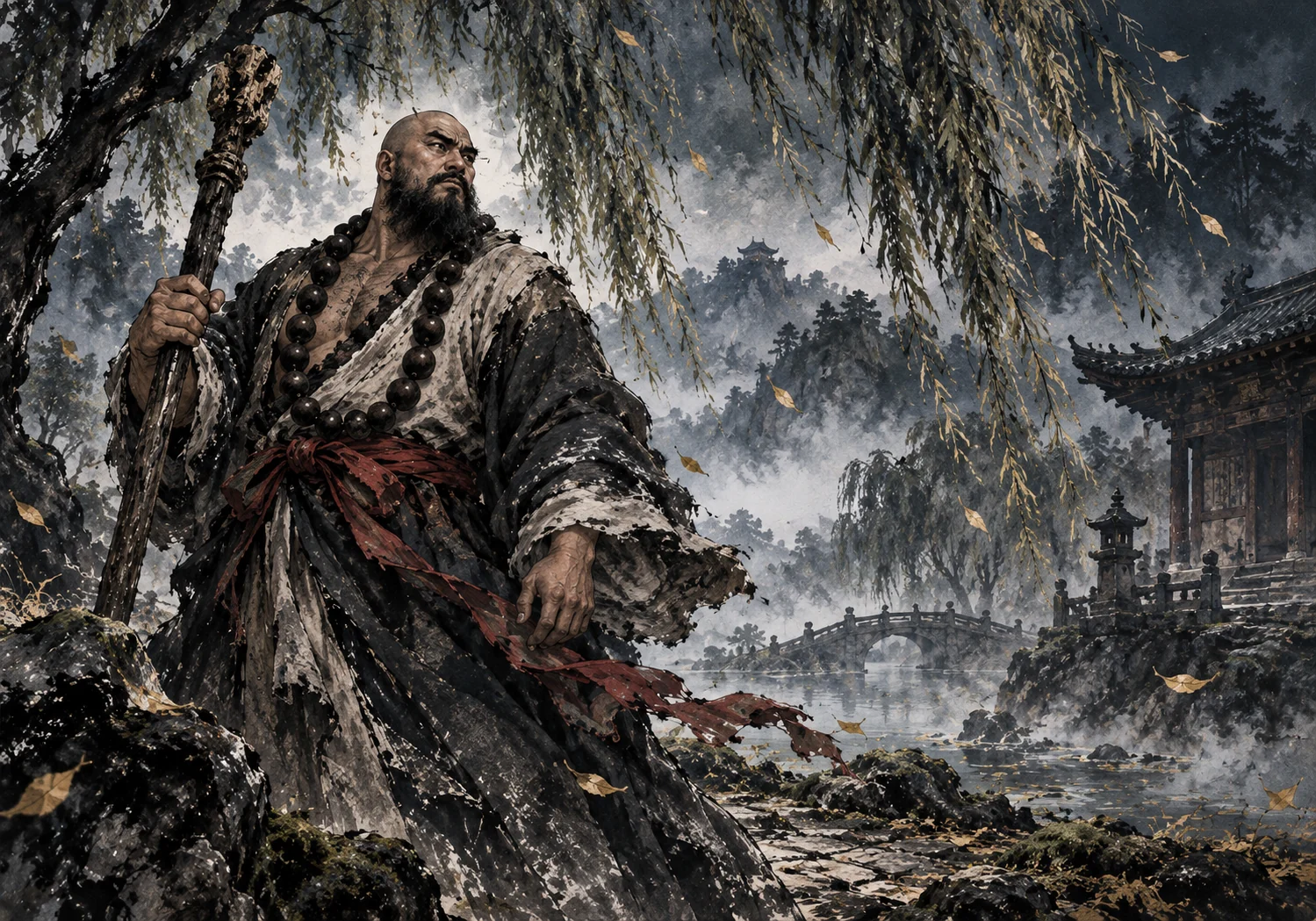
A monastery can offer refuge without removing conflict
After killing Zheng Tu, Lu Da eventually becomes the monk Lu Zhishen at Mount Wutai. The new name and robe give him shelter, but his temper, drinking, physical force, and inability to fit monastic discipline soon create conflict.
Temples also appear as travel stops, sanctuaries, property, and communities vulnerable to abuse. Religious space is part of the social world, not outside it.
Daoist authority frames both the opening and the magic
Chapter 1 places the release of the spirits at a Daoist sacred site. Gongsun Sheng later leaves Liangshan for family and teacher obligations. His master Luo Zhenren controls whether he returns and equips the return with religious authority.
Daoist figures may read stars, perform rites, command extraordinary forces, or stand apart from political ambition. These are actions inside the novel’s supernatural imagination.
Dreams, prayers, funerals, and vows organize uncertainty
Song Jiang receives heavenly books in a dream encounter with the Mysterious Maiden. Liangshan holds memorial observances for the dead. Leaders interpret omens and seek meaning before or after violence.
Ritual can console, authorize, or reshape memory. It does not prevent strategic calculation or human responsibility.
Religious endings offer exits that office cannot
Lu Zhishen’s death in Chapter 119 is framed as release and completion rather than court promotion. Gongsun Sheng and others withdraw from the official route. Their endings contrast with men who remain exposed to court suspicion.
The novel does not offer one doctrine. It uses Buddhist and Daoist forms to imagine refuge, destiny, discipline, transformation, and departure from political life.
What kind of freedom becomes possible only when rank and reputation are finally left behind?
Which part of the story speaks to you? Tell us as we shape the complete 108-card collection.
Original English writing by Liangshan Lore, based on the Chinese novel Water Margin, traditionally attributed to Shi Nai’an. Plot references follow the 120-chapter Chinese edition; names, chapter numbering, and endings can vary between editions and translations. Sections marked “Our reading of the story” offer our interpretation. The characters and events belong to fiction; concept illustrations are not historical portraits.
Continue in English.
These credited resources offer further reading, listening, publication context, or museum evidence. Chinese Lore is an English retelling with transcripts and audio, not a line-by-line translation; podcast episode numbers differ from novel chapters. CUHK Press links introduce published English translations.
Chinese original · text & chapter references
Primary-text references for checking the plot and edition. These pages are in Chinese.
Lu ZhishenFlower Monk · illustrated character story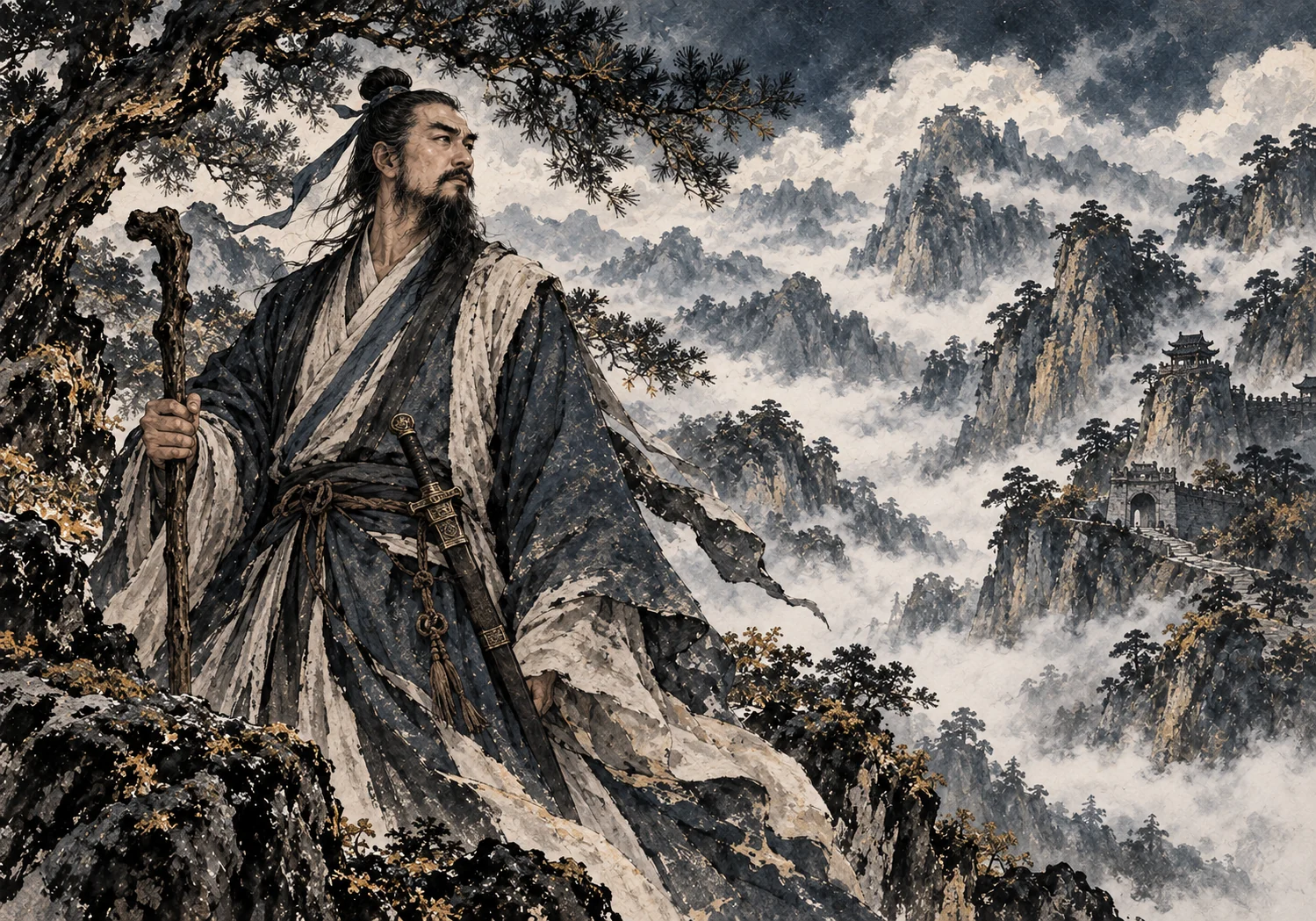 Gongsun ShengDragon in the Clouds · illustrated character story