Hu Sanniang扈三娘
Ten Feet of Blue
She can fight. Can she choose?
She captures one of Liangshan’s fighters. Later, its leader tells her that she will marry him.
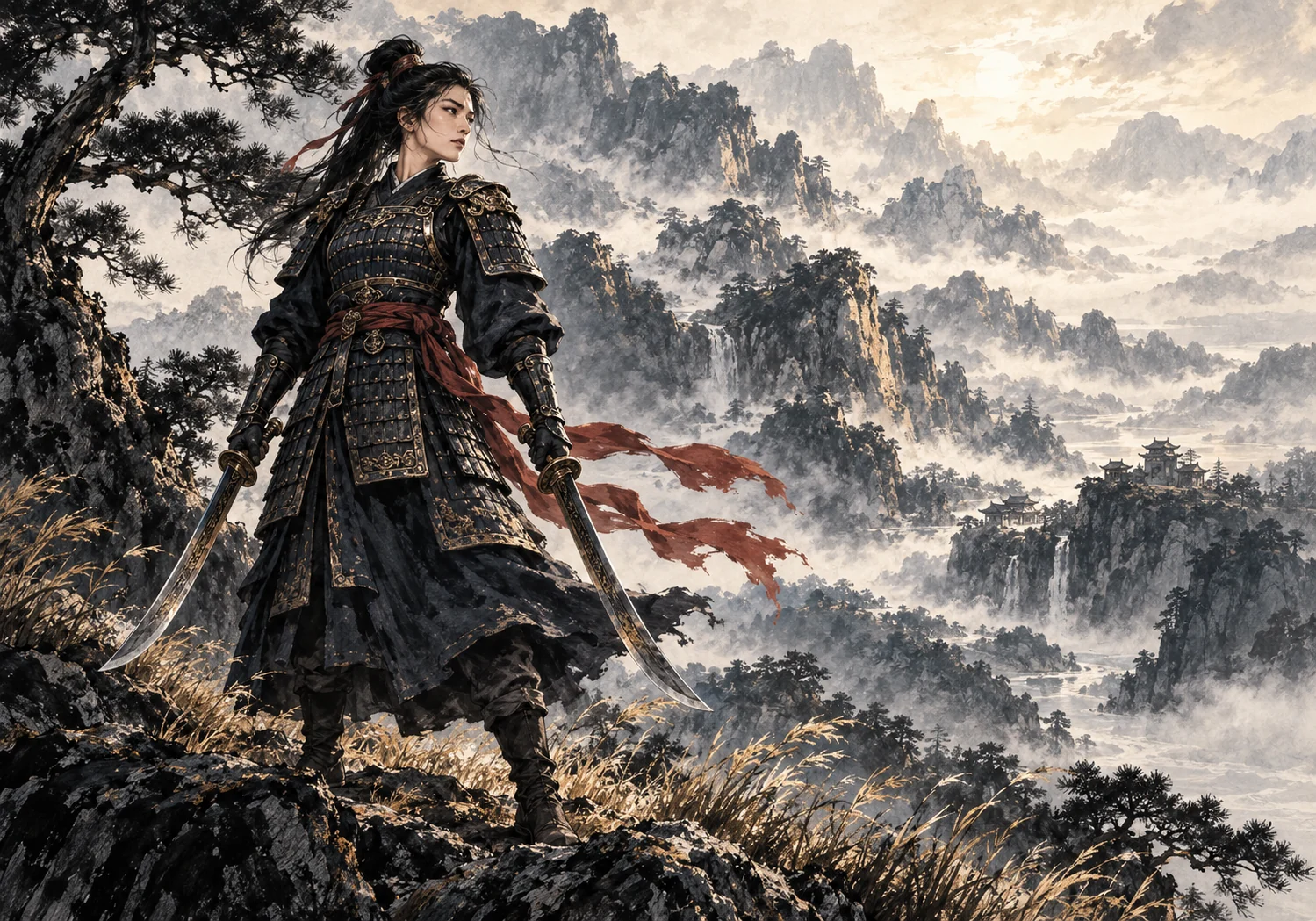
The rider who takes a prisoner
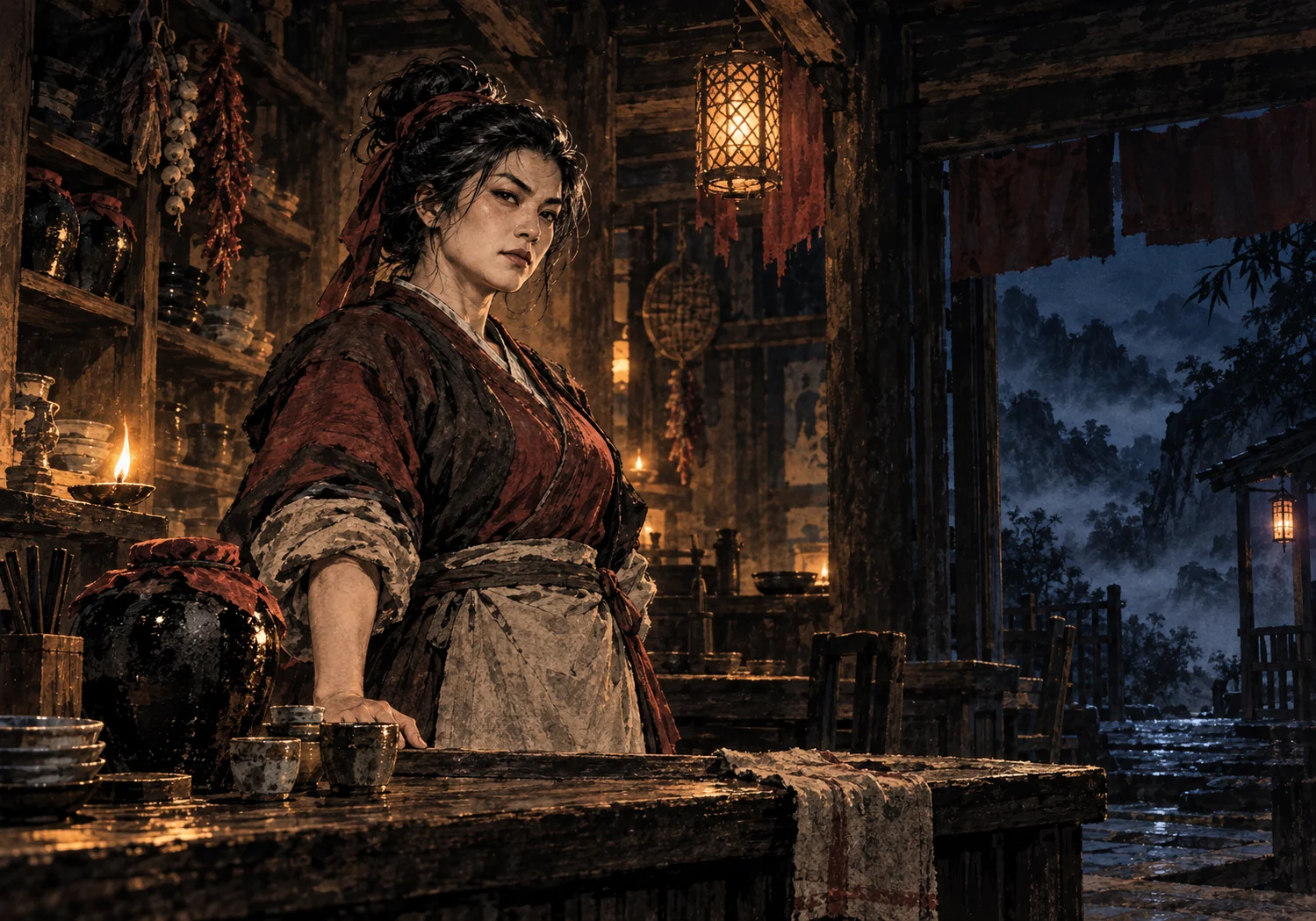
Hu Sanniang rides out from the Hu family stronghold during the conflict with Liangshan. Her family is allied with the neighboring Zhu clan through an intended marriage. She enters the story as an opponent with two blades and skill that the outlaws must take seriously.
She captures Wang Ying. For this moment, she determines what happens to a Liangshan fighter. The next part of her story will sharply reduce that freedom.
The decision made after the fighting
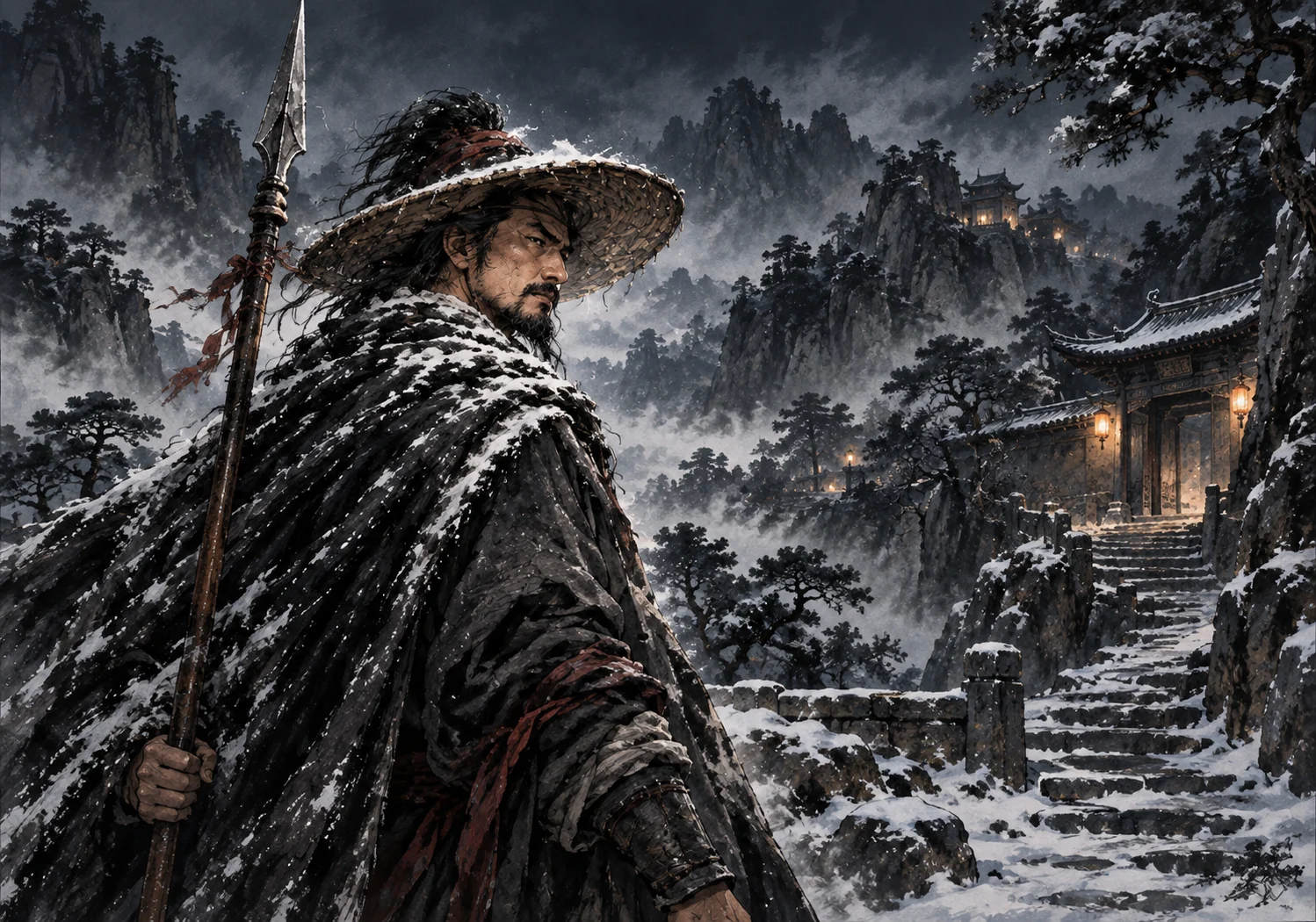
Lin Chong captures her. Song Jiang sends her back to Liangshan under guard while the campaign continues. Her brother Hu Cheng tries to reach an arrangement that will protect the household and recover her.
Li Kui ignores that arrangement and attacks the Hu family. Members of the household are killed; Hu Cheng escapes. The company holding Hu Sanniang now includes the man who has destroyed much of her family.
After the campaign, Song Jiang arranges her marriage to Wang Ying, the man she captured. She becomes a Liangshan fighter and later battles alongside him. The novel moves through these changes with little space for her own account of them.
The part she is not given to tell
Her skill is easy to see. Her wishes are much less visible. We should not fill that silence with a romance, an imagined speech, or certainty that she welcomed the future arranged for her.
The distance between her first appearance and her marriage is what troubles us. She can defeat a man in battle and still be denied a say in the life that follows. Celebrating her strength means noticing that distance too.
What is strength without the freedom to choose?
What part of Hu Sanniang’s story stays with you?
Reading Hu Sanniang.
Who captures Hu Sanniang?
Lin Chong captures her during the campaign against the Zhu family stronghold. Earlier in that fighting, she captures Wang Ying.
Does the novel explain her feelings about the arranged marriage?
It gives very little space to her inner perspective. Our reflection highlights that silence rather than inventing thoughts or dialogue for her.
Written by Liangshan Lore, based on Water Margin (Shuihu Zhuan), traditionally attributed to Shi Nai’an. The novel follows an outlaw brotherhood in a fictionalized Song-dynasty setting. It is literature, not a record of each character’s historical life.
Chapter references below follow the 120-chapter Chinese edition. Other editions and English translations differ in chapter numbering, names, and endings. These are original English summaries, not quotations from a modern translation. The reflection above is our interpretation. Artwork is a concept illustration.
Read & listen in English.
John Zhu’s podcast offers his own English retelling, with readable transcripts and audio. Podcast episode numbers differ from the novel’s chapter numbers.
Chinese original · text & chapter references
Primary-text references for checking the plot and edition. These pages are in Chinese.