Who Are the Women of Water Margin?
Three women receive places among the 108. Many more shape the story without a seat, a weapon, or control over how the narrator remembers them. Their presence does not make this an equal brotherhood.
Three women belong to the 108
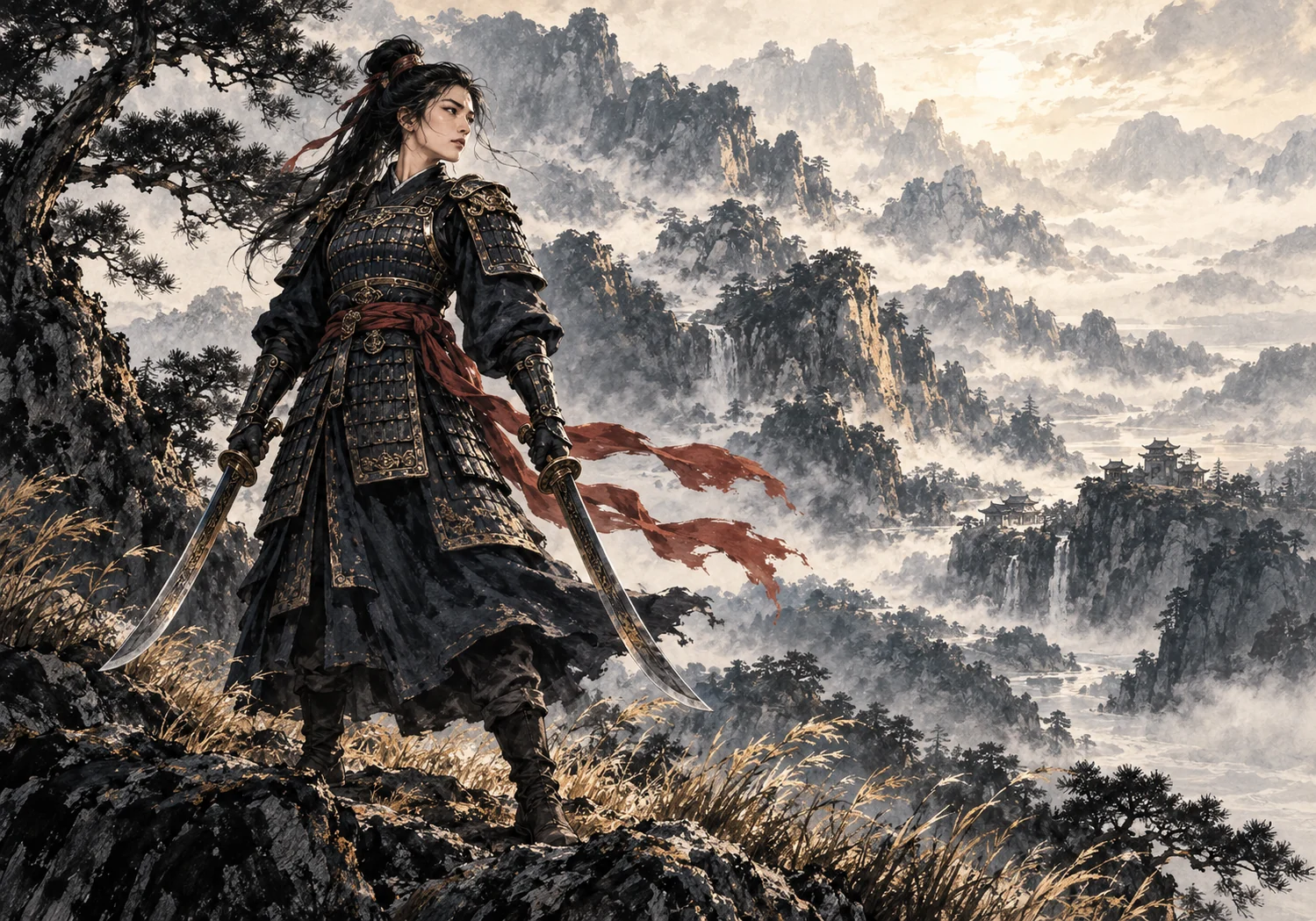
Hu Sanniang, Gu Dasao, and Sun Erniang are the three women ranked at the assembly. They should not be treated as one type. Hu Sanniang is a mounted fighter from Hu Family Manor. Gu Dasao helps organize a prison rescue through family and village ties. Sun Erniang runs a dangerous roadside inn with Zhang Qing and later takes part in disguise and intelligence work.
Their ranks confirm membership in Liangshan’s leadership, not social equality with the men around them. The list gives each a title and duty; the surrounding episodes show how differently power reaches them.
Hu Sanniang’s skill does not protect her choices
Hu Sanniang rides against the Liangshan attackers and captures Wang Ying. Lin Chong then defeats and captures her. During the destruction around the manors, most of her family is killed. Song Jiang’s father later names her as an adopted daughter, and she is married to Wang Ying—the man she had taken prisoner.
The narration provides almost no account of what she wants. It does not support a romance built from mutual choice, nor does silence prove consent. Her battlefield ability and her lack of narrative voice exist together.
Gu Dasao and Sun Erniang operate through households and roads
Gu Dasao enters the action to save her imprisoned cousins. She threatens and persuades relatives, helps assemble allies, and joins the deception that opens Zhu Family Manor. Her agency grows through a network that the story initially presents as domestic and local.
Sun Erniang is introduced through an inn that drugs travelers and turns murder into business. Wu Song recognizes the trap and survives. Later she can also host, escort, disguise, and support the outlaw network. The same character can be operationally capable and morally terrifying.
Women outside Liangshan reveal other forms of constraint
Lin Chong’s wife is targeted because Gao Yanei expects rank to overcome her refusal and her husband’s resistance. Jin Cuilian’s family needs money and time to escape a coercive arrangement before Lu Zhishen confronts Zheng Tu. Pan Jinlian’s story moves through forced marriage, adultery, murder, and brutal revenge, narrated through conventions that invite judgment more readily than interior understanding.
These women are not interchangeable examples of victimhood or villainy. Their scenes expose households, marriage, sexual coercion, reputation, and the limited routes through which a woman’s account can enter the story.
Do not repair the gaps by inventing a better story
Modern readers may want Hu Sanniang to refuse, escape, fall in love, or explain herself. Supplying any of those outcomes would replace the novel’s silence with our preferred fiction.
A more honest reading keeps the gap visible. Ask who speaks for a woman, who arranges her movement, what choices the plot records, and what it withholds. Recognition begins by refusing to turn endurance into consent or exceptional fighting skill into proof of freedom.
How should we read a capable person when the story gives everyone else more control over her future?
Which part of the story speaks to you? Tell us as we shape the complete 108-card collection.
Original English writing by Liangshan Lore, based on the Chinese novel Water Margin, traditionally attributed to Shi Nai’an. Plot references follow the 120-chapter Chinese edition; names, chapter numbering, and endings can vary between editions and translations. Sections marked “Our reading of the story” offer our interpretation. The characters and events belong to fiction; concept illustrations are not historical portraits.
Continue in English.
These credited resources offer further reading, listening, publication context, or museum evidence. Chinese Lore is an English retelling with transcripts and audio, not a line-by-line translation; podcast episode numbers differ from novel chapters. CUHK Press links introduce published English translations.
Chinese original · text & chapter references
Primary-text references for checking the plot and edition. These pages are in Chinese.
Hu SanniangTen Feet of Blue · illustrated character story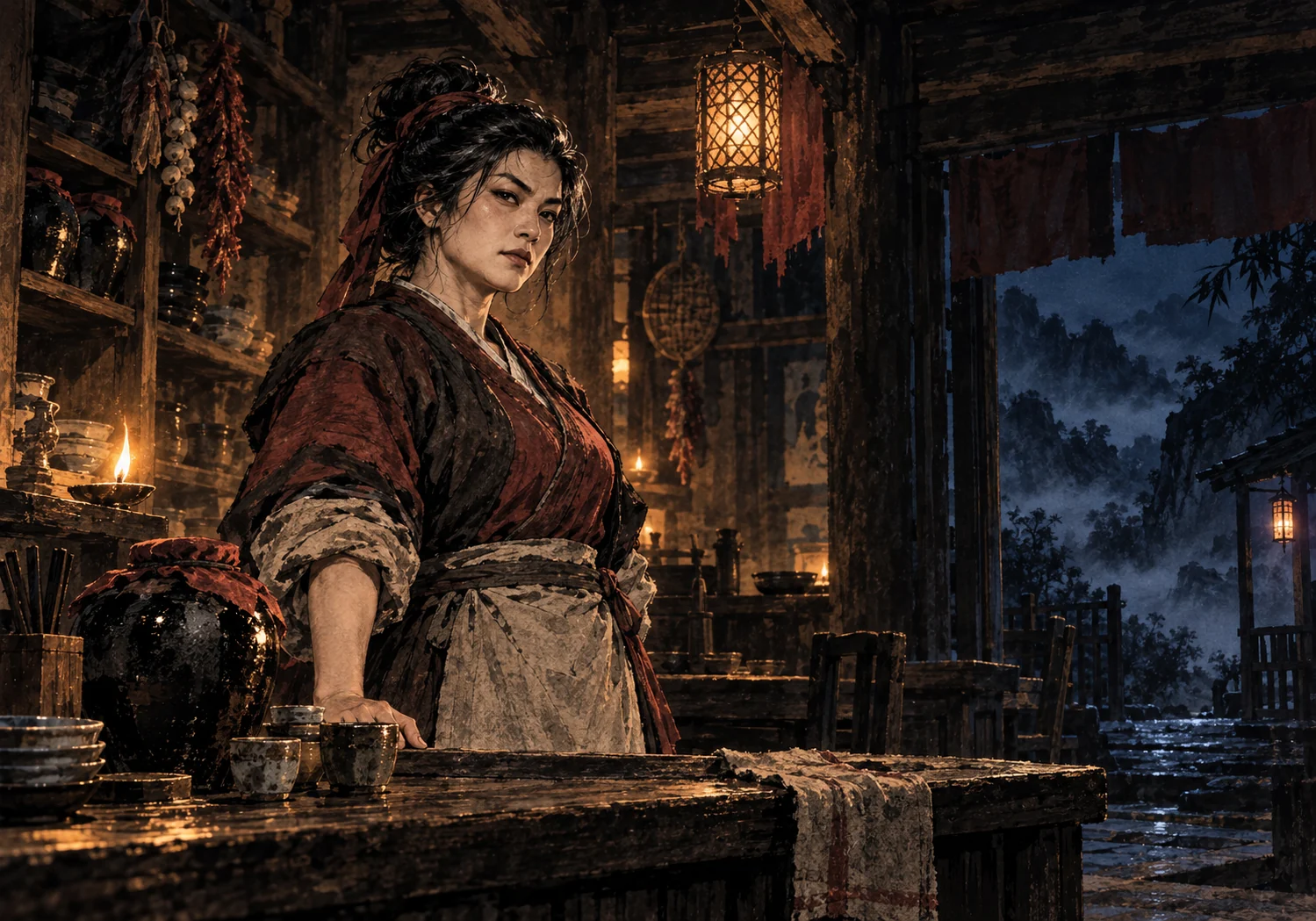 Sun ErniangThe Female Yaksha · illustrated character story