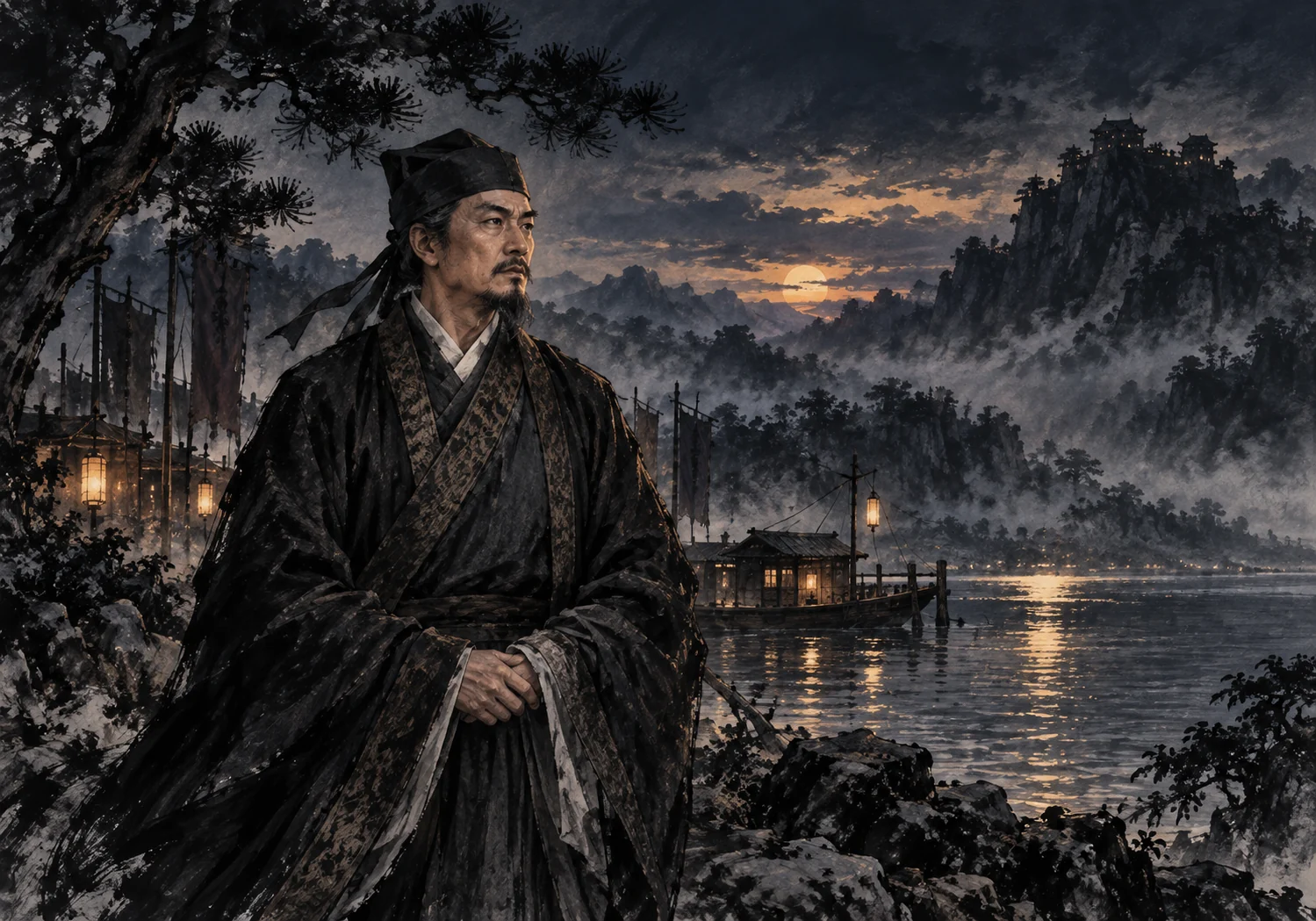
Wang Ying王英
Stumpy Tiger
One woman is released. Another is made to pay the promise.
Wang Ying seizes a woman from a roadside palanquin. Song Jiang secures her release by promising him a wife—and later makes Hu Sanniang the answer.
The woman in the palanquin
Wang Ying comes from the Huai region. The novel says he once drove carts, robbed a traveler after coveting the goods and escaped from prison when the crime was exposed. At Qingfeng Mountain he becomes one of three chiefs with Yan Shun and Zheng Tianshou. His short, compact build gives him the name Stumpy Tiger.
When men report a palanquin traveling below the mountain, Wang Ying assumes a woman is inside. He takes several dozen followers down, scatters the escort and carries the passenger to a rear room. She is Liu Gao’s wife, returning from rites at her mother’s grave. The scene is an abduction, and the text shows her asking for her life.
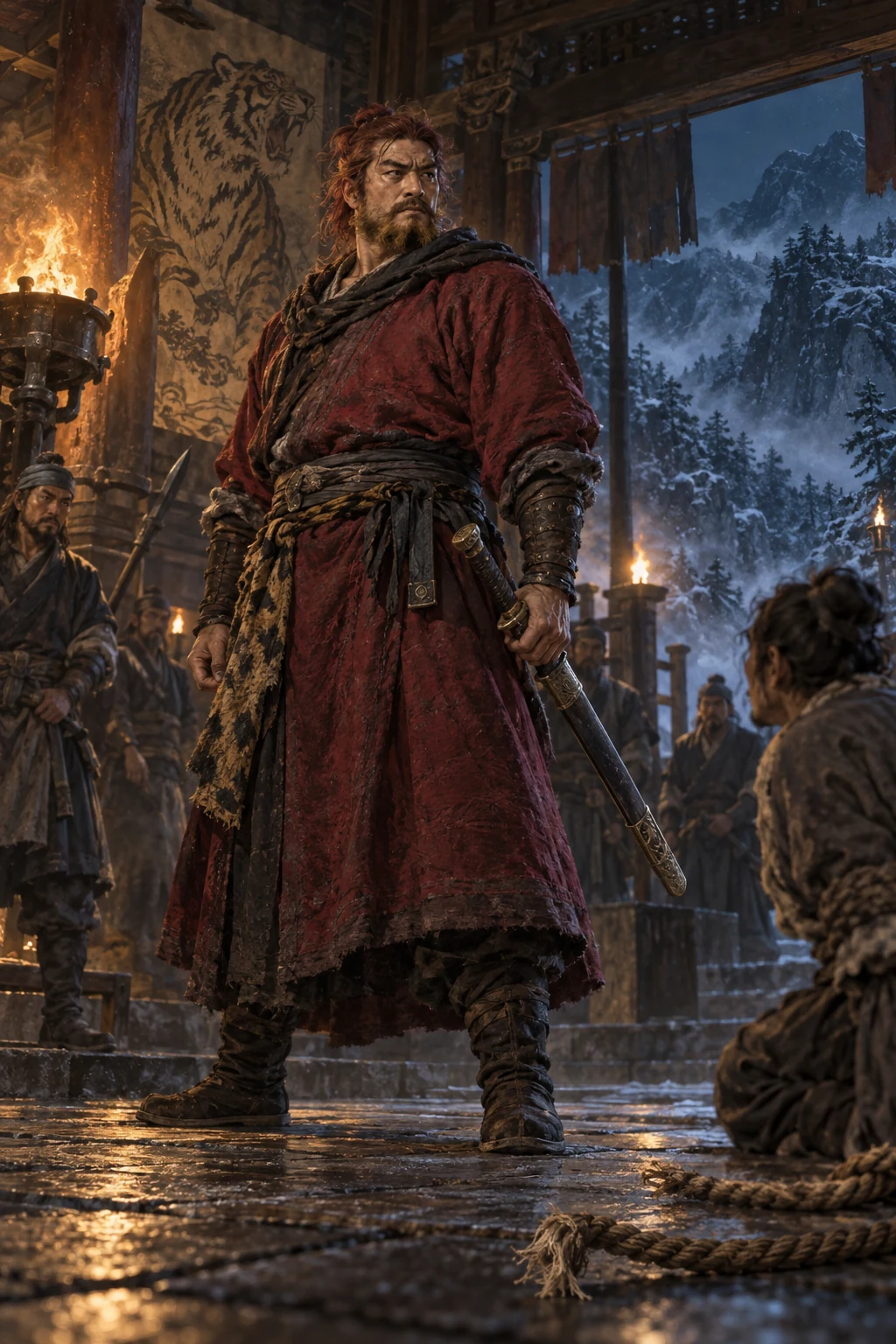
Song Jiang asks Wang Ying to release her. Wang refuses. Song then kneels and promises to find him a suitable wife later. Yan Shun orders the palanquin bearers to take the woman away despite Wang Ying’s anger. An immediate danger ends, but the promise treats another woman’s future as something Song Jiang can give.
The captor is captured
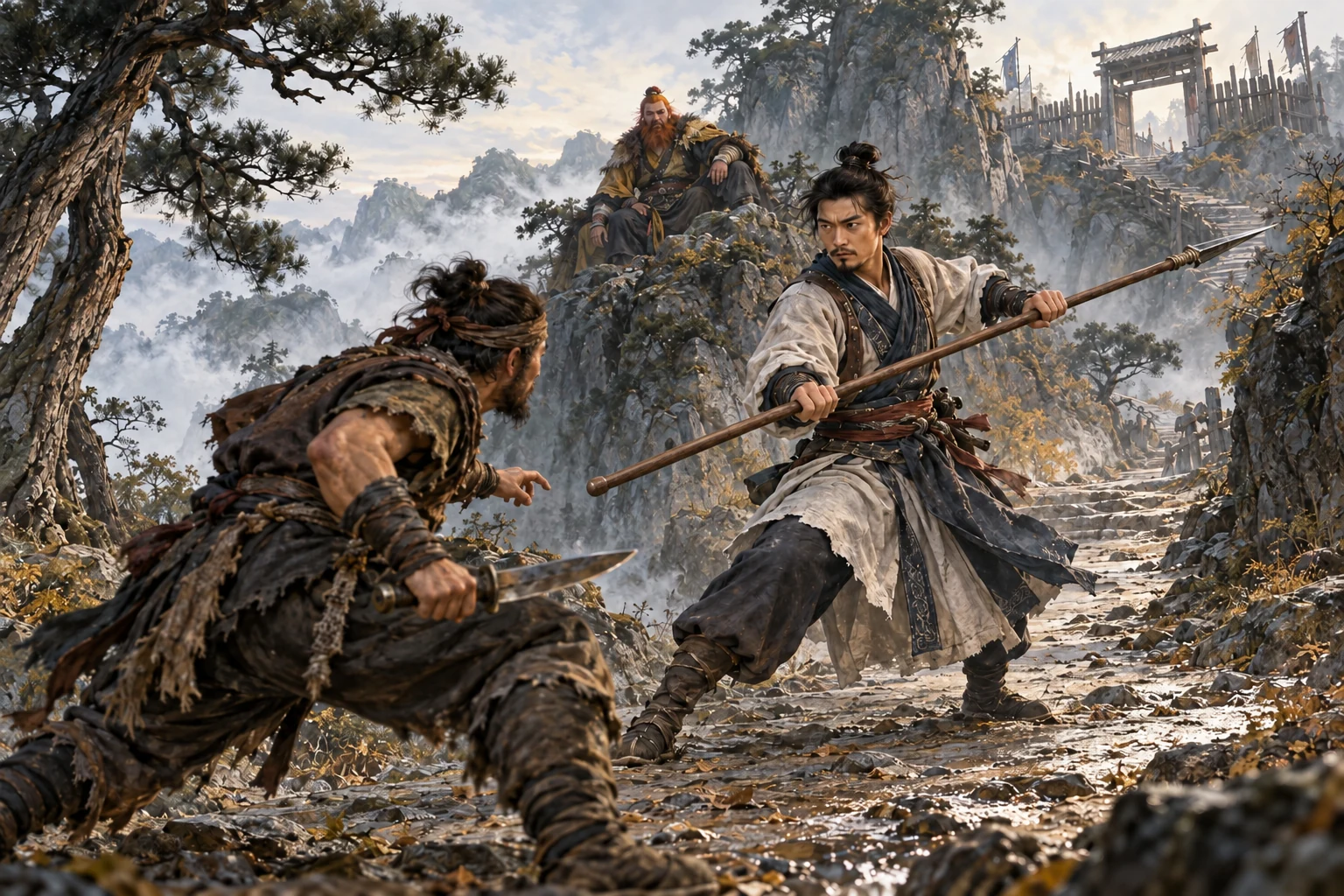
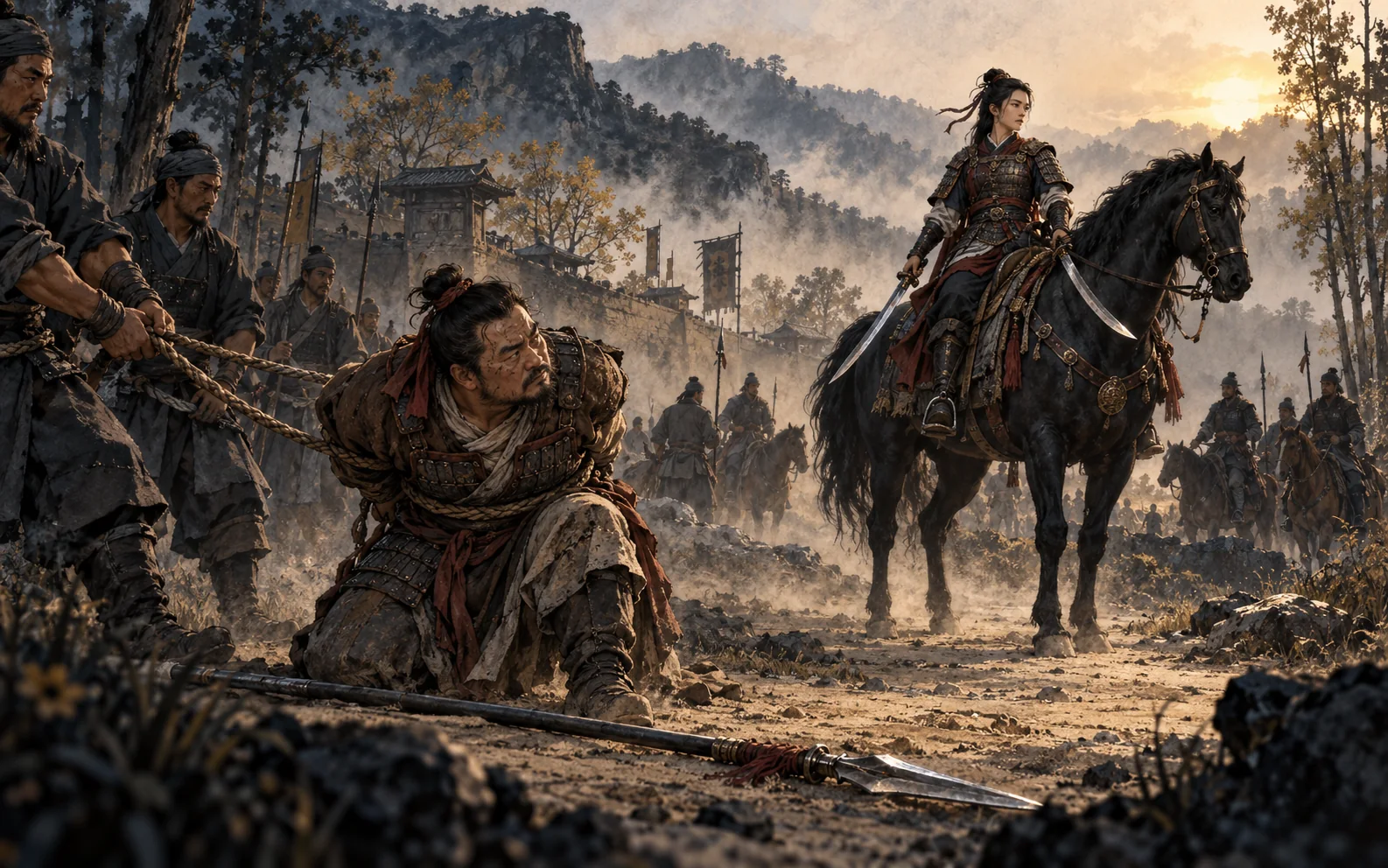
During the attack on Zhu Family Manor, Hu Sanniang rides out with twin sabers. Wang Ying charges because he hears the opposing fighter is a woman and expects to take her. Instead, his spear work breaks down. Hu Sanniang overtakes him, lifts him from the saddle and sends him to her retainers as a prisoner.
The balance does not last. Lin Chong later captures Hu Sanniang, and Liangshan destroys the allied manors. Most of her family is killed. She is taken to the stronghold, where Song Jiang’s father receives her as an adopted daughter.
At the next feast, Song Jiang calls Wang Ying forward and invokes the promise made at Qingfeng Mountain. He tells Hu Sanniang that she will marry Wang Ying. The primary text says she cannot refuse. It does not record her consent, private wishes or a romance.
A promise paid by someone who did not make it
Song Jiang’s bargain stops one abduction without challenging Wang Ying’s claim that he should be supplied with a wife. When he later calls the bargain a matter of keeping faith, Hu Sanniang bears the cost of an agreement made before she was present. Loyalty between men becomes authority over a woman’s future.
At the assembly, Wang Ying ranks fifty-eighth as the Earthly Minute Star. He and Hu Sanniang serve together among the cavalry scouts and take part in later campaigns. Those shared assignments describe what the organization requires of them; they do not turn the arranged marriage into proof of love.
Near Muzhou, Zheng Biao’s magic disorients Wang Ying and leaves an opening for a fatal spear thrust. Hu Sanniang charges after Zheng Biao and is killed by a thrown bronze brick. The novel ends their paired service in the same battle. It never returns the choice left out when the pair was created.
Who bears the cost of a promise made to control someone else?
What part of Wang Ying’s story stays with you?
Reading Wang Ying.
Who is Wang Ying in Water Margin?
Wang Ying is a former carriage driver; Qingfeng Mountain chief and Liangshan cavalry scout, known as Stumpy Tiger. The novel places this character 58 in the assembly of the 108 heroes. That rank is not a judgment of moral worth.
Does Water Margin describe Wang Ying and Hu Sanniang as a love story?
No. Hu Sanniang captures Wang Ying in battle, then loses most of her family and is taken to Liangshan. Song Jiang arranges their marriage to fulfill an earlier promise to Wang Ying; the text says she cannot refuse and does not record romance or consent.
Published · Updated
Written by Liangshan Lore, based on Water Margin (Shuihu Zhuan), traditionally attributed to Shi Nai’an. The novel follows an outlaw brotherhood in a fictionalized Song-dynasty setting. It is literature, not a record of each character’s historical life.
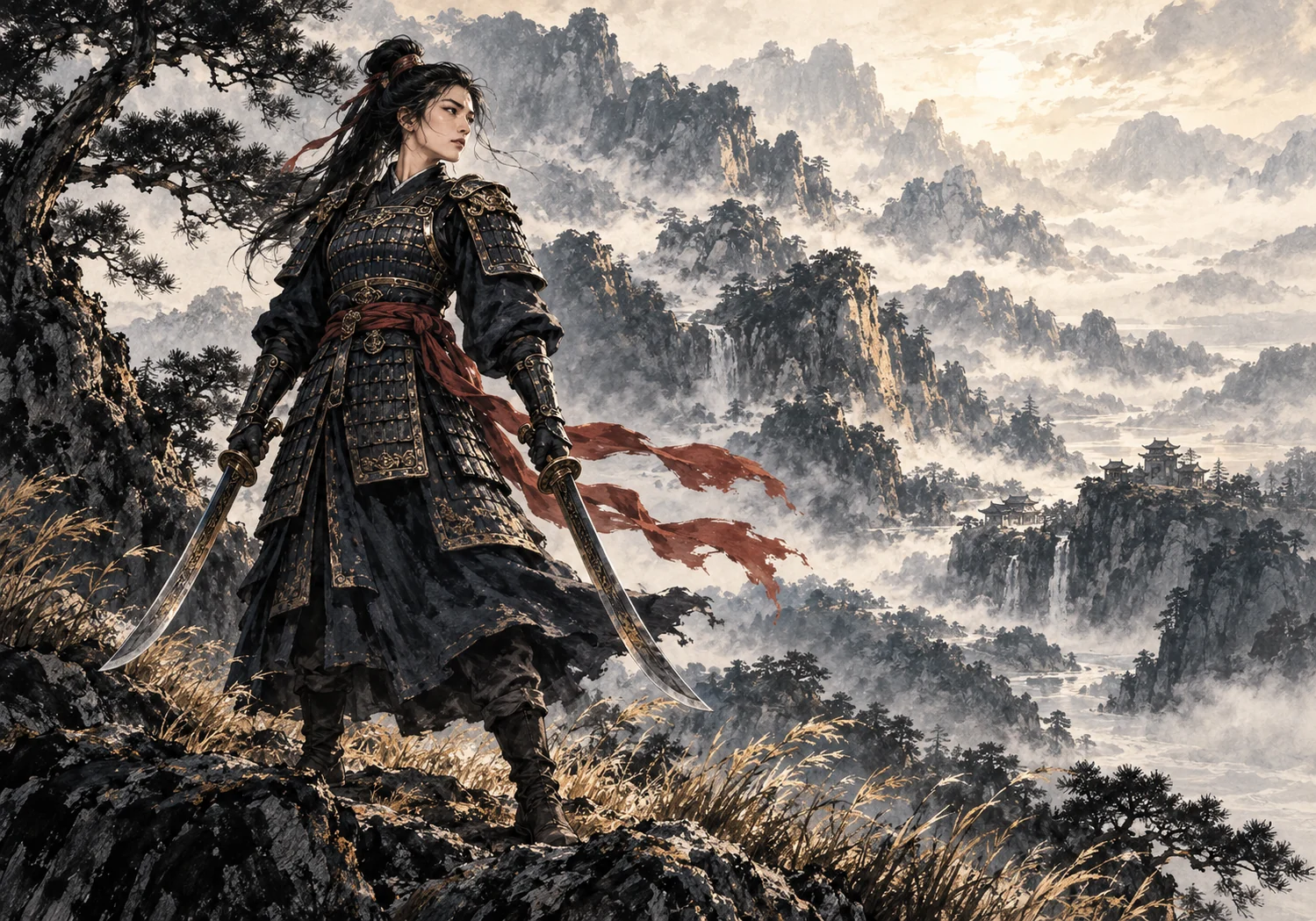
Chapter references below follow the 120-chapter Chinese edition. Other editions and English translations differ in chapter numbering, names, and endings. These are original English summaries, not quotations from a modern translation. The reflection above is our interpretation. Artwork is a concept illustration.
Continue in English.
These credited resources offer further reading, listening, publication context, or museum evidence. Chinese Lore is an English retelling with transcripts and audio, not a line-by-line translation; podcast episode numbers differ from novel chapters.
Chinese original · text & chapter references
Primary-text references for checking the plot and edition. These pages are in Chinese.