Ding Desun丁得孙
Arrow-Struck Tiger
He keeps the fork in his hands. One bolt takes the ground from under him.
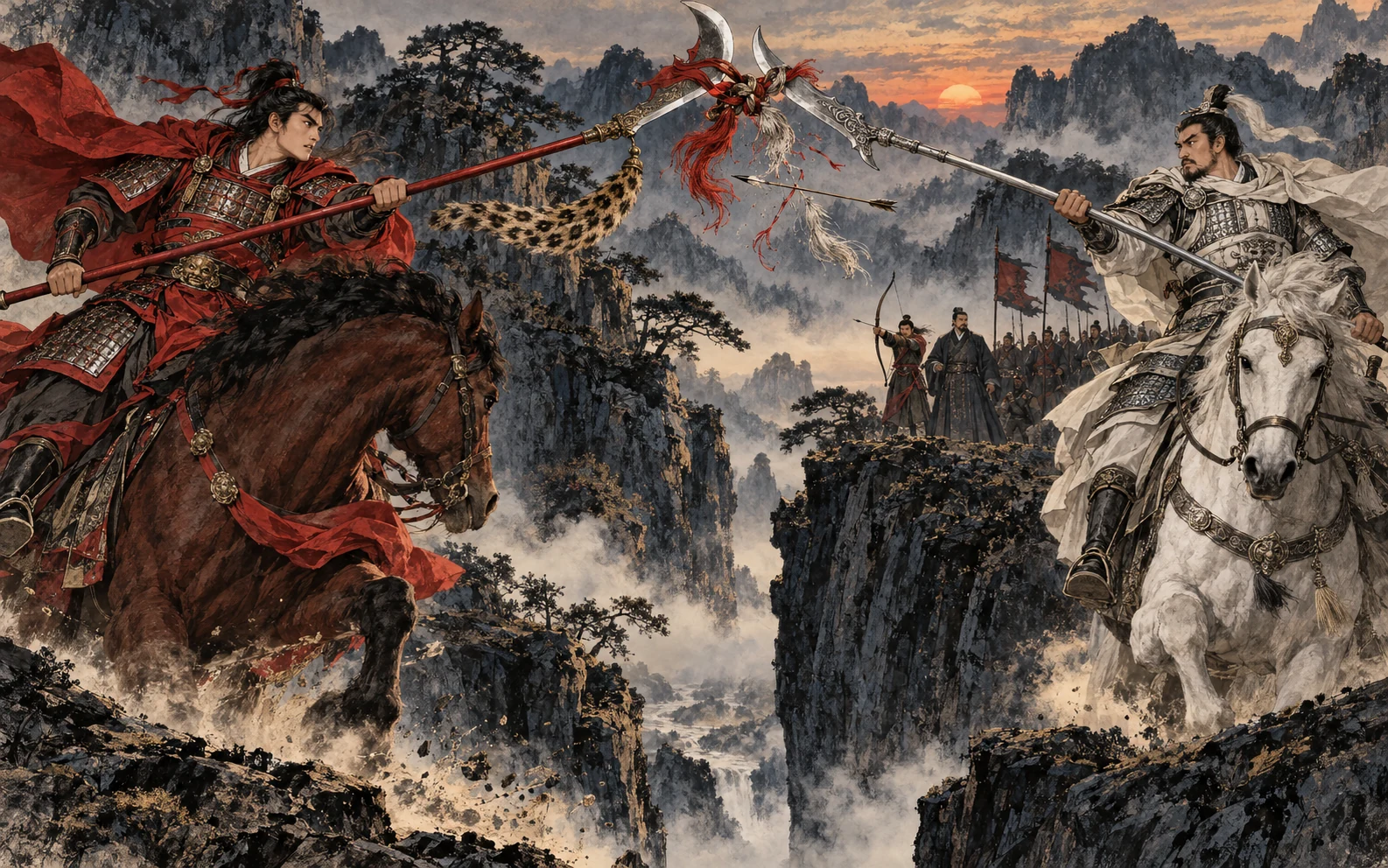
Ding Desun fights Lü Fang and Guo Sheng outside Dongchang, refusing to throw away his fork. Yan Qing aims lower: the bolt strikes a hoof, the horse falls, and the lieutenant is taken alive.
The second rider behind the stones
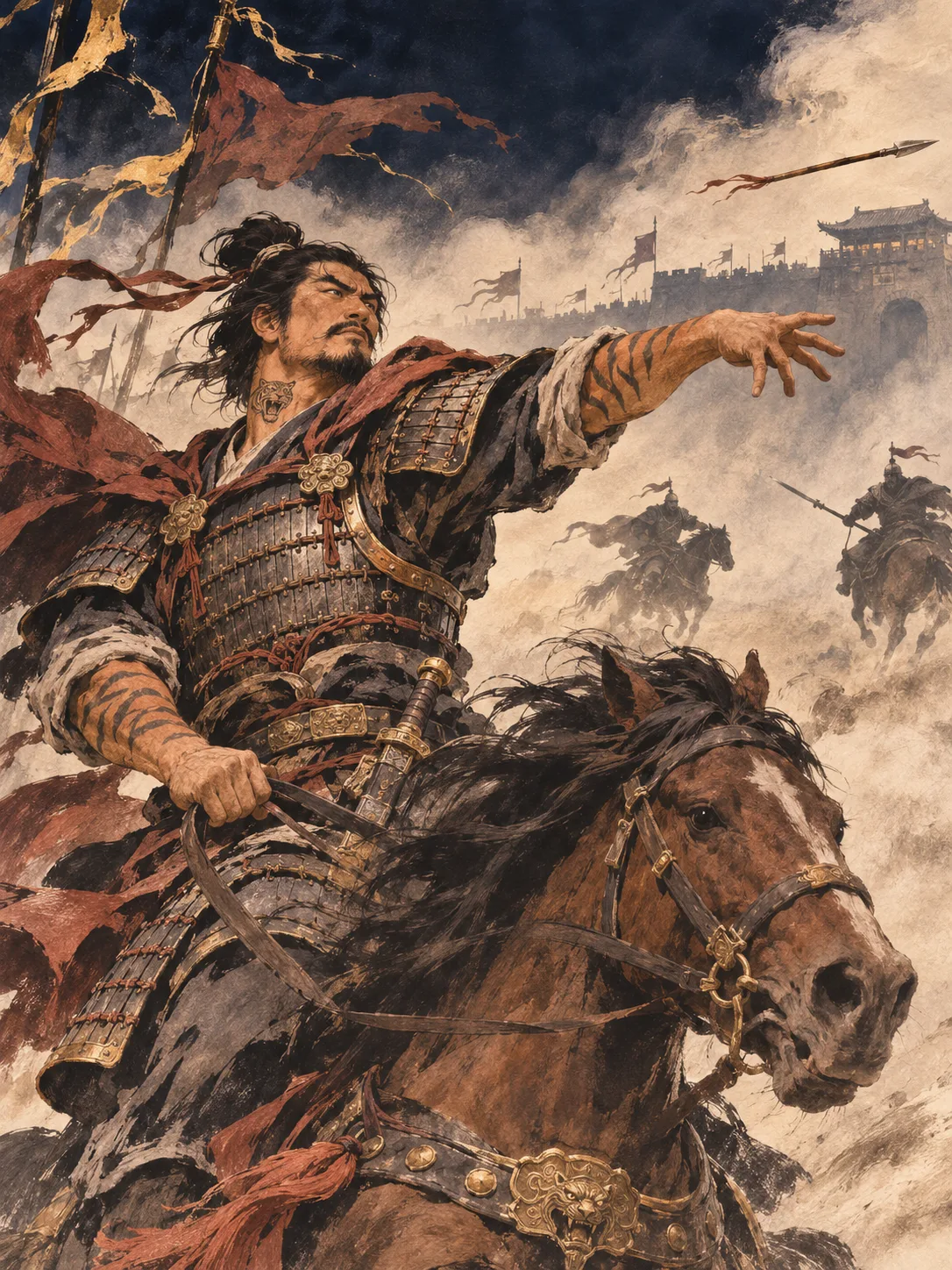
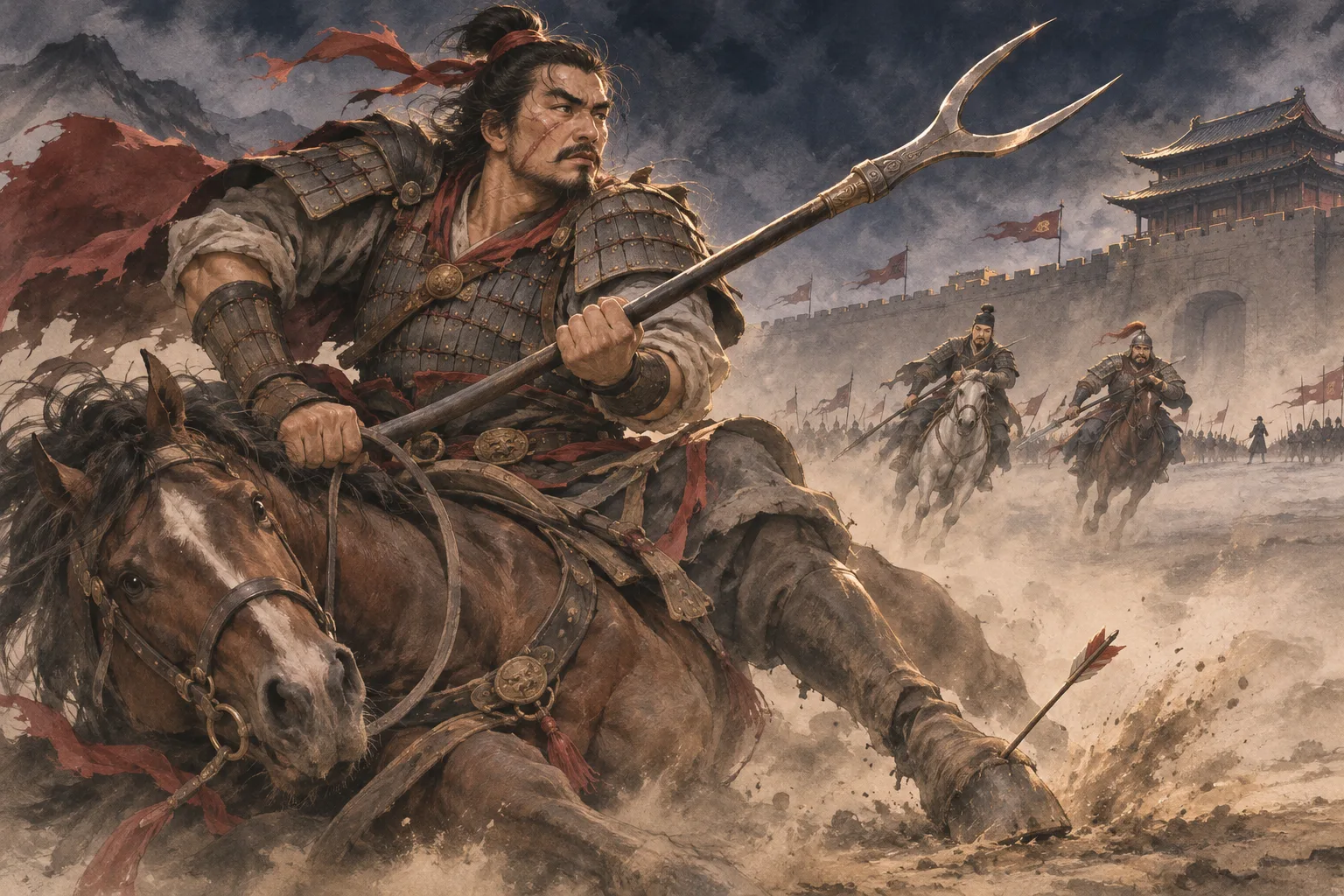
Ding Desun serves at Dongchang under Zhang Qing, alongside Gong Wang. The novel marks his cheeks and neck with scars and calls him the Arrow-Struck Tiger. It does not explain when the wounds were made. His weapon is a fork that he can use or throw from horseback.
Zhang Qing’s stones supply the defense with its unusual force, but Ding is not simply decoration behind the celebrated thrower. When a stone drops or drives back an opponent, the two lieutenants ride in to seize the man. Their exposed advance turns Zhang Qing’s accuracy into prisoners.
Before Song Jiang reaches Dongchang, Ding has already shown what the fork can do. During Lu Junyi’s failed attack, he throws it into Xiang Chong’s side beneath the arm. The wound forces Liangshan to pull back again. The supporting fighter has his own ranged weapon and his own share in the city’s defense.
The fight changes below the saddle
When the armies meet again, Lü Fang and Guo Sheng cut Ding off from Zhang Qing. He does not throw away the fork. The text says he holds on to it and fights the two halberd riders with all his strength. The contest in front of him is already two against one.
Yan Qing watches from Liangshan’s line and uses a crossbow. He does not aim at Ding’s body. The bolt strikes one of the horse’s hooves, the animal falls, and Lü Fang and Guo Sheng take the rider alive. The decisive attack arrives from beyond the opponents Ding is resisting.
Ding is sent to Liangshan with Gong Wang. After Zhang Qing is captured and Dongchang falls, the two former lieutenants enter the brotherhood with their commander. The novel records their submission but gives Ding no private speech explaining the change. At the assembly he ranks seventy-ninth as the Earthly Speed Star and serves among the junior infantry officers.
What endurance cannot cover
Ding’s capture is not a lesson that persistence is useless. Keeping the fork matters: unlike Gong Wang, he is not left unarmed by a missed throw, and two riders still have to contain him. The reversal comes because endurance against the visible danger cannot protect the horse from a third man’s bolt.
This makes the scene a question about the limits of the contest a person can see. Ding is fighting the men in front of him; Yan Qing changes the ground beneath that fight. That is our interpretation of the action, not a claim that the novel records Ding’s thoughts.
His death in Chapter 118 is even less like a formal duel. While Lu Junyi’s force moves through a mountain road toward Shezhou, Ding is bitten on the foot by a venomous snake in the grass. The poison enters his body and kills him. The novel gives the event in one sentence: a man who survived scars, forks, stones and campaigns is lost to a danger the army was not fighting.
How do you prepare for the danger that does not come from the contest in front of you?
What part of Ding Desun’s story stays with you?
Reading Ding Desun.
Who is Ding Desun in Water Margin?
Ding Desun is a dongchang lieutenant, mounted fork fighter and Liangshan infantry officer, known as Arrow-Struck Tiger. The novel places this character 79 in the assembly of the 108 heroes. That rank is not a judgment of moral worth.
How does Ding Desun die in Water Margin?
In Chapter 118 of the 120-chapter text, Ding Desun is bitten on the foot by a venomous snake in the grass along a mountain road. The poison enters his body and he dies before Lu Junyi’s force advances on Shezhou.
Published · Updated
Written by Liangshan Lore, based on Water Margin (Shuihu Zhuan), traditionally attributed to Shi Nai’an. The novel follows an outlaw brotherhood in a fictionalized Song-dynasty setting. It is literature, not a record of each character’s historical life.
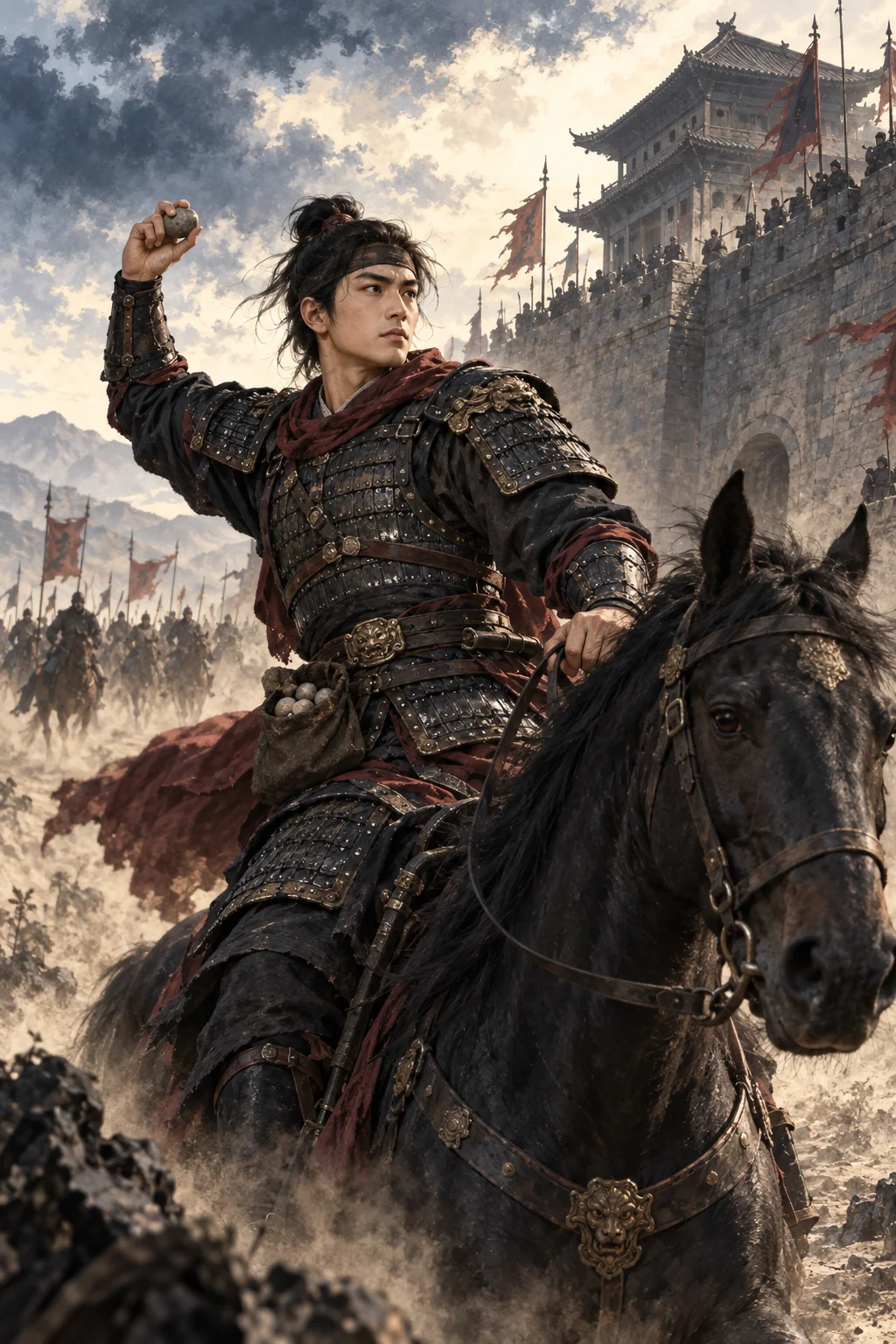
Chapter references below follow the 120-chapter Chinese edition. Other editions and English translations differ in chapter numbering, names, and endings. These are original English summaries, not quotations from a modern translation. The reflection above is our interpretation. Artwork is a concept illustration.
Continue in English.
These credited resources offer further reading, listening, publication context, or museum evidence. Chinese Lore is an English retelling with transcripts and audio, not a line-by-line translation; podcast episode numbers differ from novel chapters.
Chinese original · text & chapter references
Primary-text references for checking the plot and edition. These pages are in Chinese.