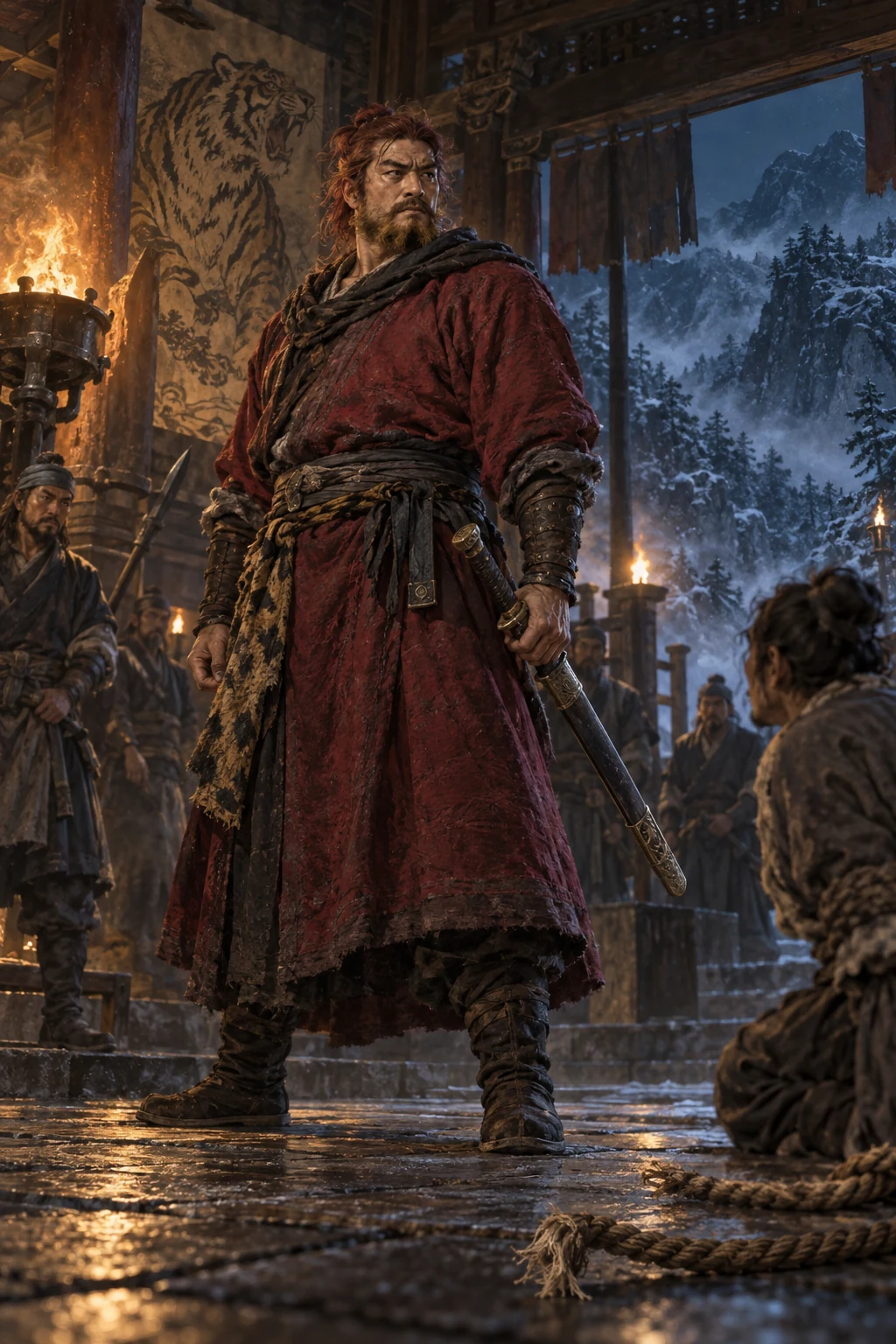
Lü Fang吕方
Little Marquis of Wen
The contest cannot end until someone outside it intervenes.
Lü Fang and Guo Sheng have fought for more than ten days. When their halberds lock together above a ravine, one arrow changes the argument.
A name and weapon borrowed from an older hero
Lü Fang comes from Tanzhou and trades in medicinal goods. When the business loses its capital in Shandong, he cannot return home. He occupies one of the paired peaks at Duiying Mountain and lives by robbery instead. The novel gives the financial loss as the turn in his road; it does not tell us what he thought about it.
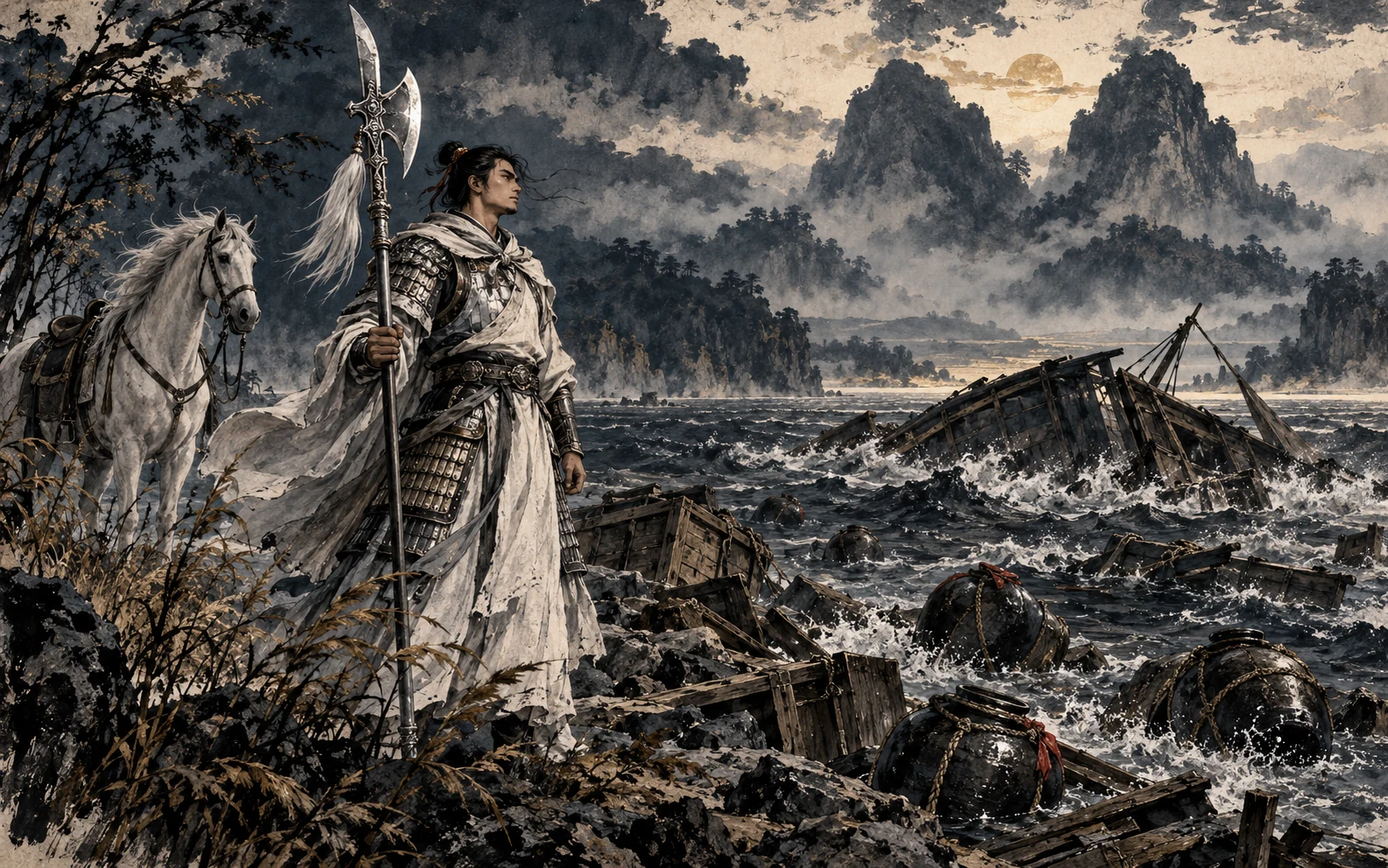
He admires Lü Bu, the late-Han warrior later made famous by Three Kingdoms stories. Lü Fang learns to use a fangtian huaji, the same kind of halberd associated with that older figure, and becomes known as the Little Marquis of Wen. Red clothes, a red horse and a red-painted weapon make the imitation visible before he says his name.
Then Guo Sheng arrives with another halberd and another nickname drawn from a celebrated general. He wants to compare skill and take the stronghold. Lü Fang offers to divide the two peaks, but Guo Sheng refuses. They ride down each day and fight without settling which man should yield.
An arrow between two equal claims
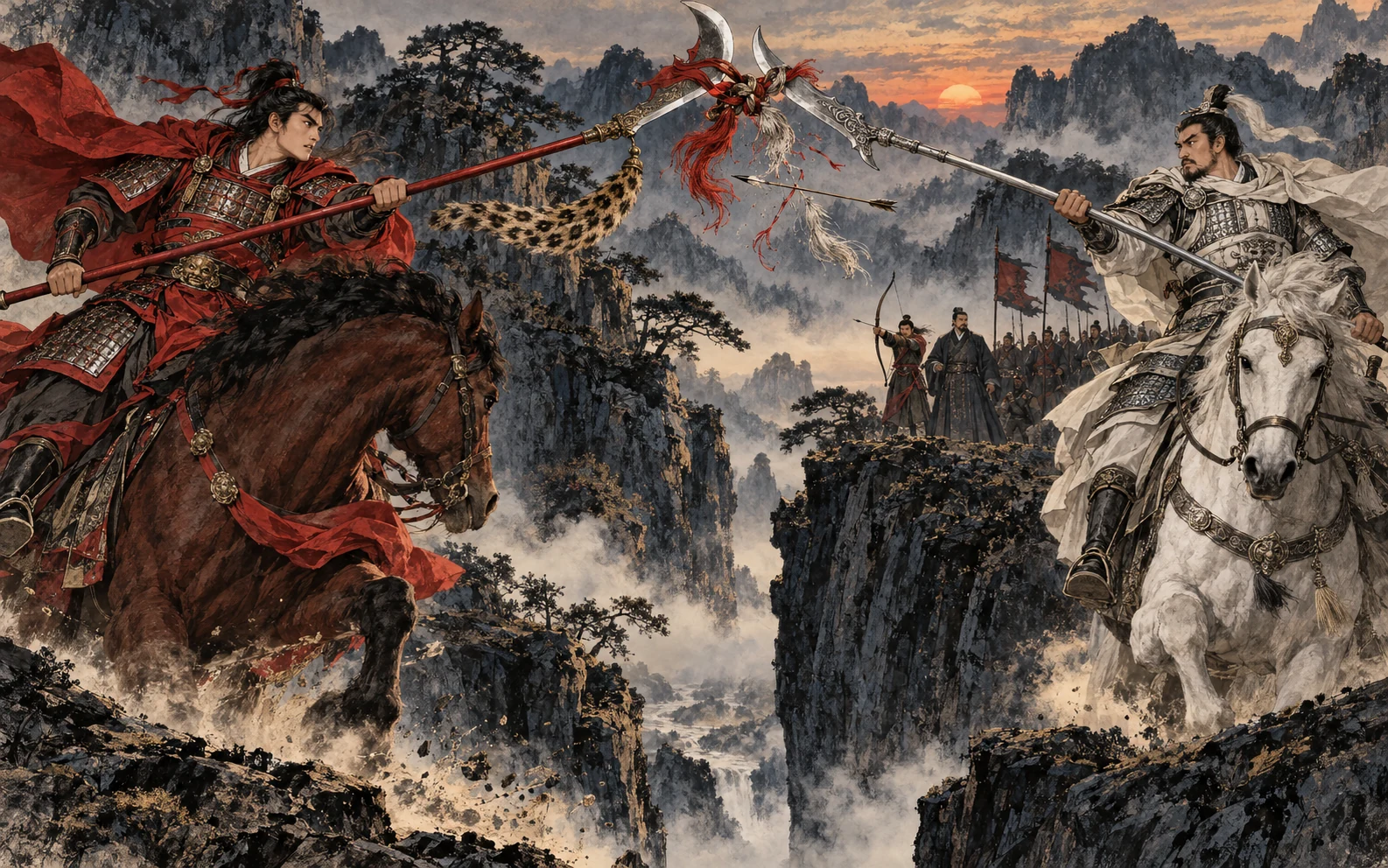
Song Jiang and Hua Rong find the two companies facing one another below the mountains. Lü Fang in red and Guo Sheng in white meet for more than thirty exchanges. Neither gains the advantage. The decorations tied beneath their halberd blades finally twist into one knot, leaving both weapons caught together above the ravine.
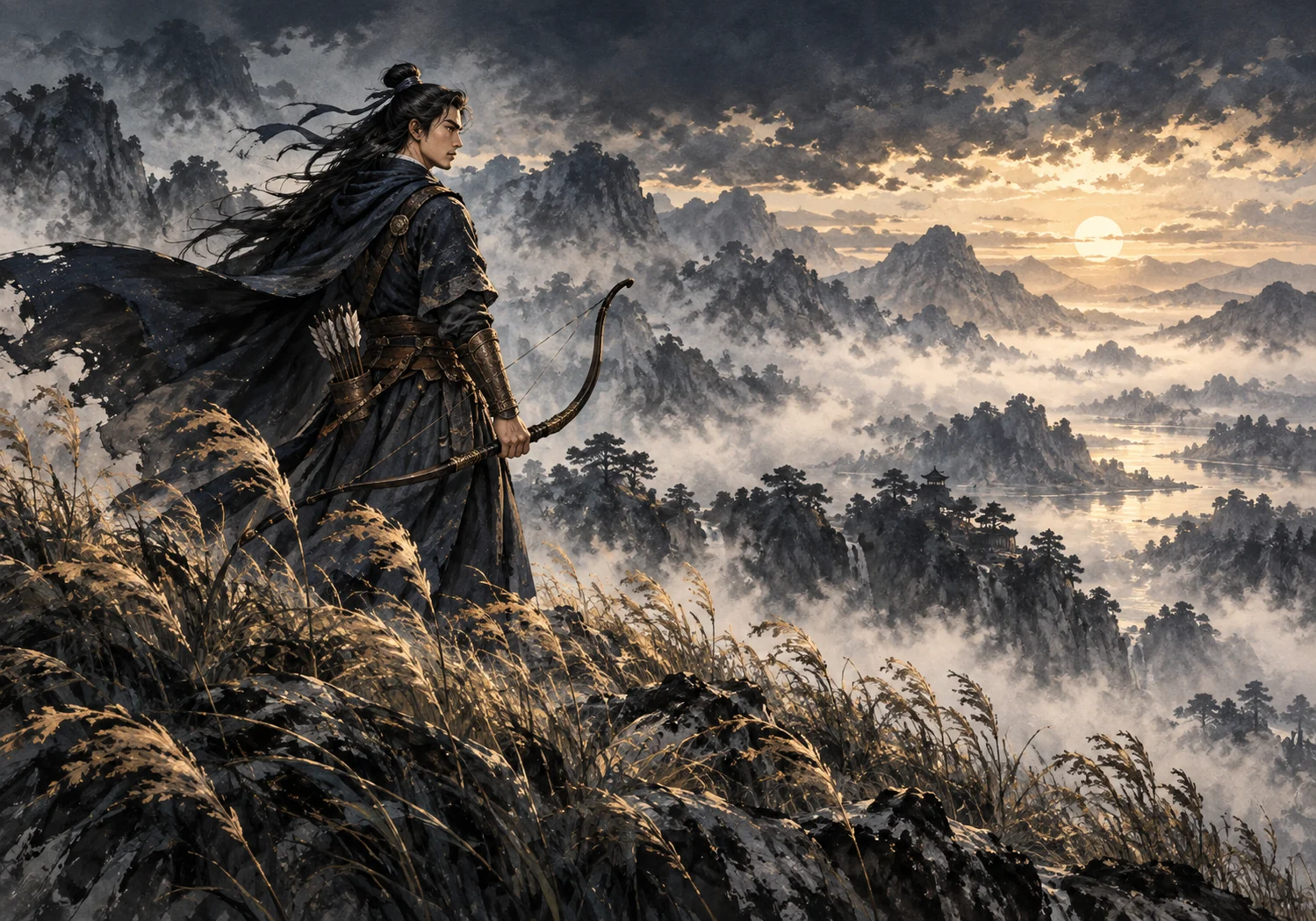
Hua Rong does not join the duel. From horseback, he sends one arrow through the tangled cords and cuts them apart. The shot releases both men without awarding victory to either. Lü Fang and Guo Sheng stop fighting, ride over to learn the archer’s name and then hear who has been traveling beside him.
Song Jiang proposes peace. The two leaders accept, feast with the travelers on their separate peaks and agree to take their people toward Liangshan. What ten days of matched strength could not decide, a precise interruption turns into a shared route.
When resemblance becomes a trap
Lü Fang has already built a public identity from resemblance: his weapon, color and title recall Lü Bu. Guo Sheng approaches with a parallel claim of his own. Their similarity gives them something to contest, but it does not provide a way to finish the contest.
Hua Rong’s arrow matters because it separates the men rather than defeating either one. The episode allows them to keep their skill while abandoning the demand that only one version can remain. At Liangshan they become a pair, serving as mounted guards beside Song Jiang and ranking next to one another.
The later campaign does not protect that partnership. At Wulong Ridge, a falling stone kills Guo Sheng. Lü Fang meets Bai Qin in close combat; their weapons are knocked aside, they grapple on unstable ground, and both riders and horses roll down the steep slope to their deaths. The paired careers end in the same battle, but not in the duel that first defined them.
When does proving you are the one become less useful than finding a way forward together?
What part of Lü Fang’s story stays with you?
Reading Lü Fang.
Who is Lü Fang in Water Margin?
Lü Fang is a leader of Duiying Mountain and Liangshan central-guard cavalry officer, known as Little Marquis of Wen. The novel places this character 54 in the assembly of the 108 heroes. That rank is not a judgment of moral worth.
Why is Lü Fang called the Little Marquis of Wen?
Lü Fang models himself on Lü Bu, whose title was Marquis of Wen, and trains with the fangtian huaji associated with that earlier warrior. The nickname marks that deliberate imitation.
Published · Updated
Written by Liangshan Lore, based on Water Margin (Shuihu Zhuan), traditionally attributed to Shi Nai’an. The novel follows an outlaw brotherhood in a fictionalized Song-dynasty setting. It is literature, not a record of each character’s historical life.
Chapter references below follow the 120-chapter Chinese edition. Other editions and English translations differ in chapter numbering, names, and endings. These are original English summaries, not quotations from a modern translation. The reflection above is our interpretation. Artwork is a concept illustration.
Continue in English.
These credited resources offer further reading, listening, publication context, or museum evidence. Chinese Lore is an English retelling with transcripts and audio, not a line-by-line translation; podcast episode numbers differ from novel chapters.
Chinese original · text & chapter references
Primary-text references for checking the plot and edition. These pages are in Chinese.