Law, Corruption, and Justice in Water Margin
A legal charge can be manufactured. A jailer can be bribed in either direction. A man may find friends inside the system and still have no safe appeal against the person above it.
The problem is not an absence of institutions
Water Margin is crowded with courts, warrants, seals, escorts, prisons, military offices, and written judgments. Characters do not live beyond government reach. They live inside institutions whose procedures can be redirected by status, money, kinship, and fear.
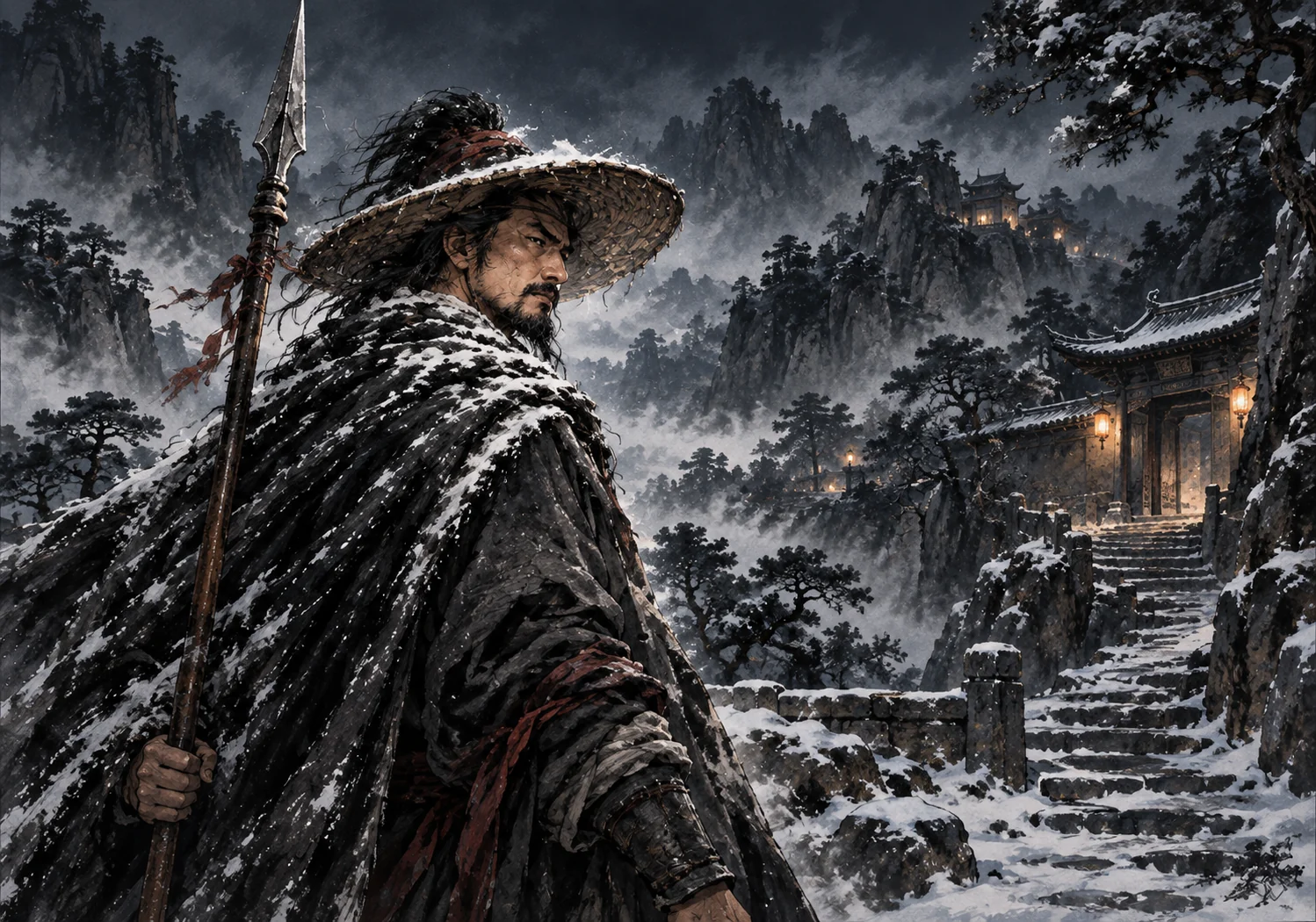
Lin Chong’s enemies do not simply attack him in the street. They lure him into a restricted hall with a sword and turn the staged entrance into an official accusation. Exile then provides another opportunity to arrange his death. The form of law remains visible while its protection has been emptied out.
Power travels through patrons and local agents
Gao Qiu’s position protects his household and gives weight to the people who act for it. Elsewhere, county officials, prison wardens, wealthy families, and military commanders control smaller territories. A victim may face not one corrupt person but a chain of people who benefit from compliance.
Bribes do not always move in the same moral direction. Money may buy torture, but friends may also pay jailers to keep a prisoner alive. Zhu Tong releases Song Jiang out of personal obligation. Cai Fu helps protect Lu Junyi after gifts and appeals reach him. Informal mercy can soften injustice without repairing the institution.
When appeal fails, justice becomes personal
Wu Song gathers evidence after his brother’s death and first takes it to the county. When the case does not proceed, he kills those he holds responsible. The sequence matters: the revenge follows a failed appeal, but failure does not turn every later killing into lawful judgment.
Outlaw rescues work through the same shift from procedure to force. The Jiangzhou execution is stopped because armed companions attack the site, not because the sentence is reviewed. A life is saved; other people in the crowd and city face the violence of the rescue.
Liangshan creates rules of its own
The stronghold distributes duties, records supplies, rewards service, and imposes command. It claims to act on Heaven’s behalf against abusive officials. Its proclamations distinguish corrupt authorities from worthy people and promise protection to some civilians.
Practice is less controlled than the claim. Campaigns produce deaths and destruction. Recruitment schemes can frame or dispossess the person being recruited. Liangshan offers an alternative order, but not a space outside power.
The novel tests legitimacy rather than solving it
If officials can be criminal and outlaws can perform justice, legal status cannot settle moral judgment. Yet the reverse is also true: calling an act righteous does not erase coercion or victims.
The tension becomes sharpest when Song Jiang seeks amnesty. The brotherhood wants the state to recognize people whom its institutions condemned. Their return to imperial service asks whether legitimacy can be restored without changing the structures that failed them.
If a system follows procedure while serving power, where can a just appeal begin?
Which part of the story speaks to you? Tell us as we shape the complete 108-card collection.
Original English writing by Liangshan Lore, based on the Chinese novel Water Margin, traditionally attributed to Shi Nai’an. Plot references follow the 120-chapter Chinese edition; names, chapter numbering, and endings can vary between editions and translations. Sections marked “Our reading of the story” offer our interpretation. The characters and events belong to fiction; concept illustrations are not historical portraits.
Continue in English.
These credited resources offer further reading, listening, publication context, or museum evidence. Chinese Lore is an English retelling with transcripts and audio, not a line-by-line translation; podcast episode numbers differ from novel chapters. CUHK Press links introduce published English translations.
Chinese original · text & chapter references
Primary-text references for checking the plot and edition. These pages are in Chinese.
Lin ChongPanther Head · illustrated character story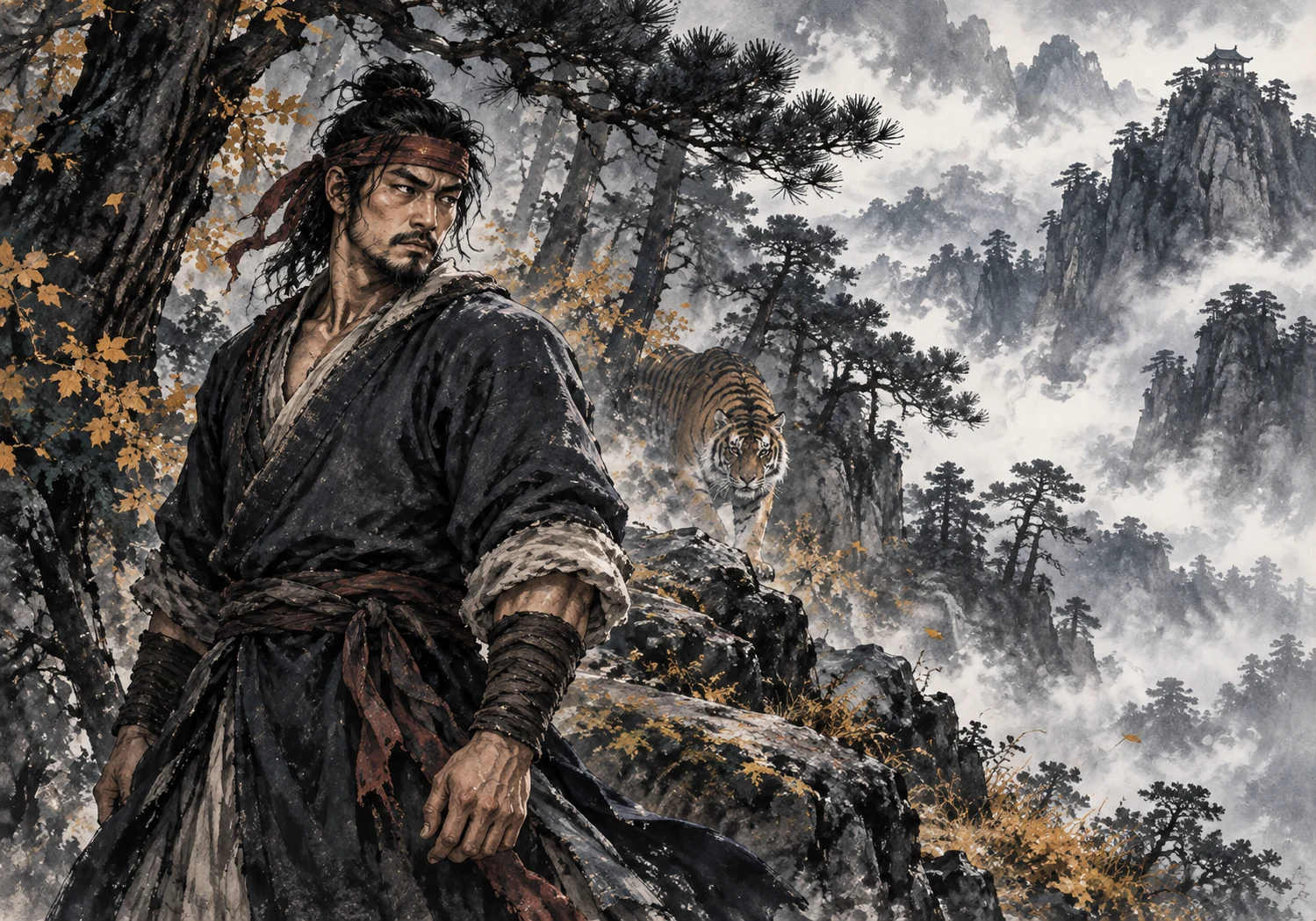 Wu SongTiger Slayer · illustrated character story