How Did Liangshan Become an Outlaw Stronghold?
Liangshan does not begin with 108 seats waiting to be filled. It begins as a small refuge whose leader fears strong newcomers—and grows because each new arrival changes what the place can do.
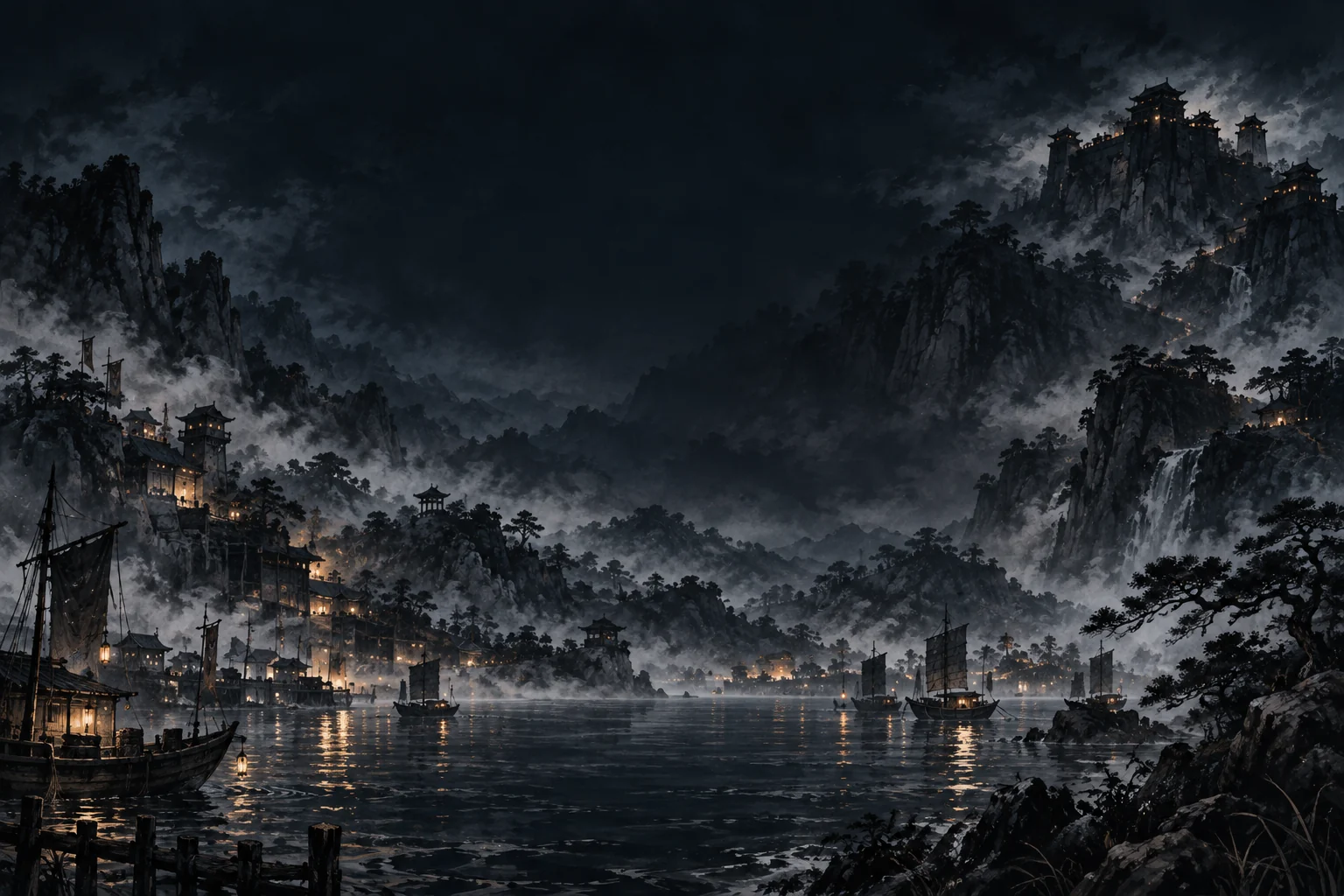
Wang Lun protects a small and fragile refuge
When Lin Chong reaches Liangshan, the stronghold already exists under Wang Lun. Boats, signals, and difficult approaches give it protection. Yet Wang Lun worries that a capable officer will threaten his own position and tries to send Lin away with an initiation demand.
This first Liangshan is not yet the celebrated brotherhood. It is a guarded refuge with a narrow leadership. The scene establishes a problem that will return throughout the novel: sanctuary can offer freedom from one hierarchy while creating another inside its gates.
The birthday-gift robbers force a change of leadership
Chao Gai, Wu Yong, Gongsun Sheng, the Ruan brothers, Liu Tang, and Bai Sheng steal a convoy of valuables intended for a powerful official. Once the plan is exposed, most of the group escapes toward Liangshan. Wang Lun again resists newcomers whose reputation and numbers may exceed his own.
Lin Chong kills Wang Lun during the confrontation. Chao Gai becomes leader, and the refuge opens into a growing company. The transition is decisive but not clean: the future brotherhood begins its expansion through an internal killing as well as a language of shared cause.
Song Jiang arrives with a network already around him
Long before he joins, Song Jiang has helped people, received travelers, and built a name as Timely Rain. He secretly warns Chao Gai of arrest. Later, people protect Song Jiang when he is a fugitive and rescue him from execution at Jiangzhou.
These ties expand Liangshan beyond a defensible site. Smaller mountain bands merge with it. Former officers bring military experience; boatmen control water; artisans, healers, scribes, innkeepers, and scouts make sustained organization possible. Recruitment may come through gratitude, defeat, deception, or the destruction of a person’s former life.
The stronghold begins to resemble the world it opposes
By the time Song Jiang takes leadership after Chao Gai’s death, Liangshan has ranks, offices, supply systems, rewards, punishments, infantry, cavalry, and a water force. Chapter 71 formalizes 108 leaders in a celestial order.
Organization is necessary for survival, yet it changes the meaning of escape. People who fled abusive institutions now live inside a disciplined institution of their own. The stronghold can rescue prisoners and protect guests; it can also wage campaigns, seize property, and leave civilians with the consequences.
Liangshan becomes powerful not because everyone shares the same dream, but because very different skills and losses are made to serve one command.
Three leaders reveal three versions of Liangshan
Wang Lun treats Liangshan as something to preserve by exclusion. Chao Gai expands it through fellowship among the birthday-gift group and military success. Song Jiang turns it into a broad coalition while keeping imperial recognition in view.
The change in leaders is also a change in destination. A refuge becomes a brotherhood, then an army that seeks a negotiated return to official order. The marsh remains in the same place; the argument over what it is for never stops.
Can a refuge grow into a power without reproducing the structures people fled?
Which part of the story speaks to you? Tell us as we shape the complete 108-card collection.
Original English writing by Liangshan Lore, based on the Chinese novel Water Margin, traditionally attributed to Shi Nai’an. Plot references follow the 120-chapter Chinese edition; names, chapter numbering, and endings can vary between editions and translations. Sections marked “Our reading of the story” offer our interpretation. The characters and events belong to fiction; concept illustrations are not historical portraits.
Continue in English.
These credited resources offer further reading, listening, publication context, or museum evidence. Chinese Lore is an English retelling with transcripts and audio, not a line-by-line translation; podcast episode numbers differ from novel chapters. CUHK Press links introduce published English translations.
Chinese original · text & chapter references
Primary-text references for checking the plot and edition. These pages are in Chinese.
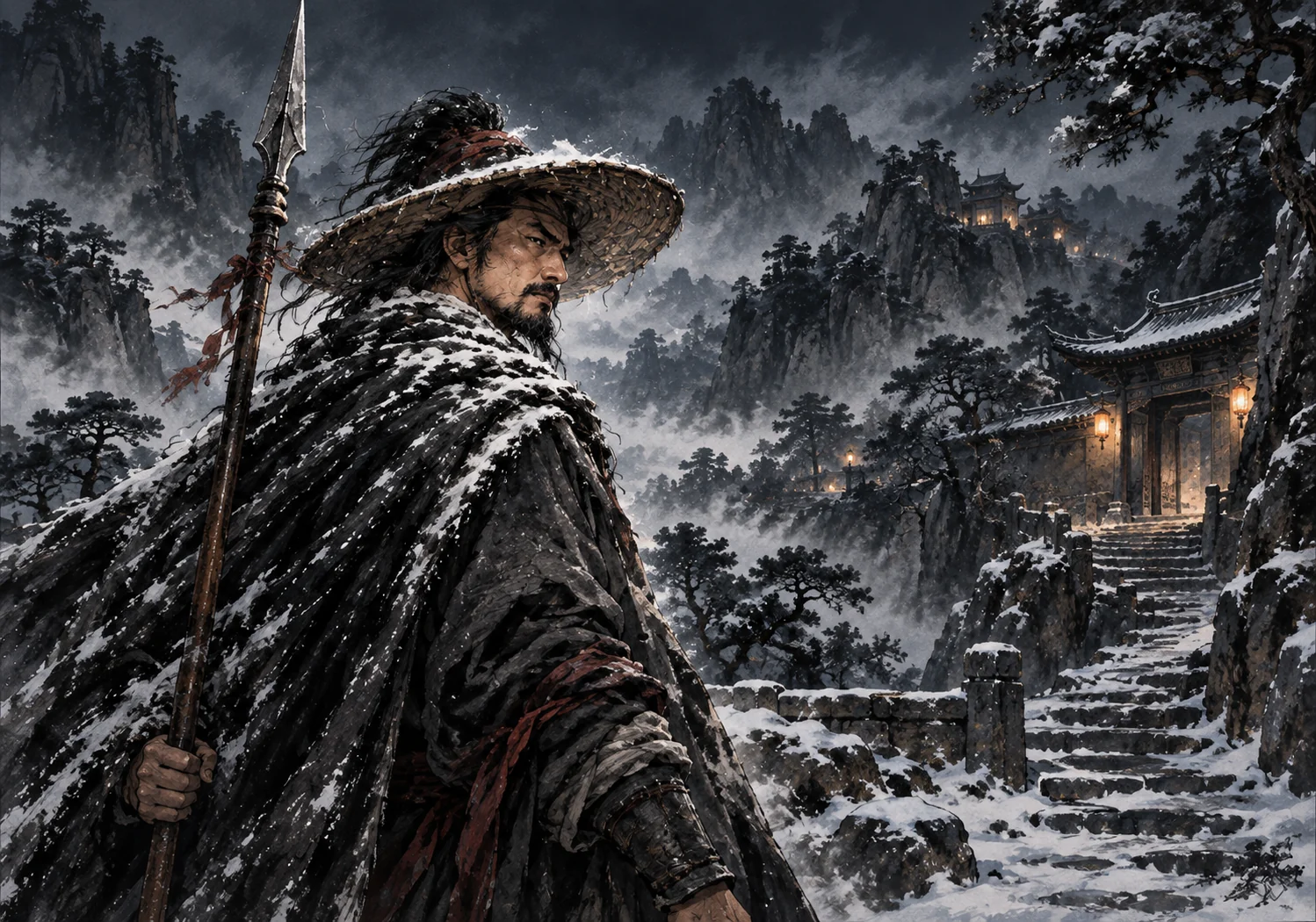 Lin ChongPanther Head · illustrated character story
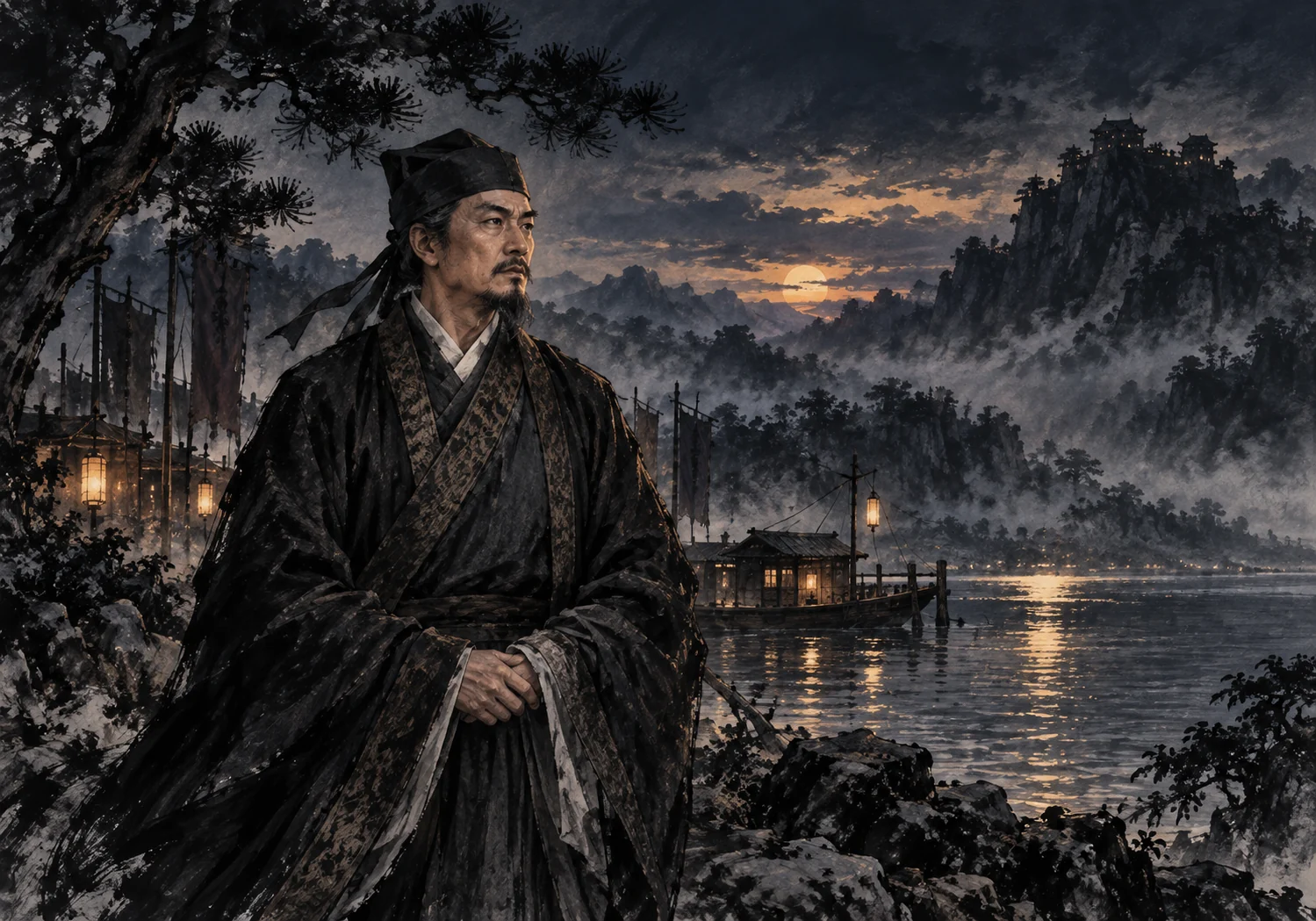 Song JiangTimely Rain · illustrated character story