When and Where Is Water Margin Set?
A capital crowded with officials. Provincial roads lined with inns, prisons, temples, and estates. A marsh where boats can disappear. The novel moves through a recognizable China, but it is not a documentary map.
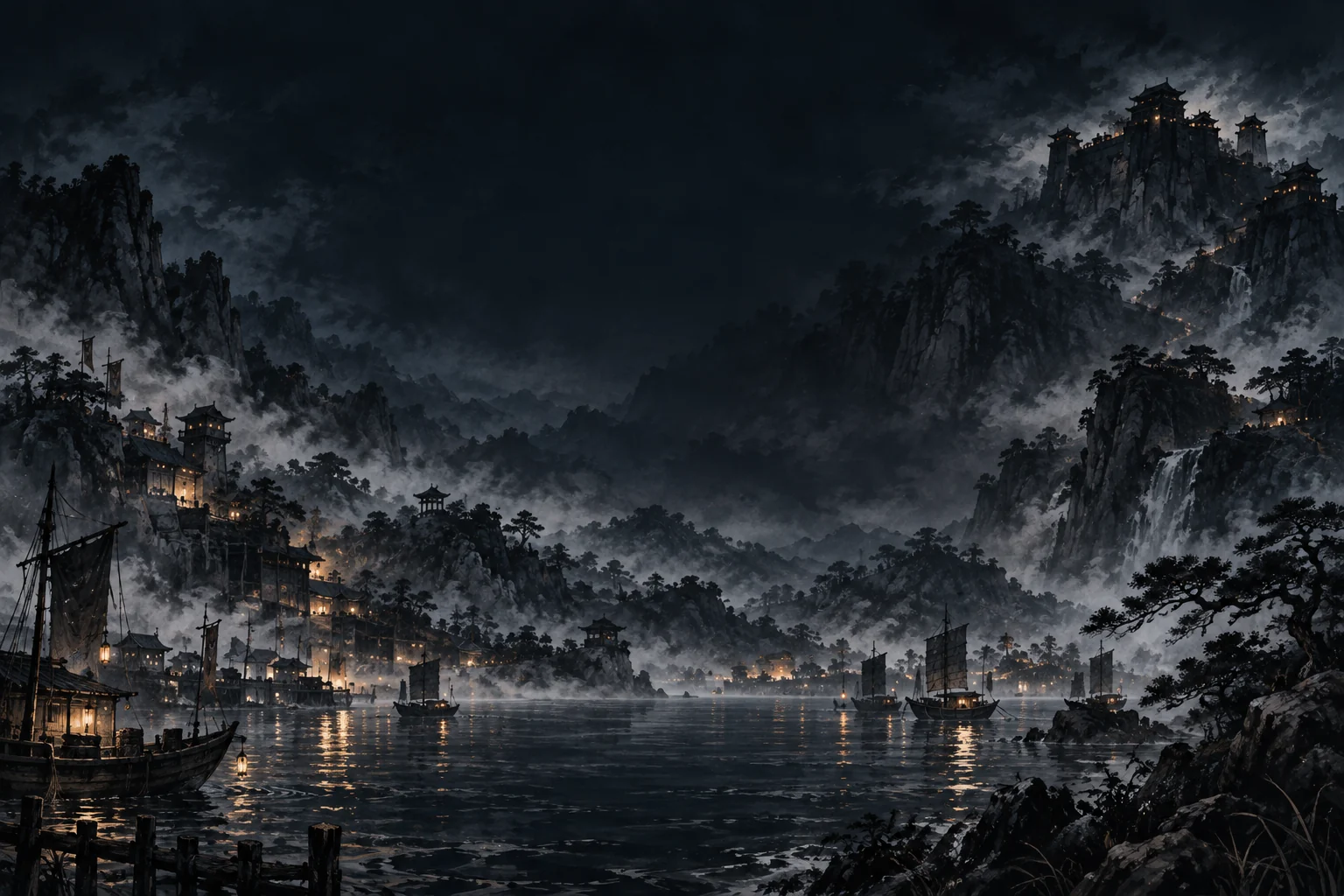
The story and the book belong to different times
Water Margin places its main action near the end of the Northern Song dynasty, in the early twelfth century. Emperor Huizong rules from the eastern capital, Bianjing—present-day Kaifeng. Song Jiang and a small band associated with him have a historical trace, but the novel’s 108-character brotherhood is a much larger work of fiction.
The book took shape centuries later, through storytelling, performance, and print. It is traditionally attributed to Shi Nai’an, while authorship and textual formation remain debated. Calling it a Ming novel and saying it is set in the Northern Song are therefore not contradictory: one describes the world of the plot; the other describes the period in which the long-form novel was formed and printed.
That distance matters. The novel looks backward at the Song court through concerns carried by later storytellers and readers. It should not be used as a transparent record of daily life in 1120.
Most lives break apart away from Liangshan
The story begins at court and on a sacred mountain, then repeatedly returns to ordinary institutions: a military post, a county office, a prison camp, a family compound, a market, a roadside wine shop. Bianjing represents imperial power, but decisions made there reach people through local officials, commanders, jailers, and wealthy households.
Movement connects the episodes. Exile sends Lin Chong north toward Cangzhou. A convoy exposes Yang Zhi on the road. Song Jiang travels through Jiangzhou before reaching the marsh. A person’s route can change at an inn or river crossing long before a battle begins.
Place is therefore part of the pressure. Distance makes news uncertain, roads create vulnerability, and local networks can protect a fugitive more effectively than formal law.
Liangshan is a landscape before it is a symbol
Liangshan Marsh lies in Shandong in the story’s geography. Water and reed-filled approaches make it difficult for an army to enter and easy for boatmen who know the channels to control movement. The stronghold is not simply a mountain isolated from society; it depends on landing places, taverns, messengers, farms, markets, and routes into nearby towns.
As the company grows, the landscape becomes organized territory. Watch posts, passes, water forces, supply work, and specialist roles turn refuge into a functioning power. The marsh protects the outlaws, but it does not feed or equip them without contact with the world beyond it.
Read historical names with caution
Emperor Huizong, the official Gao Qiu, and the rebel Fang La have historical identities. Their presence gives the fiction a historical horizon. It does not make every meeting, speech, family connection, or battle involving them a documented event.
The safest question is not “Did all of this happen?” but “What does the novel do with a remembered period?” It builds a world where official titles coexist with magic, prophetic dreams, star spirits, astonishing feats, and patterned coincidences. Real names and impossible events share the same narrative space.
Our character stories treat that space as fiction. Historical context can sharpen the reading, but it should not flatten legend into biography.
Use the map to follow pressure, not just distance
You do not need to memorize every prefecture. Start with three anchors: Bianjing for the imperial court, Shandong for Liangshan and several surrounding conflicts, and the roads and waterways that carry people between official and outlaw worlds.
When a new place appears, ask what becomes possible there. Can a warrant reach it? Does a friend control the inn? Must the traveler cross water? Is the local official tied to a more powerful patron? The answers explain why a character can be secure in one chapter and trapped in the next.
What changes when the safest place in a society lies outside its law?
Which part of the story speaks to you? Tell us as we shape the complete 108-card collection.
Original English writing by Liangshan Lore, based on the Chinese novel Water Margin, traditionally attributed to Shi Nai’an. Plot references follow the 120-chapter Chinese edition; names, chapter numbering, and endings can vary between editions and translations. Sections marked “Our reading of the story” offer our interpretation. The characters and events belong to fiction; concept illustrations are not historical portraits.
Continue in English.
These credited resources offer further reading, listening, publication context, or museum evidence. Chinese Lore is an English retelling with transcripts and audio, not a line-by-line translation; podcast episode numbers differ from novel chapters. CUHK Press links introduce published English translations.
Chinese original · text & chapter references
Primary-text references for checking the plot and edition. These pages are in Chinese.
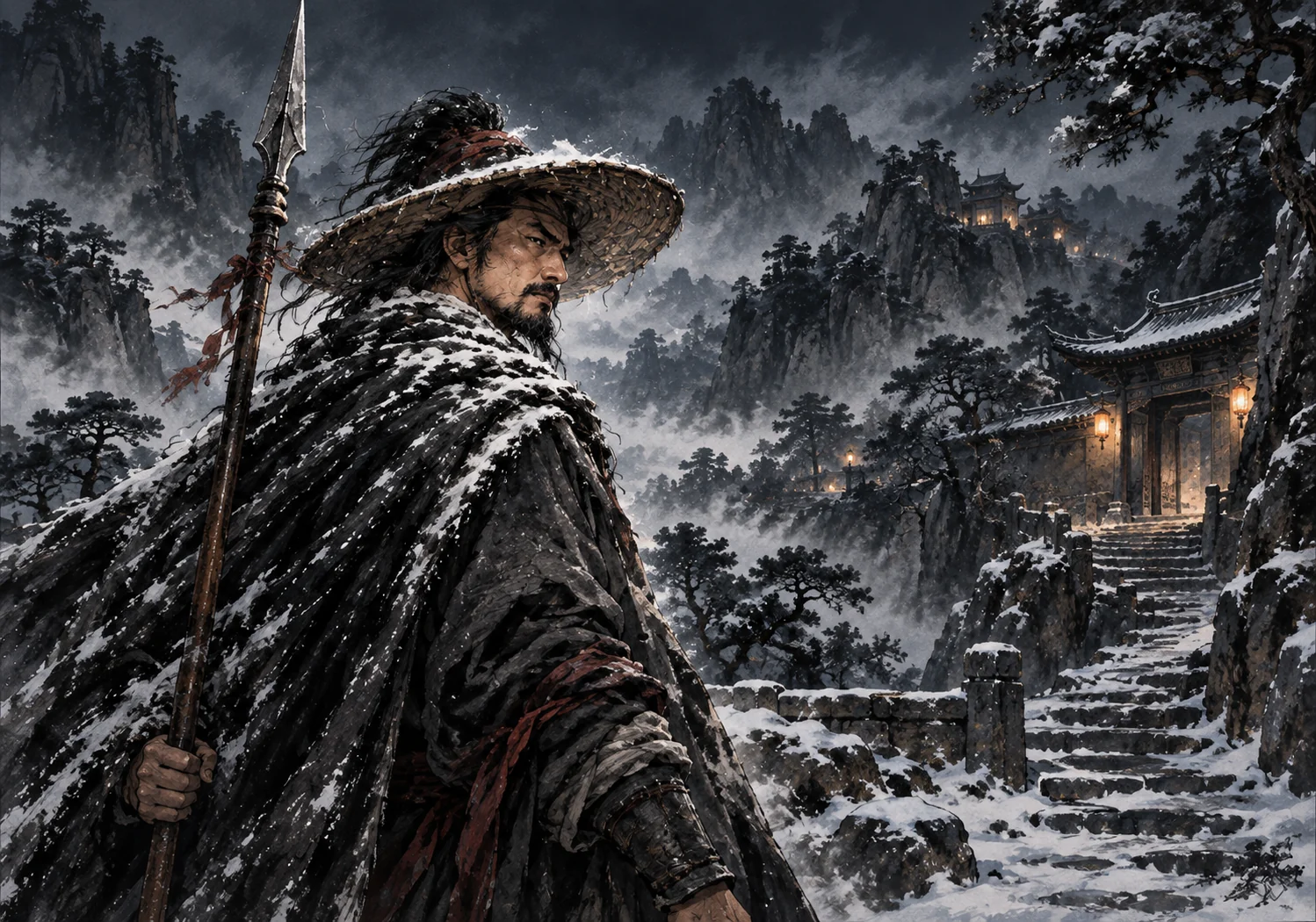 Lin ChongPanther Head · illustrated character story
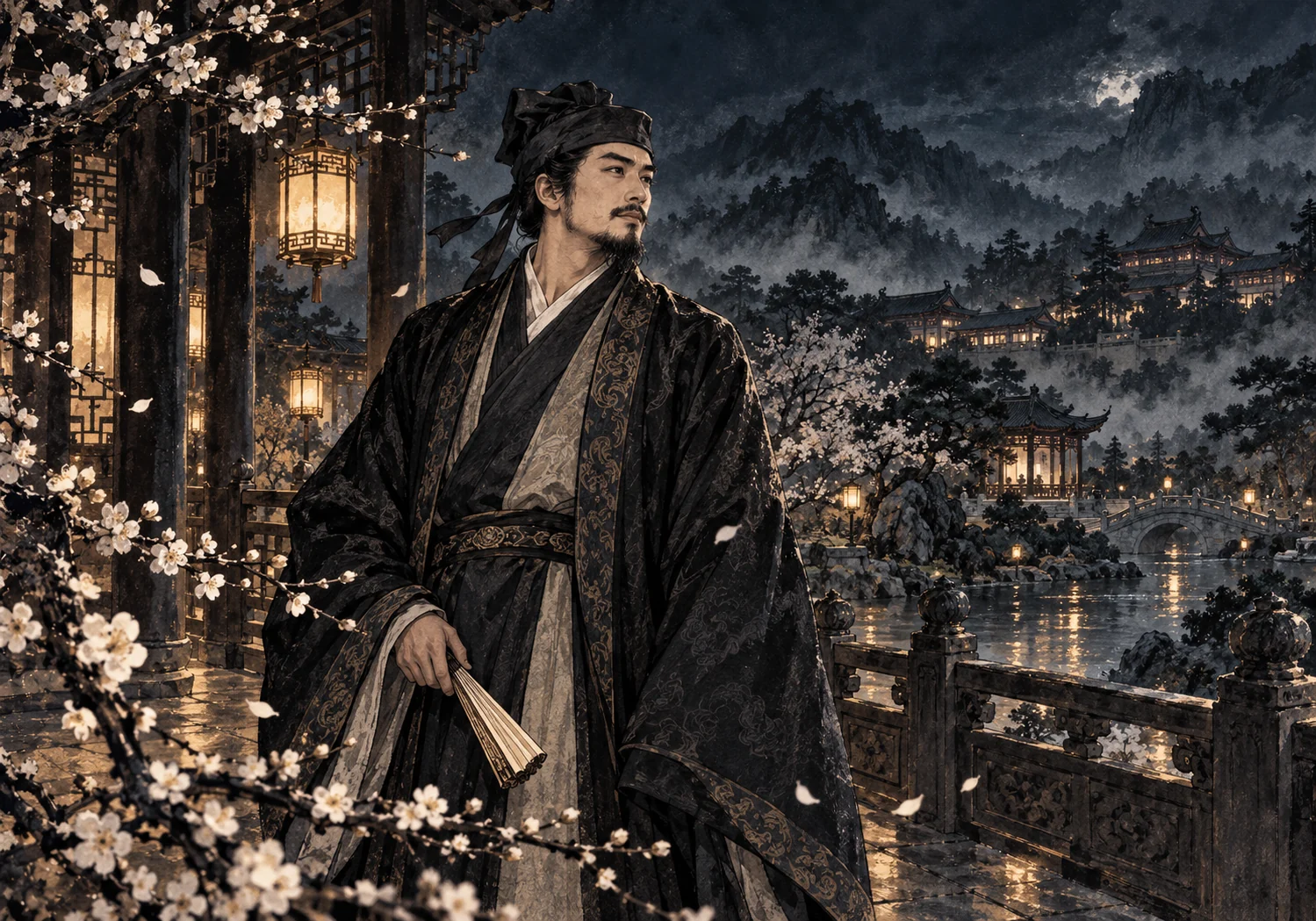 Chai JinLittle Whirlwind · illustrated character story