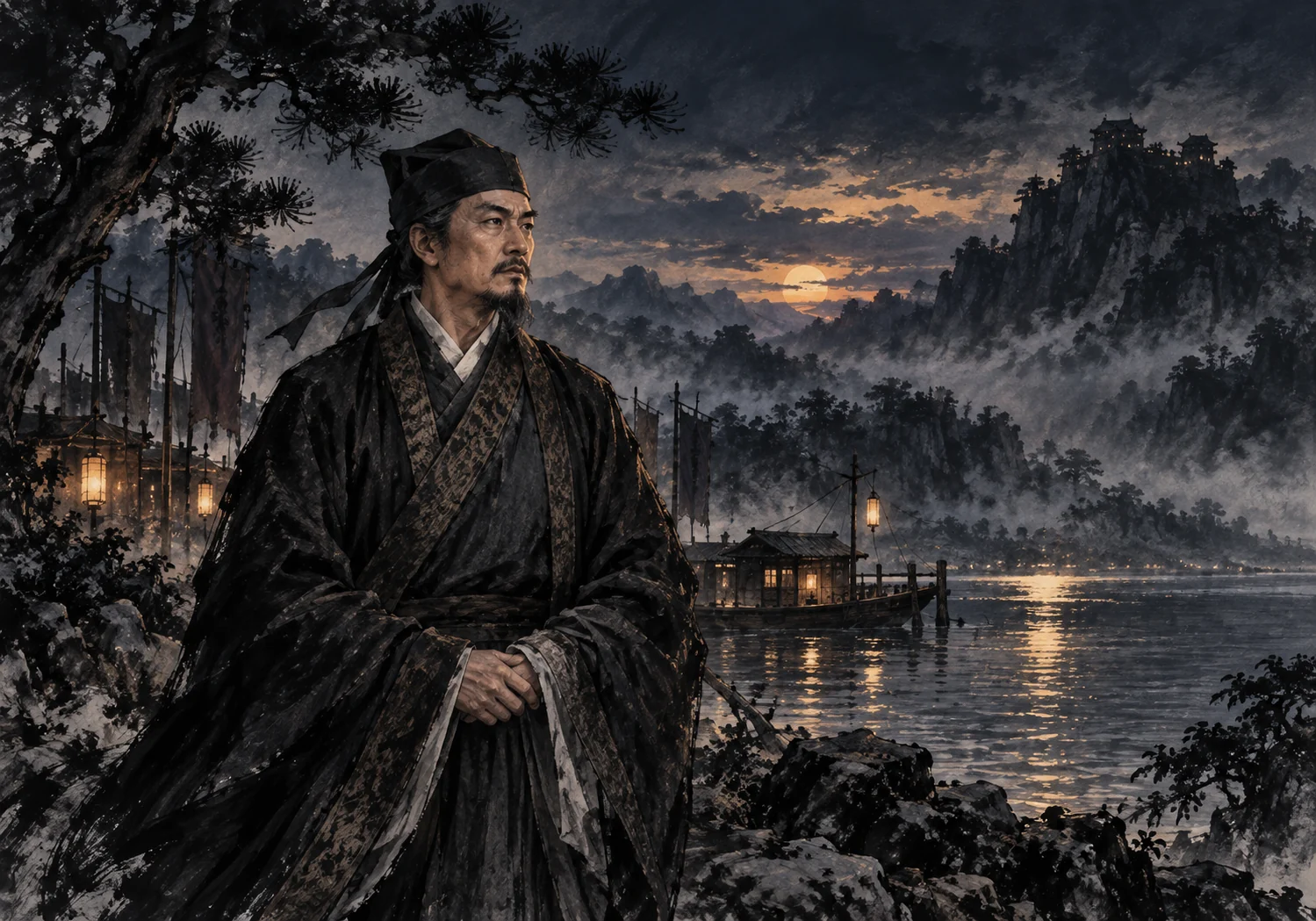
Zheng Tianshou郑天寿
Fair-Faced Gentleman
A roadside fight gives him a place. For years, the record keeps him inside the company.
Zheng Tianshou is a travelling silversmith who fights Wang Ying for more than fifty bouts. Yan Shun sees the contest and asks him to become Qingfeng Mountain’s third chief.
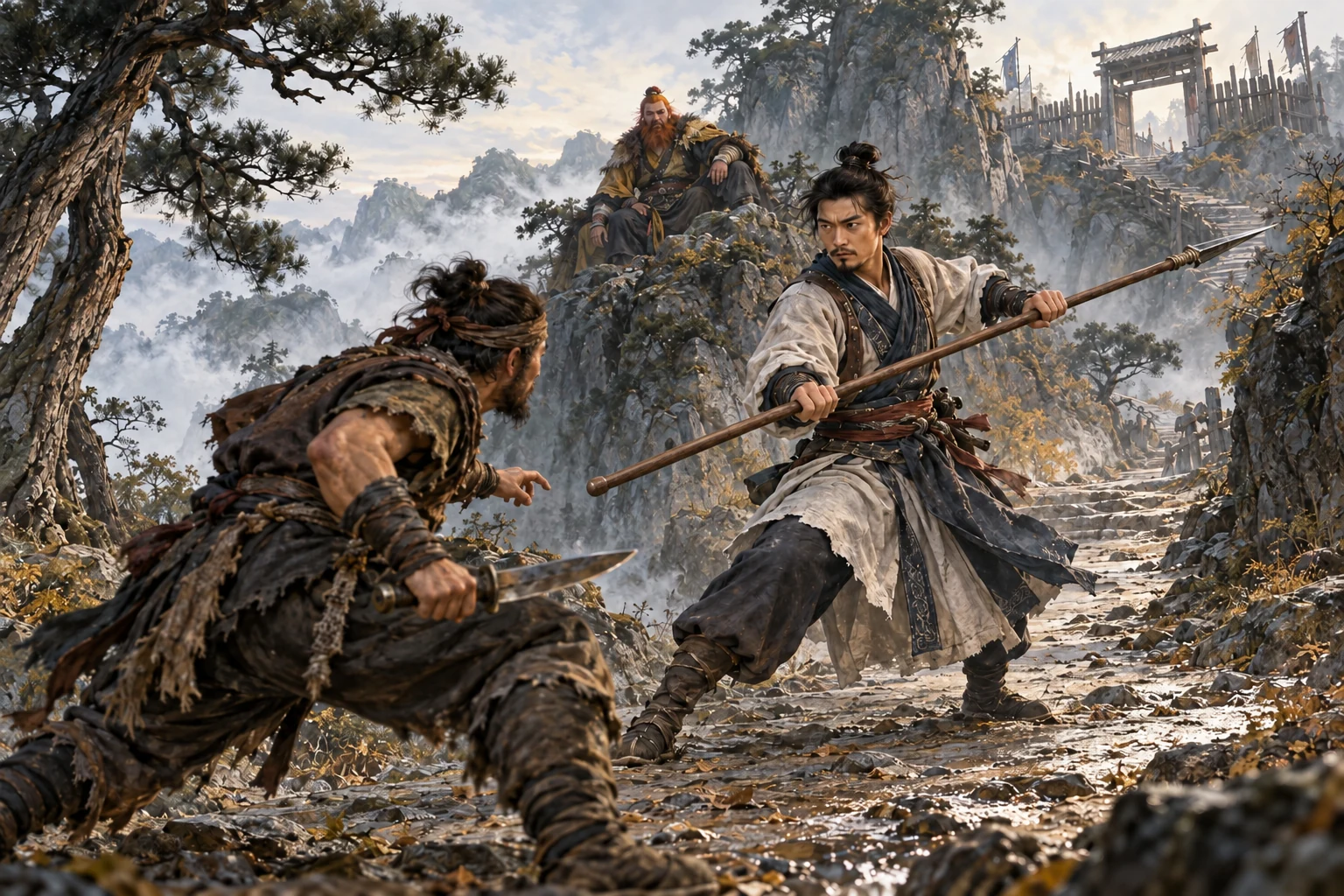
The silversmith on the mountain road
Zheng Tianshou comes from Suzhou and once makes his living as a silversmith. The novel says he has practiced with staffs and spears since childhood. His clear complexion and handsome appearance give him the name Fair-Faced Gentleman, but appearance is only the first thing the story records about him.
While travelling through the jianghu world, Zheng reaches Qingfeng Mountain. Wang Ying tries to rob him. The two fight for more than fifty bouts without a winner, turning an attempted roadside theft into a public test of skill.
Yan Shun watches the contest and asks Zheng to stay. Zheng accepts and becomes the mountain’s third chief. The text does not supply a private speech about why a working craftsman chooses the stronghold; it gives the fight, the invitation and the new place in the company.
The third chief acts with the group
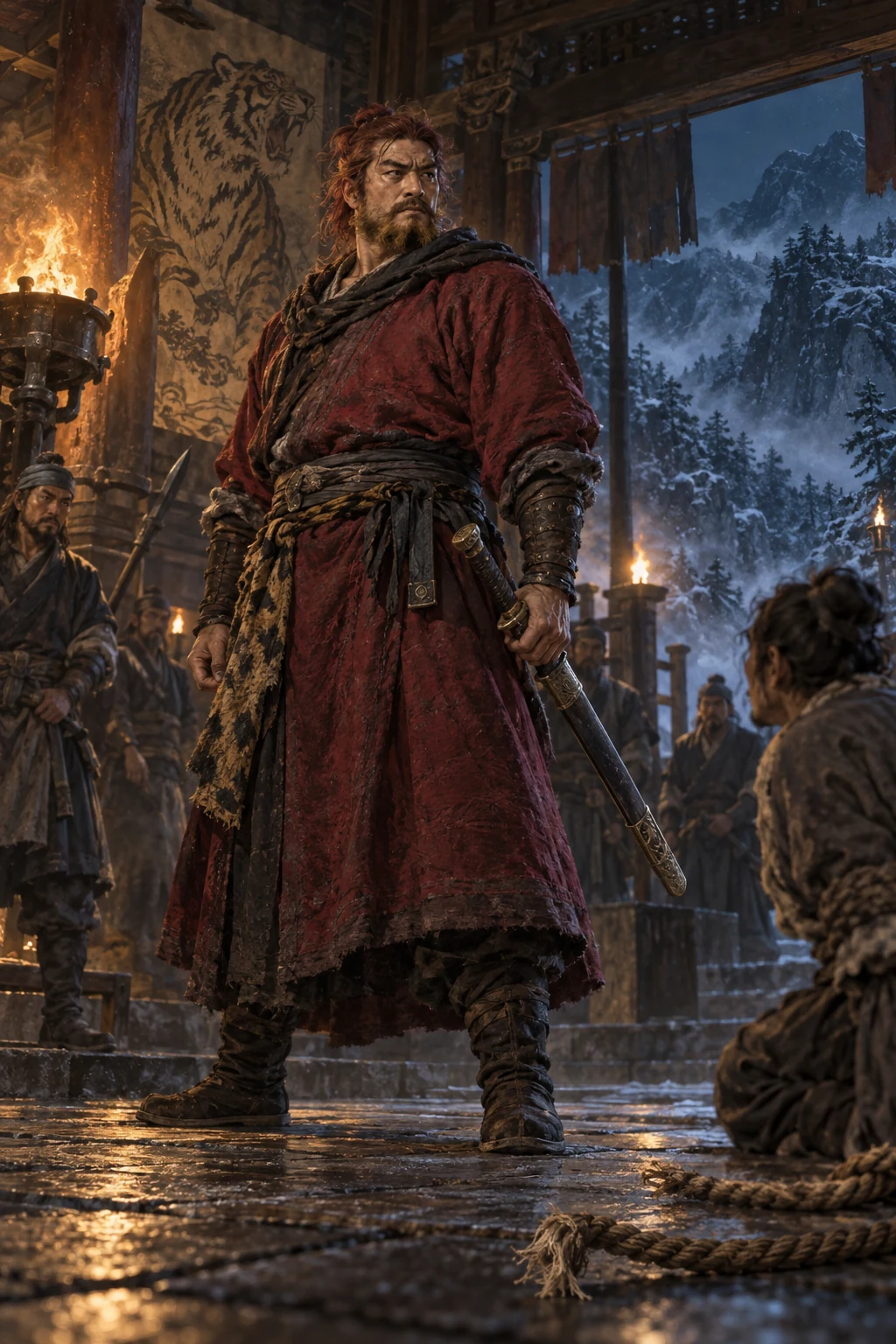
When Qingfeng’s men capture Song Jiang, Zheng sits beside Yan Shun and Wang Ying as the prisoner is prepared for death. Yan Shun recognizes Song Jiang’s name and cuts him free; all three chiefs bow to the guest. Days later, Zheng accompanies Song Jiang and Yan Shun when they intervene after Wang Ying abducts Liu Gao’s wife. The group releases her, although the stronghold’s earlier violence is not erased.
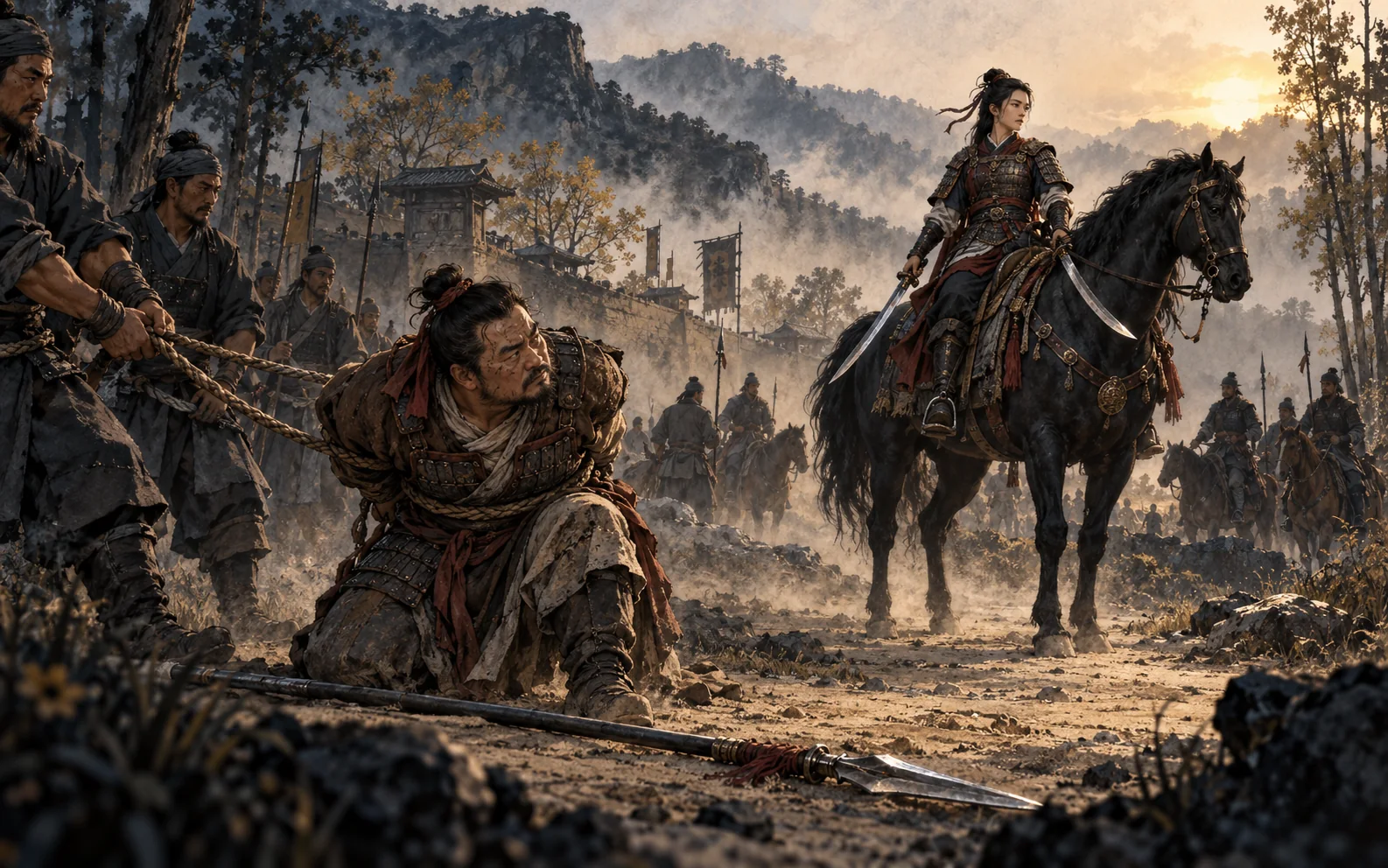
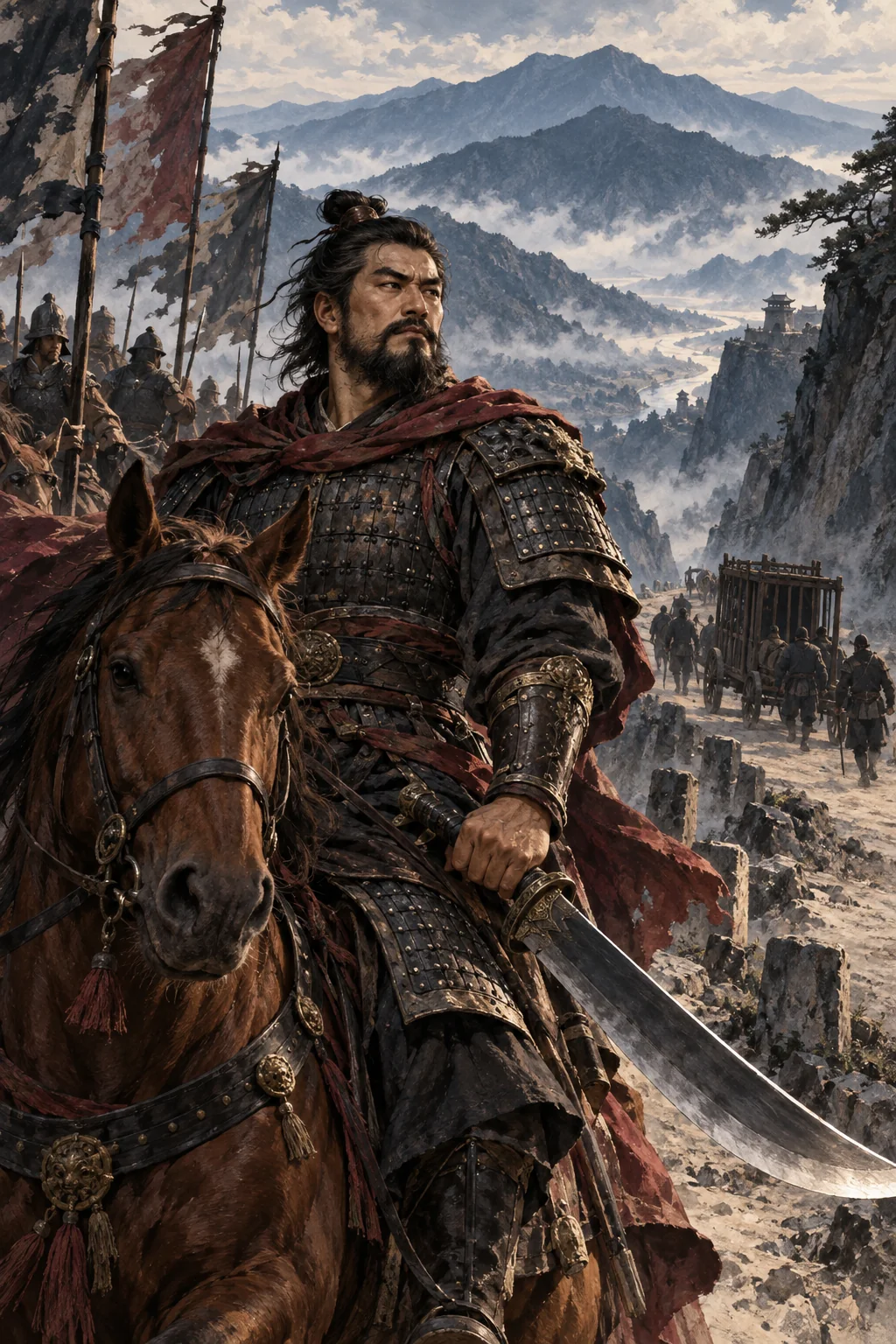
Zheng later fights beside the other two chiefs when they intercept Huang Xin’s prisoner convoy and recover Song Jiang and Hua Rong. The Qingfeng company helps draw Qin Ming into the outlaw camp, abandons the mountain and enters Liangshan together. Zheng is repeatedly present in actions credited to several men rather than singled out as the lone hero.
That pattern continues. He helps seize the calligrapher Xiao Rang and seal carver Jin Dajian, disguises himself as a porter in the Jiangzhou prison-break force, guards a lakeside outpost and serves under larger formations. The novel gives him tasks, but rarely gives him the center of the scene.
A life recorded in company
Zheng Tianshou is easy to reduce to his face because his nickname does exactly that. His record offers a quieter correction: the silversmith holds his own in a long fight, accepts a place made through that encounter and keeps appearing where the company needs another fighter, guard or accomplice.
At the great assembly he ranks seventy-fourth as the Earthly Different Star and serves among Liangshan’s infantry officers. The title does not create a hidden superpower. It marks one position in a structure where much of the work is collective and many individual choices receive only a line.
During the Fang La campaign, Zheng follows Lu Junyi’s army against Xuanzhou. Defenders throw projectiles and shoot poisoned arrows during the assault. A falling grindstone kills Zheng; Cao Zheng and Wang Dingliu later die from poisoned wounds. The handsome face that introduced him is absent from this final account. What remains is his place among the people lost taking the city.
How much of a person can a record miss when it remembers the group more clearly than the individual?
What part of Zheng Tianshou’s story stays with you?
Reading Zheng Tianshou.
Who is Zheng Tianshou in Water Margin?
Zheng Tianshou is a former silversmith, Qingfeng Mountain chief and Liangshan infantry officer, known as Fair-Faced Gentleman. The novel places this character 74 in the assembly of the 108 heroes. That rank is not a judgment of moral worth.
How does Zheng Tianshou die in Water Margin?
During the Fang La campaign, Zheng Tianshou is killed by a grindstone thrown from Xuanzhou’s defenses while Lu Junyi’s army assaults the city.
Published · Updated
Written by Liangshan Lore, based on Water Margin (Shuihu Zhuan), traditionally attributed to Shi Nai’an. The novel follows an outlaw brotherhood in a fictionalized Song-dynasty setting. It is literature, not a record of each character’s historical life.
Chapter references below follow the 120-chapter Chinese edition. Other editions and English translations differ in chapter numbering, names, and endings. These are original English summaries, not quotations from a modern translation. The reflection above is our interpretation. Artwork is a concept illustration.
Continue in English.
These credited resources offer further reading, listening, publication context, or museum evidence. Chinese Lore is an English retelling with transcripts and audio, not a line-by-line translation; podcast episode numbers differ from novel chapters.
Chinese original · text & chapter references
Primary-text references for checking the plot and edition. These pages are in Chinese.