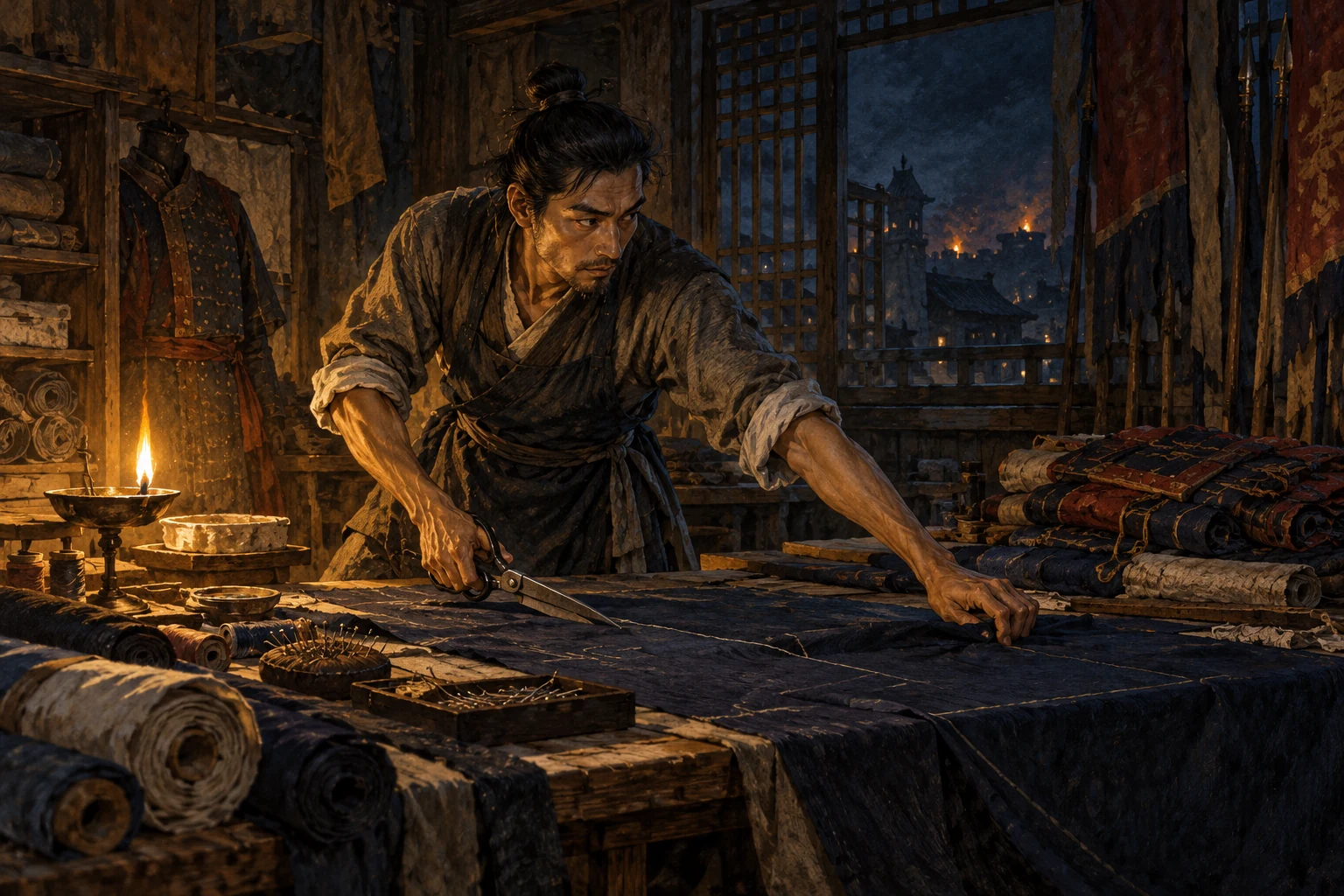
Song Qing宋清
Iron Fan
His brother becomes famous on the road. Song Qing keeps opening the gate at home.
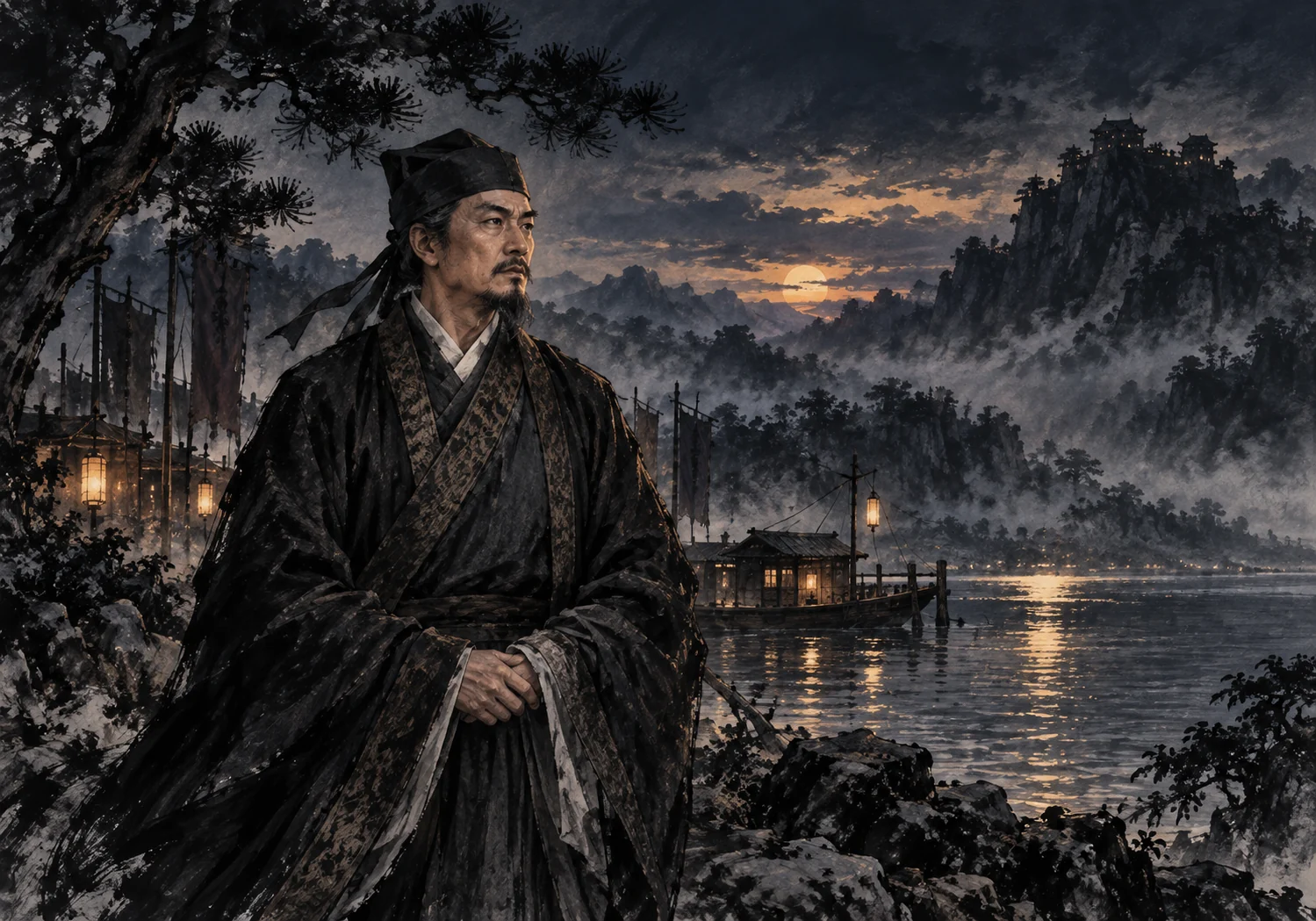
Song Qing stays with his father and the family farm while Song Jiang moves through offices, exile and Liangshan. A false death letter pulls the elder brother home; a warning at the rear gate sends him away again.
The brother who remains at the farm
Song Qing is Song Jiang’s younger brother. When the novel introduces the Song household, Song Qing remains at the family estate with their father while Song Jiang works as a county clerk. The family has formally separated Song Jiang from the household so that his legal trouble will not automatically take the farm with him.
That arrangement does not remove the danger. After Song Jiang kills Yan Poxi and flees, officers search the estate. His father and Song Qing are questioned, but the separation papers help prevent the household from being punished for the fugitive’s absence.
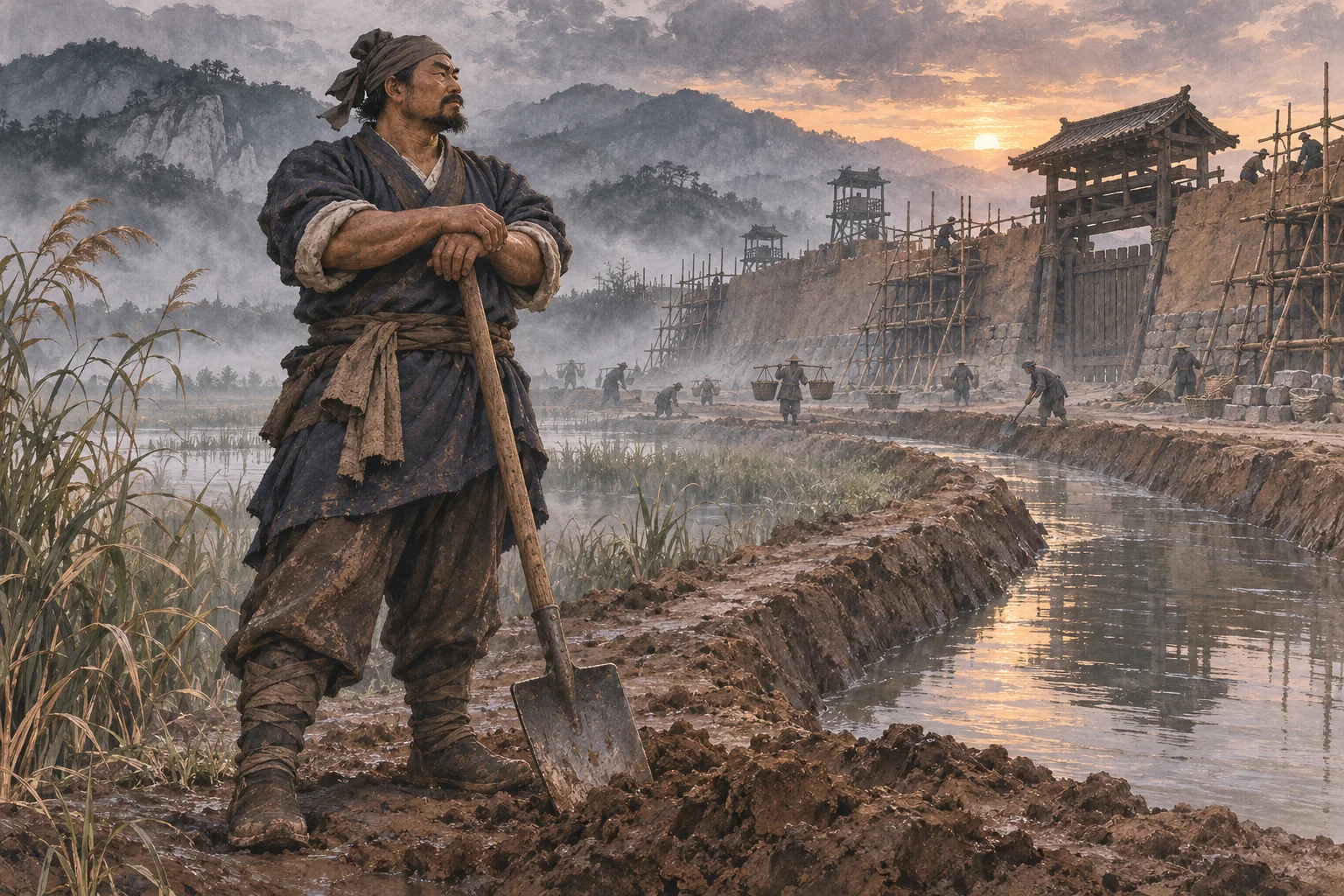
Song Qing is called Iron Fan, but the novel does not explain the name or give him a supernatural fan. Its clearest early description is practical: he follows his father and works the fields. While the elder brother’s reputation travels through the jianghu world, the younger brother stays with the land and the parent left at home.
A false death and a warning at the rear gate
Years later, Song Qing sends a letter saying that their father has died. Song Jiang hurries home to mourn and finds the report false. Their father says that the deception was his idea, not Song Qing’s: he feared that Song Jiang would remain among outlaws and wanted to draw him back before the family line was damaged further.
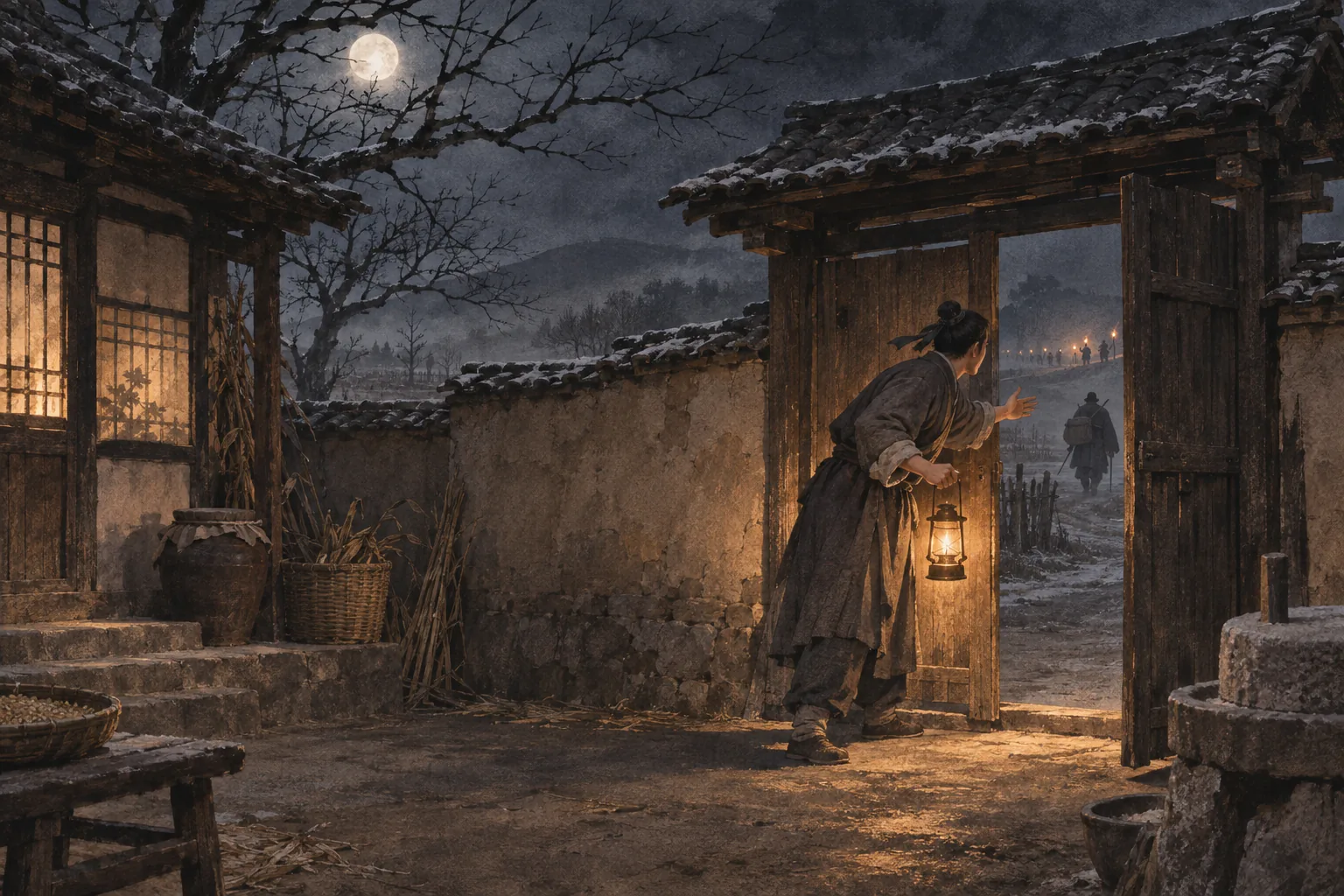
The plan brings Song Jiang home, but the authorities arrest him that night. Exile follows. When Song Jiang later returns to the estate after another flight, Song Qing opens the rear gate and warns him that officials and a large force are watching the village. He tells his brother to seek help at Liangshan instead of entering the trap.
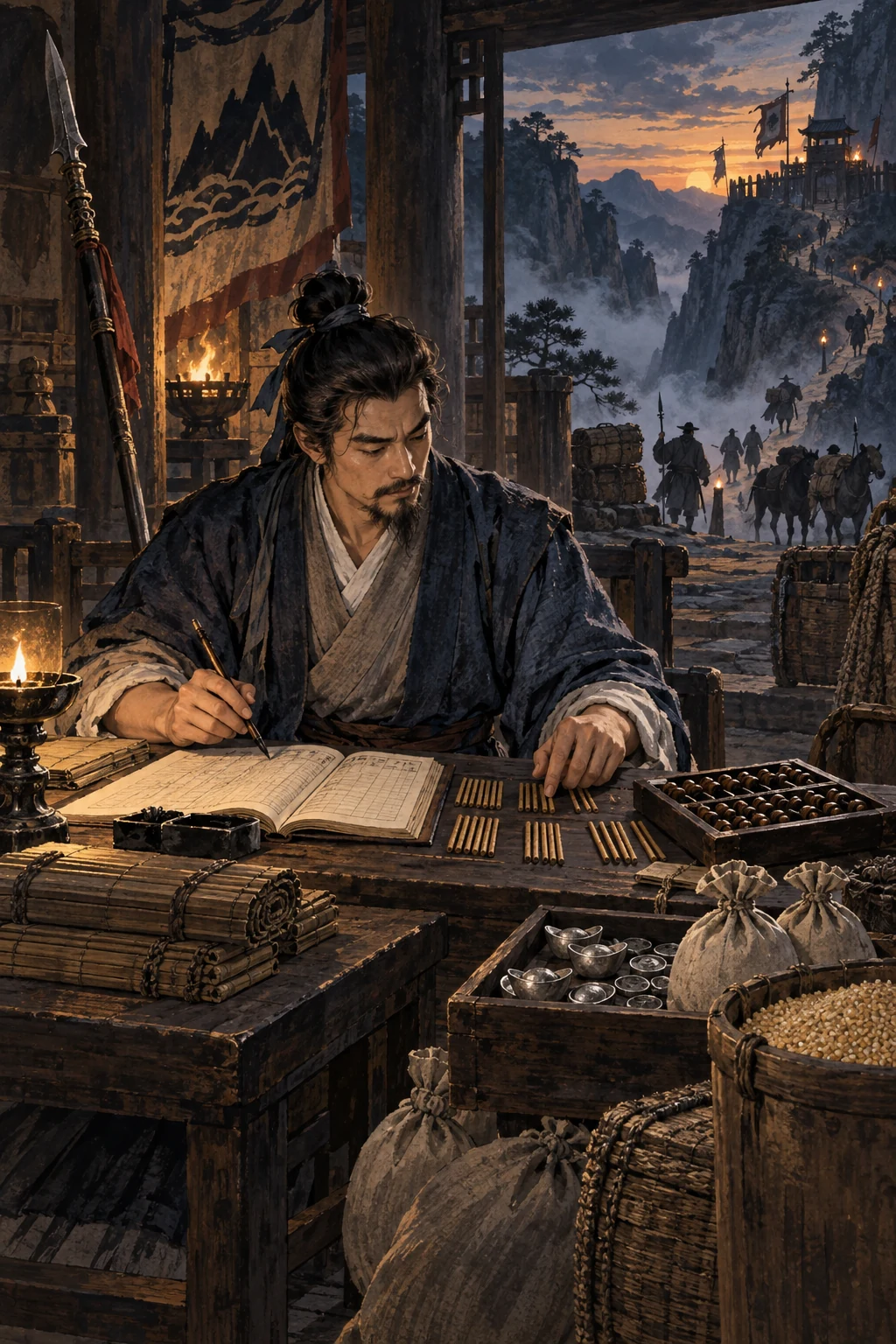
Song Qing eventually enters Liangshan with the household. At the assembly he ranks seventy-sixth as the Earthly Handsome Star and receives responsibility for preparing and supervising banquets. The assignment sounds quieter than command, but feeding a large company and arranging its formal gatherings are part of how that company holds together.
What survives after the company disperses
Song Qing’s story depends on work that keeps other people’s stories possible: remaining with an aging father, keeping the estate, carrying a message, opening the correct gate and organizing meals. The novel records these actions without turning him into a hidden strategist or fighter.
After the campaigns, Song Qing returns home with Song Jiang. Their father has died. Song Jiang transfers the estate to his younger brother, who resumes farming and the family’s ancestral rites. The public career has come back to the private household that endured its consequences.
Song Qing is ill when Song Jiang dies and cannot attend the funeral. When an official post connected to his brother’s service is later offered to him, he declines it on account of that illness and remains a farmer. The ending does not make staying home simple or untouched by loss. It shows continuity as a burden carried through absence, survival and work.
When one person’s life becomes public history, who keeps the ordinary life that history still depends on?
What part of Song Qing’s story stays with you?
Reading Song Qing.
Who is Song Qing in Water Margin?
Song Qing is a younger brother of Song Jiang, Song family farmer and Liangshan banquet supervisor, known as Iron Fan. The novel places this character 76 in the assembly of the 108 heroes. That rank is not a judgment of moral worth.
Why is Song Qing called Iron Fan?
The novel gives Song Qing the nickname Iron Fan but does not explain its origin or describe a supernatural fan. Claims that turn the name into a special weapon go beyond the text.
Published · Updated
Written by Liangshan Lore, based on Water Margin (Shuihu Zhuan), traditionally attributed to Shi Nai’an. The novel follows an outlaw brotherhood in a fictionalized Song-dynasty setting. It is literature, not a record of each character’s historical life.
Chapter references below follow the 120-chapter Chinese edition. Other editions and English translations differ in chapter numbering, names, and endings. These are original English summaries, not quotations from a modern translation. The reflection above is our interpretation. Artwork is a concept illustration.
Continue in English.
These credited resources offer further reading, listening, publication context, or museum evidence. Chinese Lore is an English retelling with transcripts and audio, not a line-by-line translation; podcast episode numbers differ from novel chapters.
Chinese original · text & chapter references
Primary-text references for checking the plot and edition. These pages are in Chinese.