Jiang Jing蒋敬
Divine Mathematician
The examination ends. His skill with numbers does not.
Jiang Jing leaves the examination path, but calculation follows him from a mountain stronghold into the stores of Liangshan.
A result that changes the route
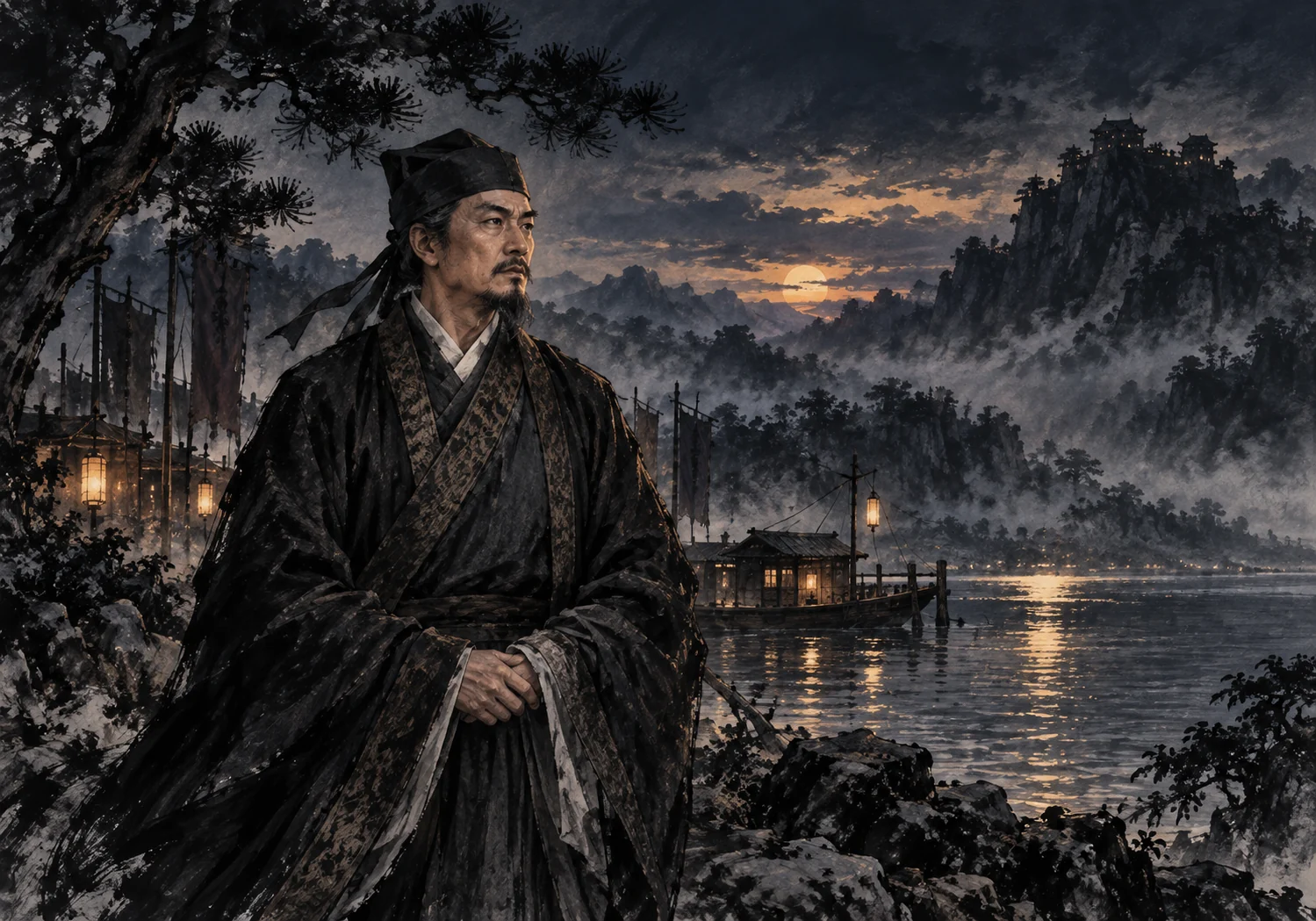
Jiang Jing comes from Tanzhou in Hunan. He has trained as an examination candidate, but does not pass. The novel says he leaves literary study for martial work; it does not tell us what he felt about the result.
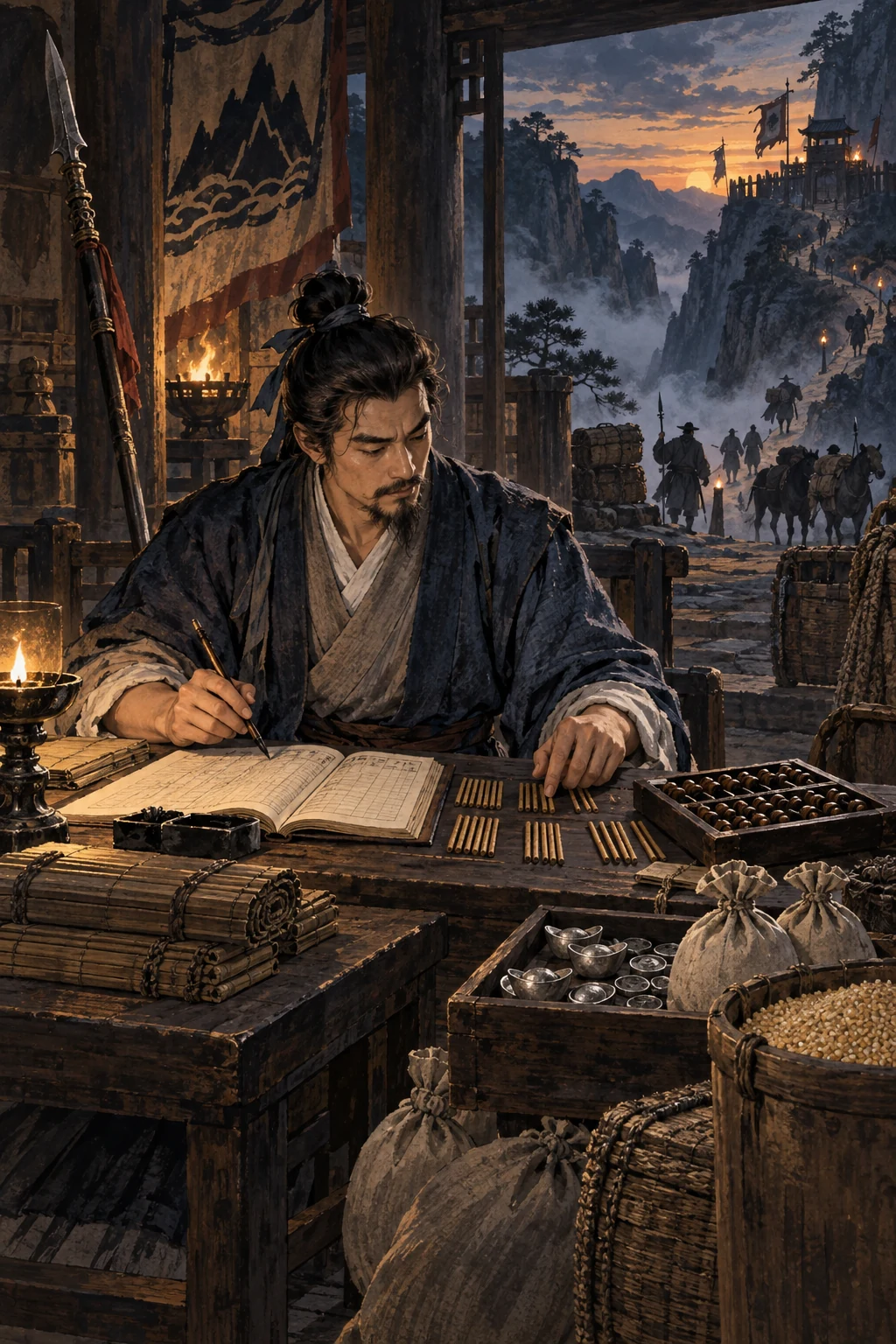
The change does not erase what he can do. Jiang Jing understands strategy, formations and the use of spear and staff. Above all, he is exact with written calculation: the text says that even when figures mount into the thousands, he misses no fraction. That precision gives him the name Divine Mathematician.
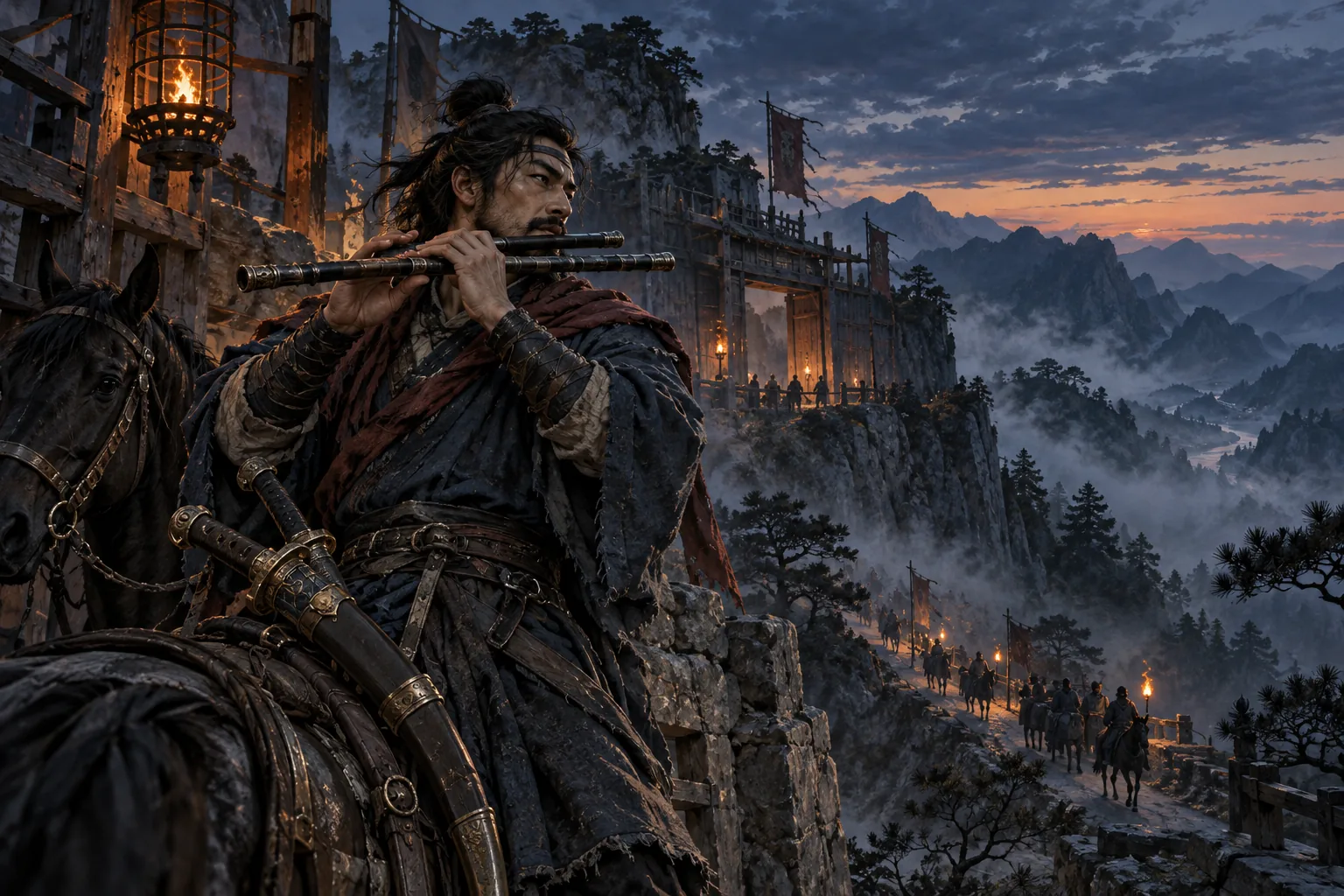
He becomes one of four leaders at Huangmen Mountain with Ou Peng, Ma Lin and Tao Zongwang. The group has made a working stronghold of its own before Liangshan enters their story.
A smaller company joins a larger one
After Song Jiang is rescued at Jiangzhou, the returning company meets the Huangmen leaders on the road. Jiang Jing and his companions bring the travelers into their mountain hall and receive them with food and drink. The possible roadblock becomes a welcome.
Song Jiang invites all four leaders to Liangshan. They agree together. The next day they collect their money and goods, lead several hundred followers away, burn the stockade and join the procession. Jiang Jing arrives as part of an established team rather than as a lone famous recruit.
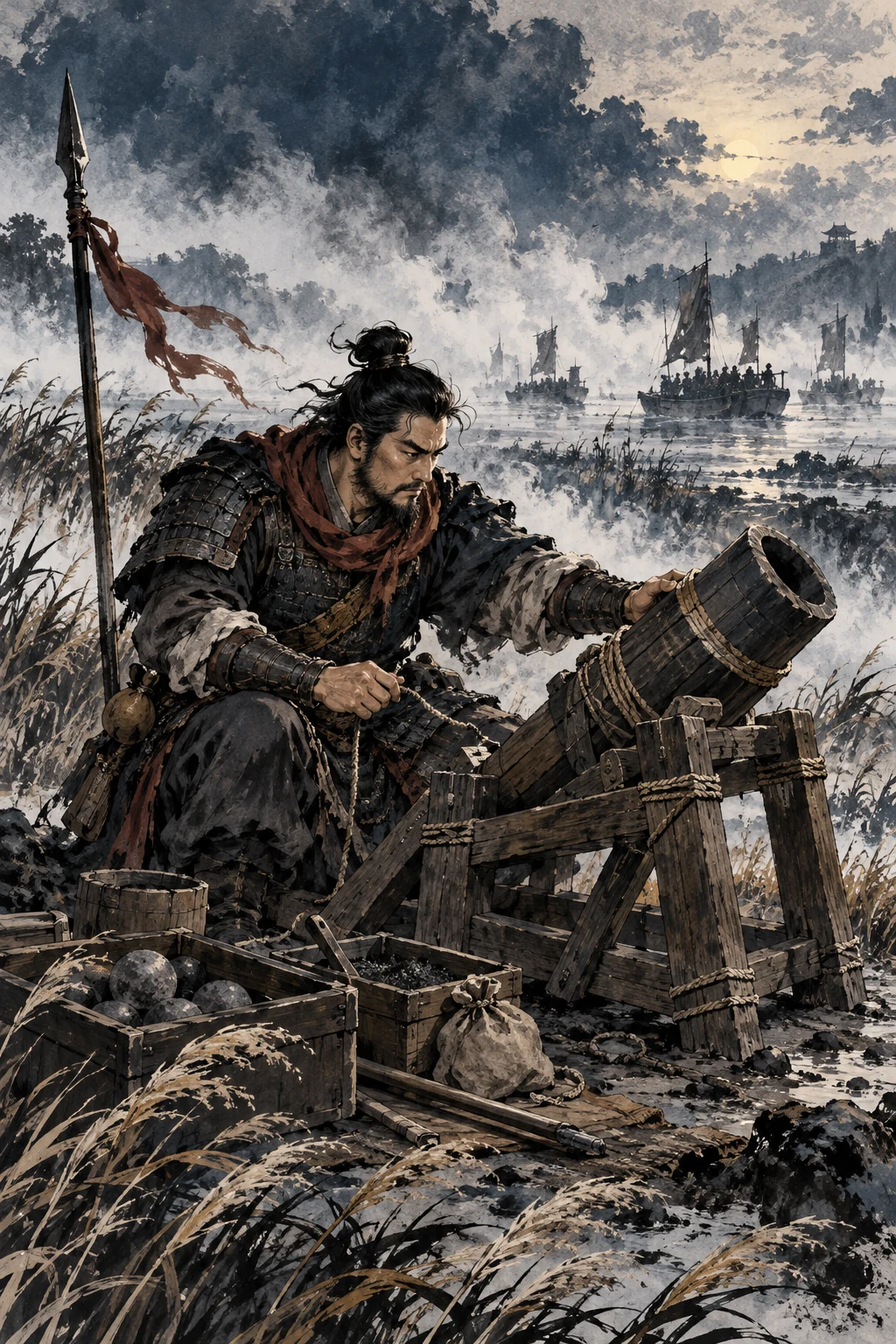
At the assembly he ranks fifty-third as the Meet Star. Liangshan assigns him to the receipt and issue of money and grain in the stronghold’s stores. The calculator introduced beside a mountain road is now part of the system that keeps a much larger company supplied.
The work behind the celebrated names
Jiang Jing’s first ambition does not produce the office an examination could have opened. Yet the skill associated with study reappears in another institution. The route changes; the habit of exactness remains useful.
His assignment also widens the picture of Liangshan. Fighters and strategists depend on grain counted, stores tracked and supplies released. The work is less dramatic than a duel, but the company cannot remain a company without it.
After the final campaigns, Jiang Jing declines an official future and returns to Tanzhou as a civilian. The novel gives no detailed account of the life that follows. It leaves him where he began, but with a path that an examination result could not have predicted.
Which ability survived after the future you planned did not?
What part of Jiang Jing’s story stays with you?
Reading Jiang Jing.
Who is Jiang Jing in Water Margin?
Jiang Jing is a former examination candidate; Huangmen leader and Liangshan accounts officer, known as Divine Mathematician. The novel places this character 53 in the assembly of the 108 heroes. That rank is not a judgment of moral worth.
Why is Jiang Jing called the Divine Mathematician?
The novel describes him as exact in written calculation even with large sums. At Liangshan, that skill is used in managing the receipt and issue of money and grain.
Published · Updated
Written by Liangshan Lore, based on Water Margin (Shuihu Zhuan), traditionally attributed to Shi Nai’an. The novel follows an outlaw brotherhood in a fictionalized Song-dynasty setting. It is literature, not a record of each character’s historical life.
Chapter references below follow the 120-chapter Chinese edition. Other editions and English translations differ in chapter numbering, names, and endings. These are original English summaries, not quotations from a modern translation. The reflection above is our interpretation. Artwork is a concept illustration.
Continue in English.
These credited resources offer further reading, listening, publication context, or museum evidence. Chinese Lore is an English retelling with transcripts and audio, not a line-by-line translation; podcast episode numbers differ from novel chapters.
Chinese original · text & chapter references
Primary-text references for checking the plot and edition. These pages are in Chinese.