Ma Lin马麟
Iron Flute Immortal
The flutes and the sabers belong to the same life.
Ma Lin can fill a mountain hall with music and ride into battle with twin sabers. Liangshan gives both talents a place, though only one decides where he is sent.
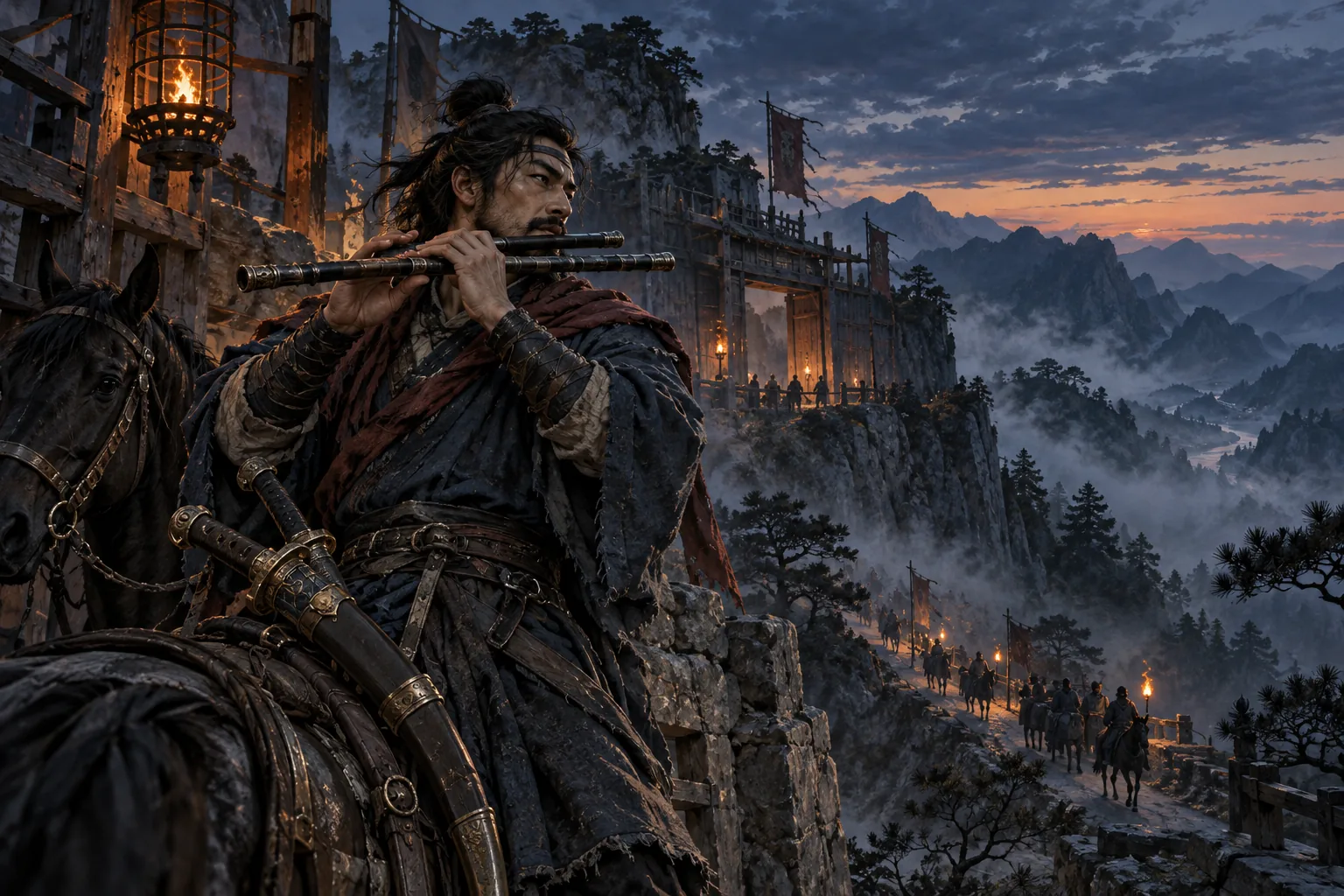
Two iron flutes at a mountain stronghold
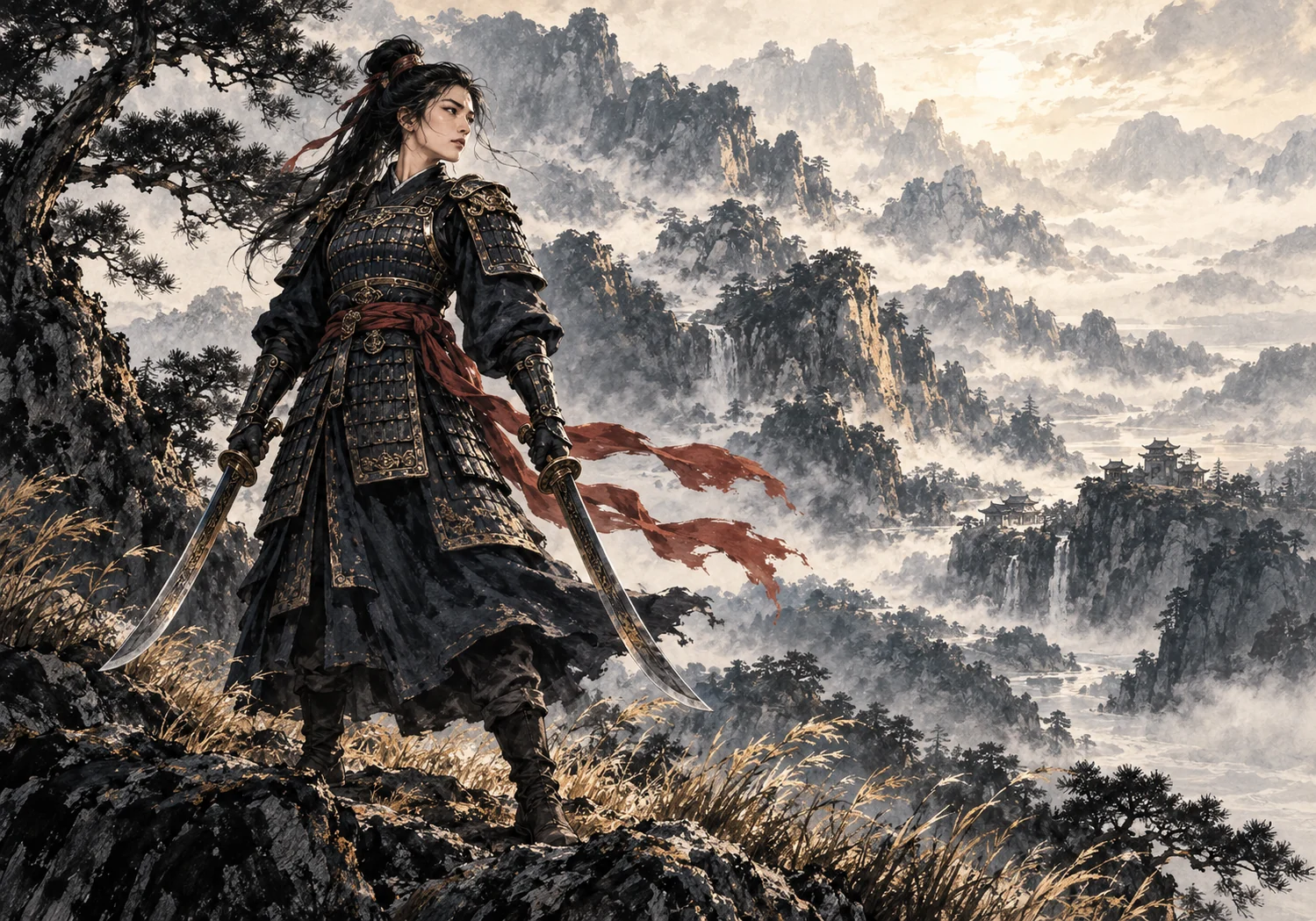
Ma Lin comes from Jiankang. The novel introduces him as a local idler, then names two trained abilities: he can play a pair of iron flutes and wield two broad bronze sabers so effectively that a hundred men cannot get close. Those paired skills give him the name Iron Flute Immortal.
He is one of four leaders at Huangmen Mountain with Ou Peng, Jiang Jing and Tao Zongwang. They already command a working camp when Song Jiang’s company passes after the Jiangzhou rescue. The four have heard the news and send scouts to watch the road.
The encounter begins as a roadblock. Once the travelers are identified, the Huangmen leaders bow, explain that they had intended to help Song Jiang and receive the company with food, drink and a feast inside the stronghold.
The smaller mountain empties into Liangshan
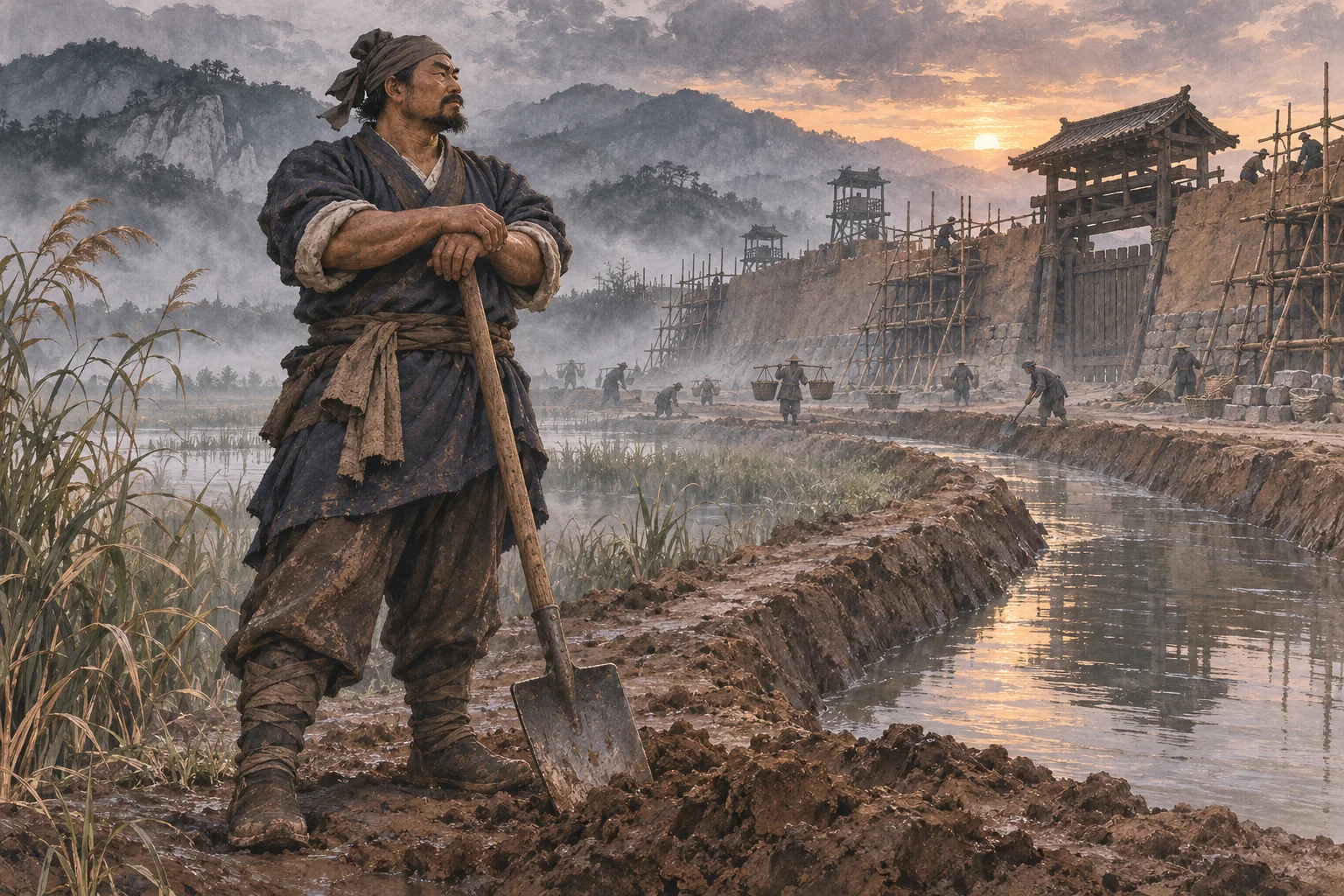
Song Jiang asks whether the four leaders will leave Huangmen and join Liangshan. They agree as a group. The next morning they gather money, goods and several hundred followers, burn the stockade and travel with the returning company. Ma Lin enters Liangshan by accepting an invitation alongside people with whom he already shares command.
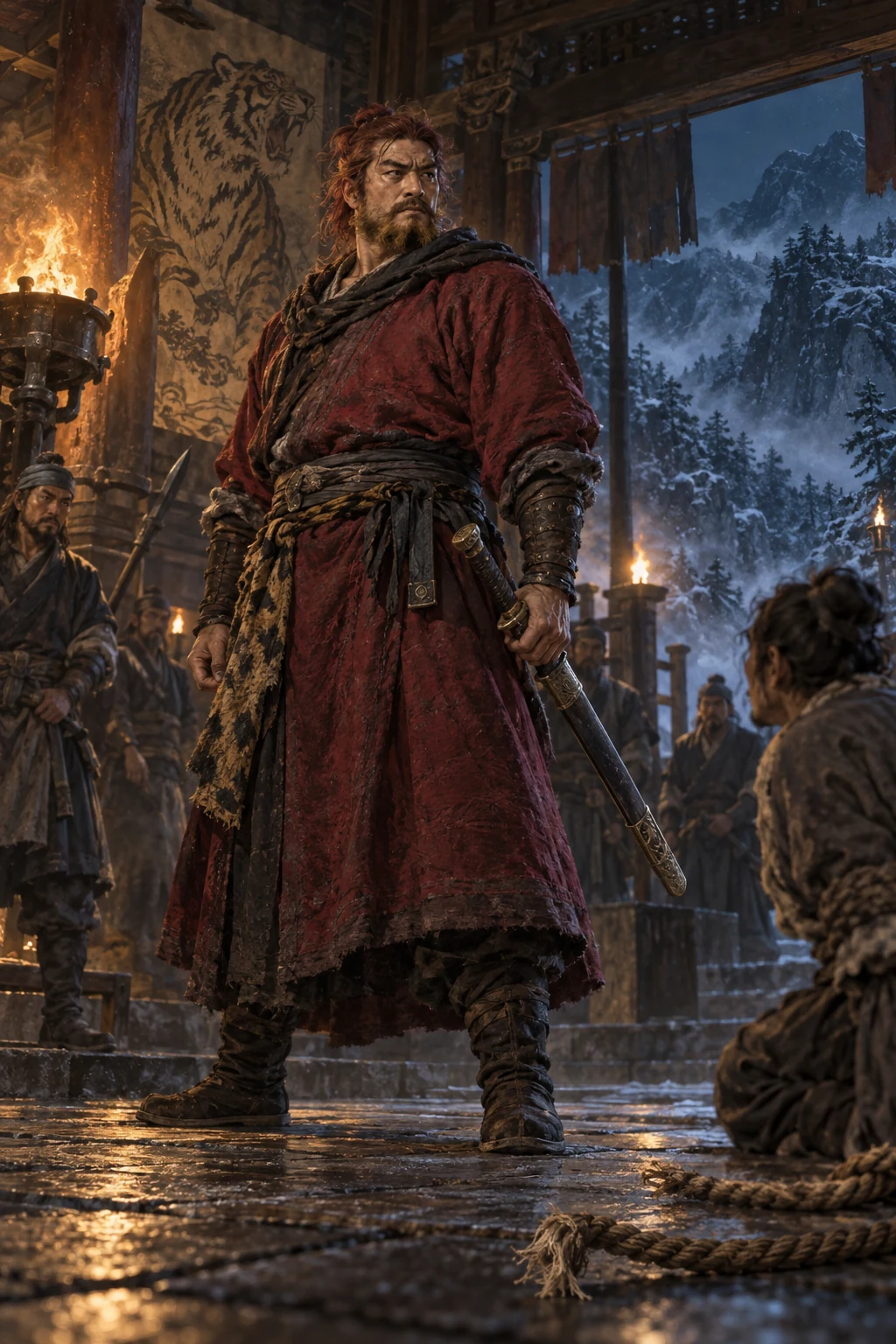
At Zhu Family Village, that new allegiance puts his other skill in view. Ma Lin rides out with twin sabers against Zhu Long. When Hu Sanniang changes opponents, she and Ma Lin meet saber against saber on horseback. The novel makes the exchange vivid, but gives neither fighter a clean individual victory before the larger battle shifts around them.
At the assembly Ma Lin ranks sixty-seventh as the Earthly Bright Star and serves among the cavalry scouts. Yet the iron flutes do not vanish behind the military title. During the Chrysanthemum Feast he plays while Yue He sings and Yan Qing accompanies them on the qin.
What the roster remembers first
Ma Lin’s introduction refuses a simple division between artist and fighter. The flute is not a secret gentler self invented behind the sabers, and the sabers do not cancel the music. The text presents both as practiced parts of the same public identity.
Liangshan has room for the performance, but its formal roster defines him through cavalry and scouting. When the company becomes an imperial campaign army, that assignment determines where his body goes. A broad range of ability does not mean equal control over which ability an institution will call upon.
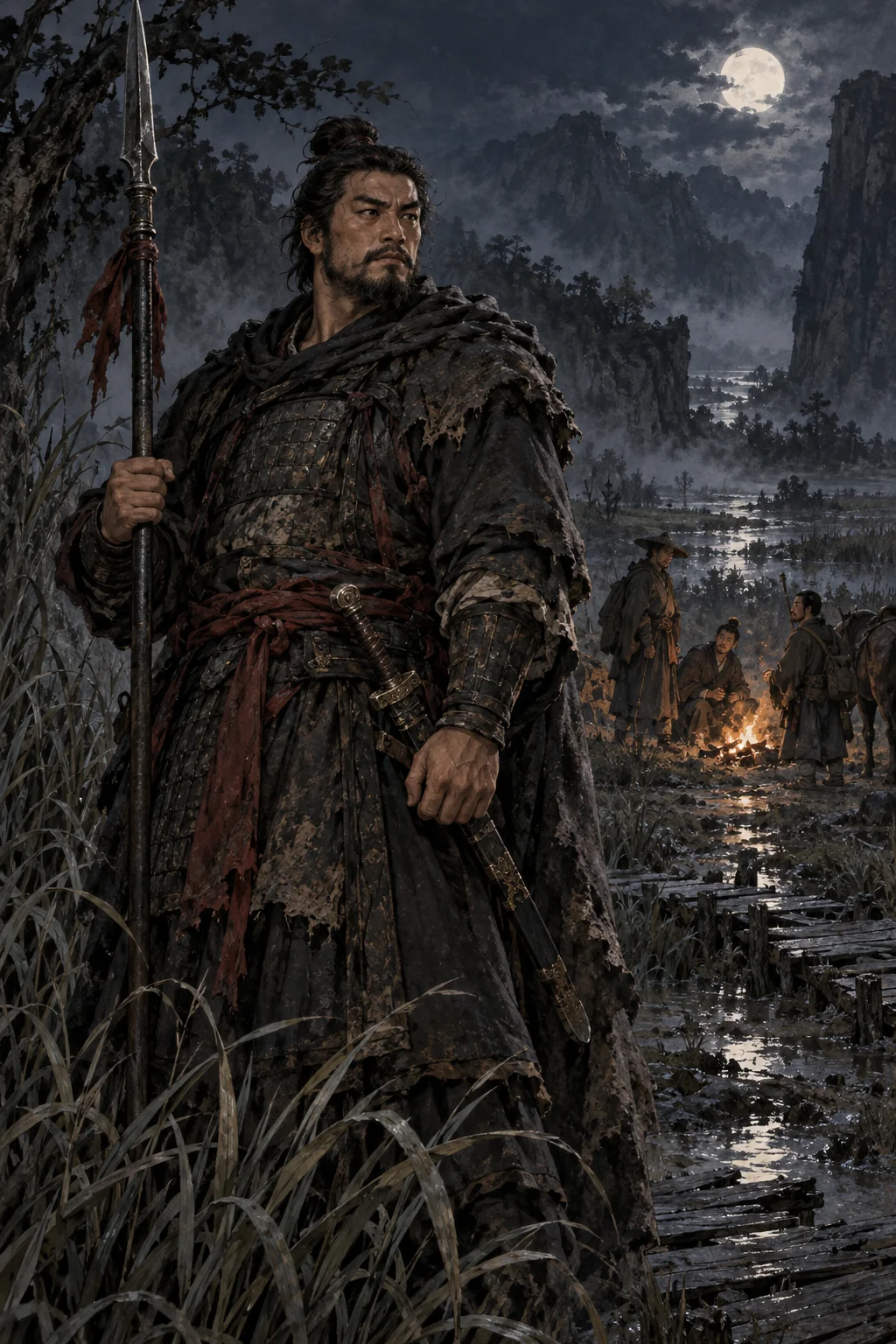
At Wulong Ridge, Ma Lin and Yan Shun are left to guard the main road while the army attacks Muzhou. A later report says Bai Qin knocks Ma Lin from his horse with a thrown spear and Shi Bao follows with a saber stroke that cuts him in two. The narration gives no last song, speech or private thought. The musician-fighter ends as news carried back from a post he was ordered to hold.
Which part of a person stays visible when an institution needs only one of their abilities?
What part of Ma Lin’s story stays with you?
Reading Ma Lin.
Who is Ma Lin in Water Margin?
Ma Lin is a bandit leader at Huangmen Mountain and Liangshan cavalry scout commander, known as Iron Flute Immortal. The novel places this character 67 in the assembly of the 108 heroes. That rank is not a judgment of moral worth.
Why is Ma Lin called the Iron Flute Immortal?
The novel says Ma Lin can play a pair of iron flutes as well as wield two broad bronze sabers. English retellings also render 鐵笛仙 as Iron Flute Deity; the nickname does not mean the flutes give him supernatural powers.
Published · Updated
Written by Liangshan Lore, based on Water Margin (Shuihu Zhuan), traditionally attributed to Shi Nai’an. The novel follows an outlaw brotherhood in a fictionalized Song-dynasty setting. It is literature, not a record of each character’s historical life.
Chapter references below follow the 120-chapter Chinese edition. Other editions and English translations differ in chapter numbering, names, and endings. These are original English summaries, not quotations from a modern translation. The reflection above is our interpretation. Artwork is a concept illustration.
Continue in English.
These credited resources offer further reading, listening, publication context, or museum evidence. Chinese Lore is an English retelling with transcripts and audio, not a line-by-line translation; podcast episode numbers differ from novel chapters.
Chinese original · text & chapter references
Primary-text references for checking the plot and edition. These pages are in Chinese.