Hua Rong花荣
Little Li Guang
A steady aim. A divided duty.
He welcomes an old friend. Before the visit is over, they are prisoners together.
A friend comes to Qingfeng Fort
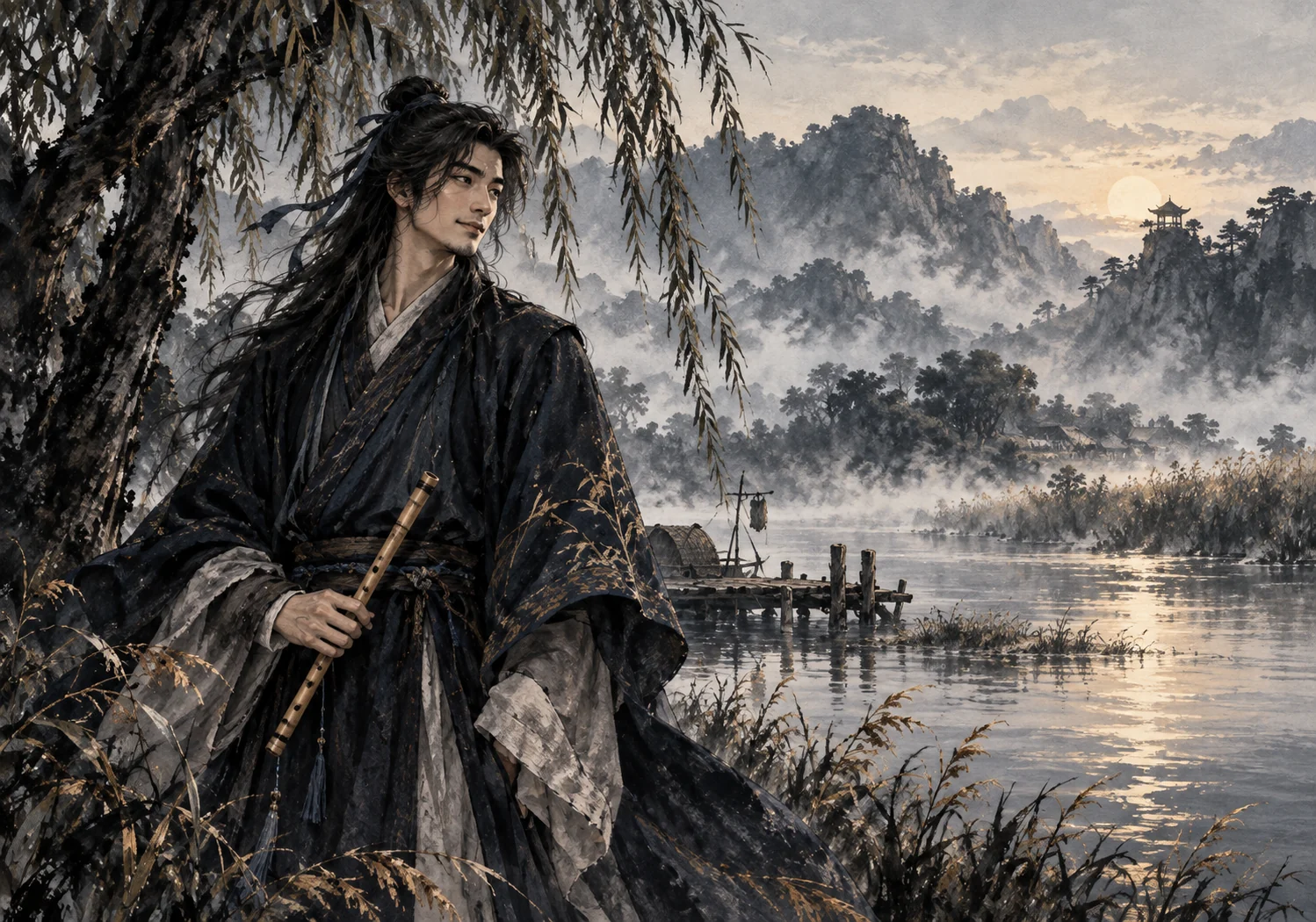
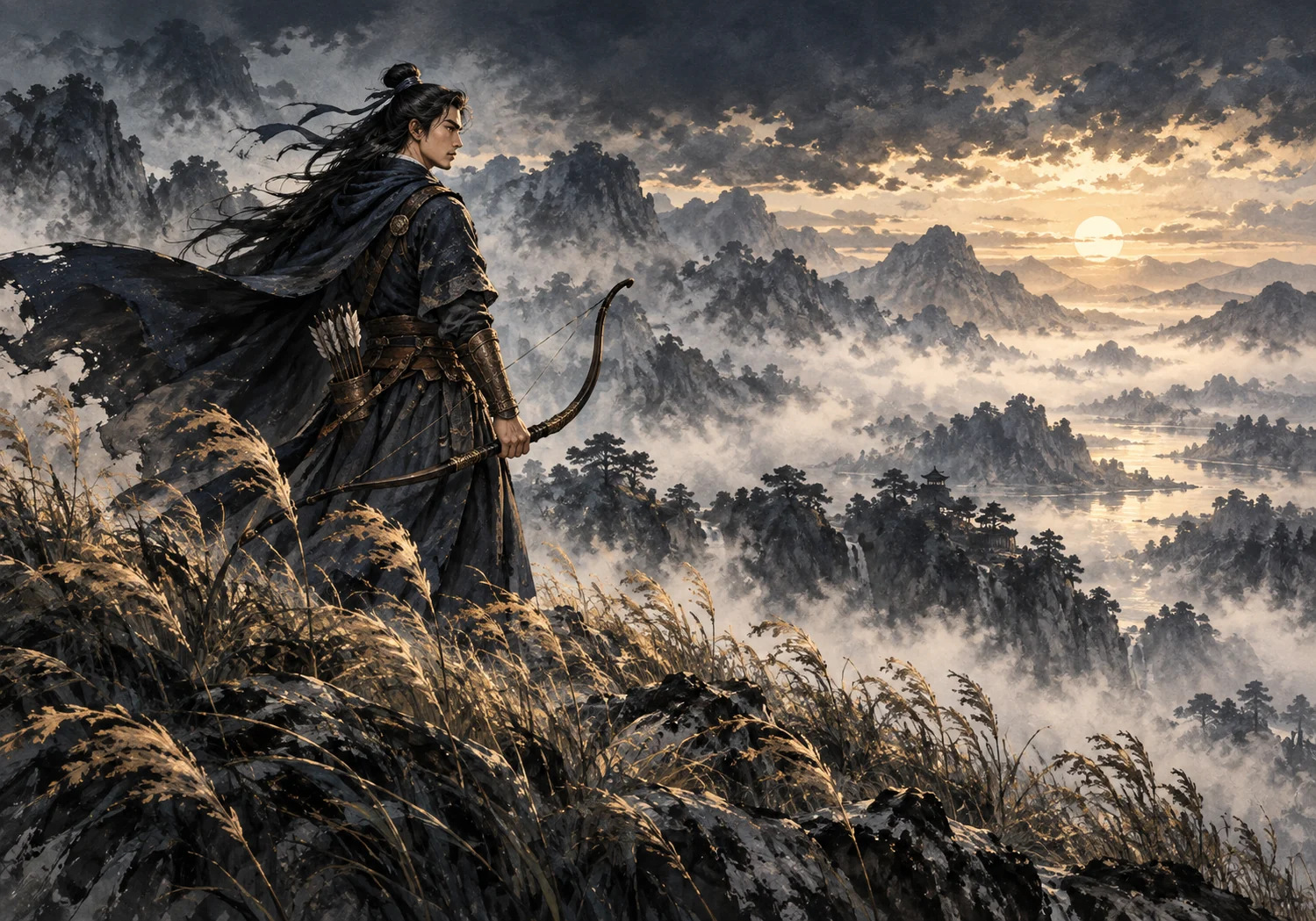
Hua Rong serves as a military officer at Qingfeng Fort. People call him Little Li Guang, comparing his archery to the celebrated Han-dynasty general. He shares local authority uneasily with a civilian official, Liu Gao.
Song Jiang comes to visit him. On the way, Song has helped free Liu Gao’s wife from bandits. It ought to make his arrival safer. Instead, it becomes the fact that can be twisted against him.
The meeting that ends in a prison cart
At the lantern celebrations, Liu Gao’s wife recognizes Song Jiang and accuses him of being connected to the bandits. Liu Gao has him arrested. Hua Rong intervenes: the man held as a criminal is his friend, and the accusation is false.
The dispute draws in Huang Xin, another officer. He offers a meeting that appears to promise reconciliation. Hua Rong attends and is detained. He and Song Jiang end up in prison carts, with official authority now turned against both of them.
The fighting that follows carries them toward Liangshan. There, Hua Rong proves his archery by shooting a flying wild goose. The stronghold gains a remarkable bowman. Qingfeng Fort loses an officer whose attempt to protect a guest made remaining in his post impossible.
A clear shot, a less clear future
In this episode, Hua Rong’s loyalty has a concrete object: a friend accused of something he did not do. Defending him means risking his own safety, rather than merely speaking well of him.
Joining Liangshan gives that friendship a longer future. It also brings larger decisions about whom to fight and whom to follow. The archer can see where an arrow will go. A trusted friend’s plans are harder to judge from the beginning.
How far should loyalty carry us?
What part of Hua Rong’s story stays with you?
Reading Hua Rong.
What does Little Li Guang mean?
It compares Hua Rong’s archery to Li Guang, a famous Han-dynasty general. Hua Rong is a fictional character living in the novel’s much later setting.
Why does Hua Rong leave official life?
The conflict over Song Jiang’s arrest turns Hua Rong’s defense of a friend into a clash with his fellow officials. It helps set his course toward Liangshan.
Written by Liangshan Lore, based on Water Margin (Shuihu Zhuan), traditionally attributed to Shi Nai’an. The novel follows an outlaw brotherhood in a fictionalized Song-dynasty setting. It is literature, not a record of each character’s historical life.
Chapter references below follow the 120-chapter Chinese edition. Other editions and English translations differ in chapter numbering, names, and endings. These are original English summaries, not quotations from a modern translation. The reflection above is our interpretation. Artwork is a concept illustration.
Read & listen in English.
John Zhu’s podcast offers his own English retelling, with readable transcripts and audio. Podcast episode numbers differ from the novel’s chapter numbers.
Chinese original · text & chapter references
Primary-text references for checking the plot and edition. These pages are in Chinese.