Fan Rui樊瑞
Demon King of Chaos
He comes to conquer Liangshan. He leaves with a teacher.
Fan Rui raises wind and sand against Liangshan. When the formation turns his power aside and his companions return alive, he chooses to learn from the man who defeated him.
A storm against Liangshan
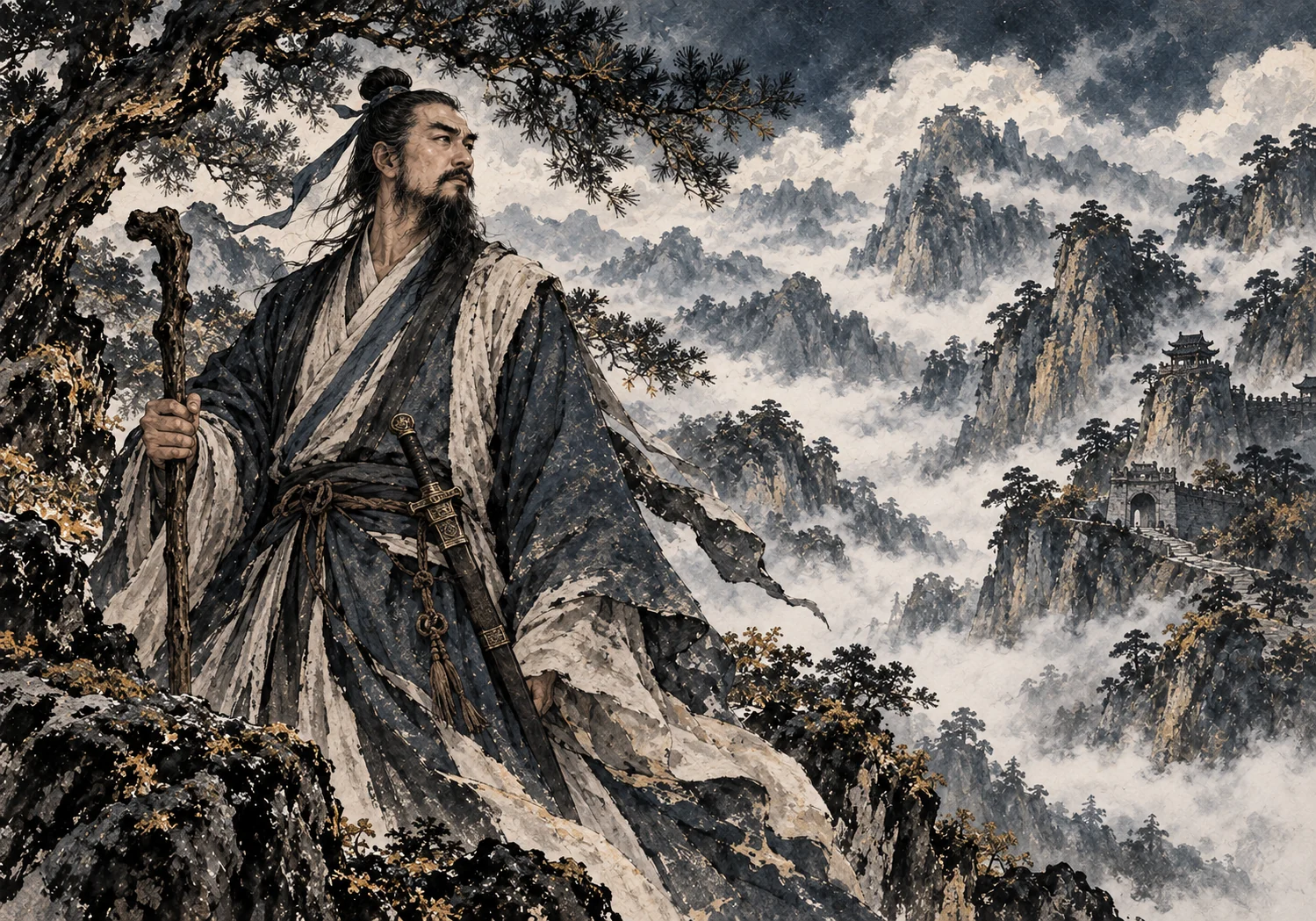
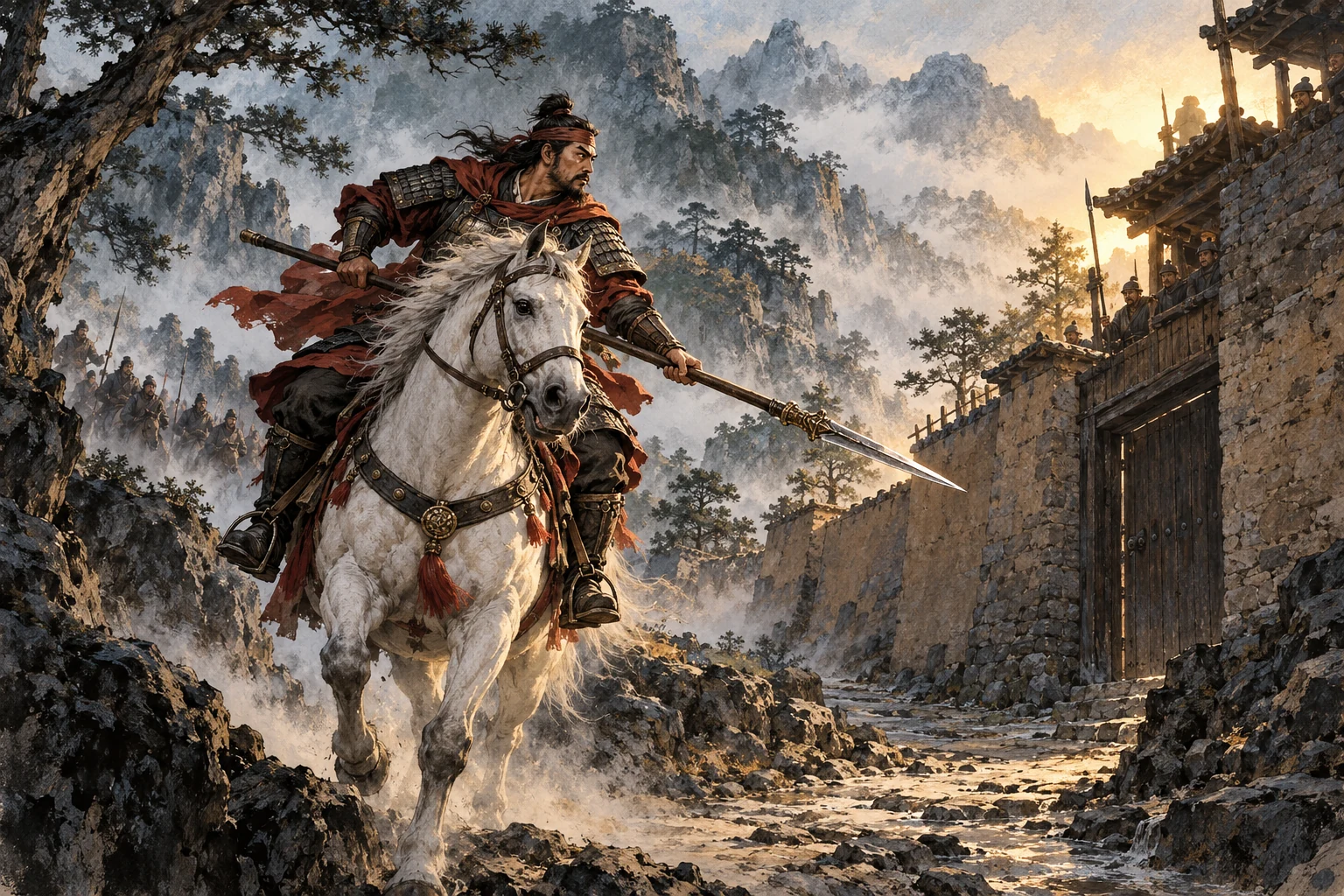
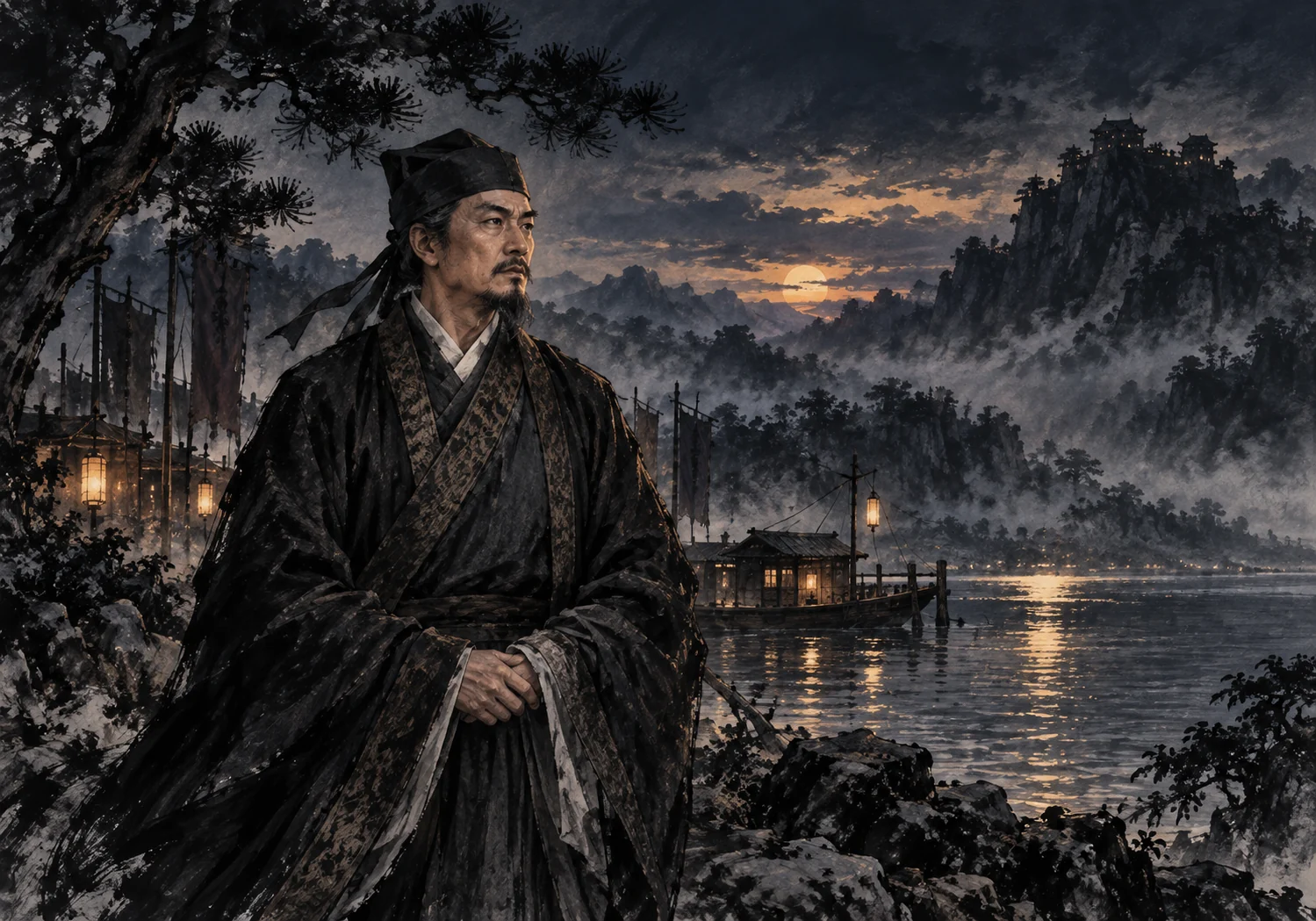
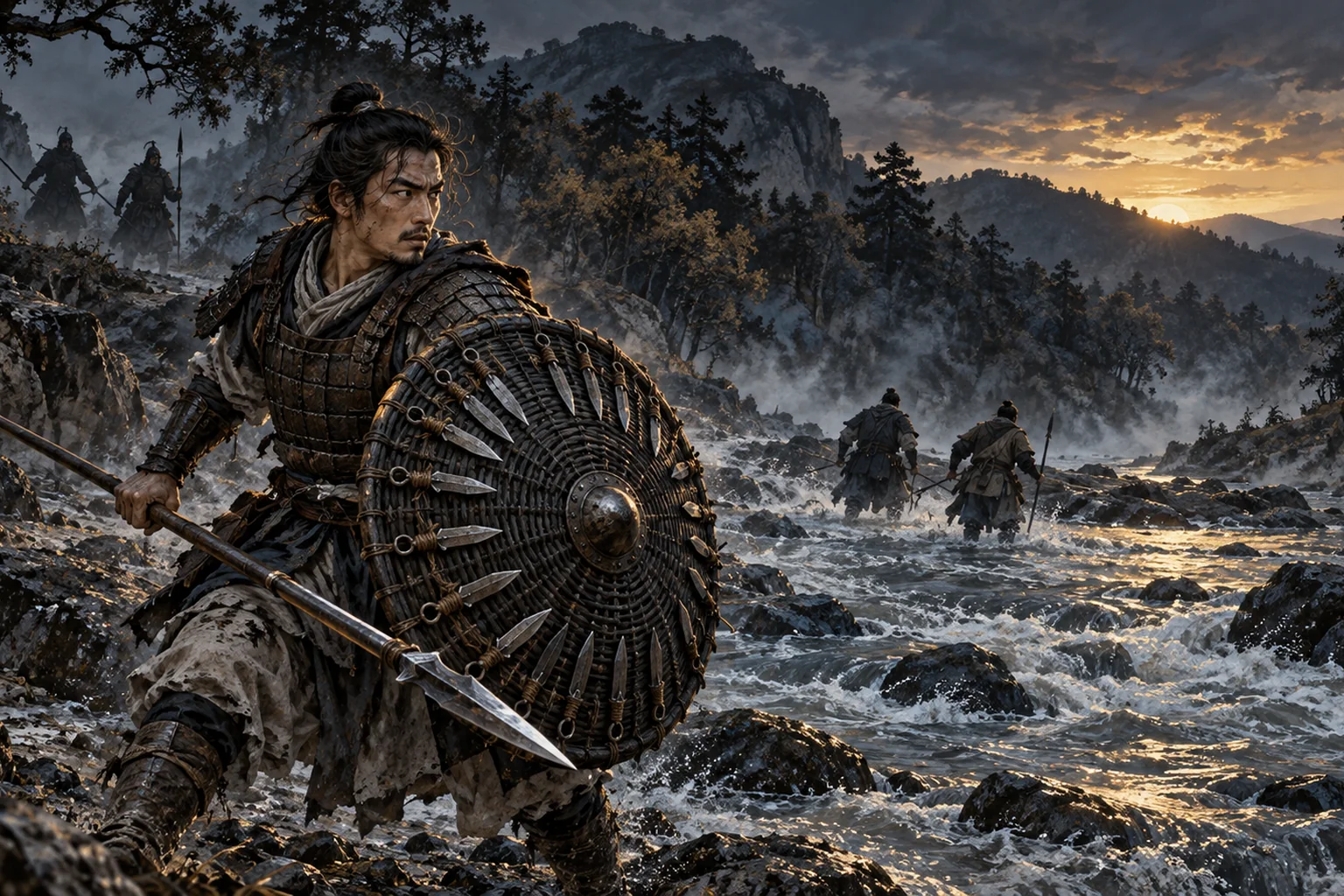
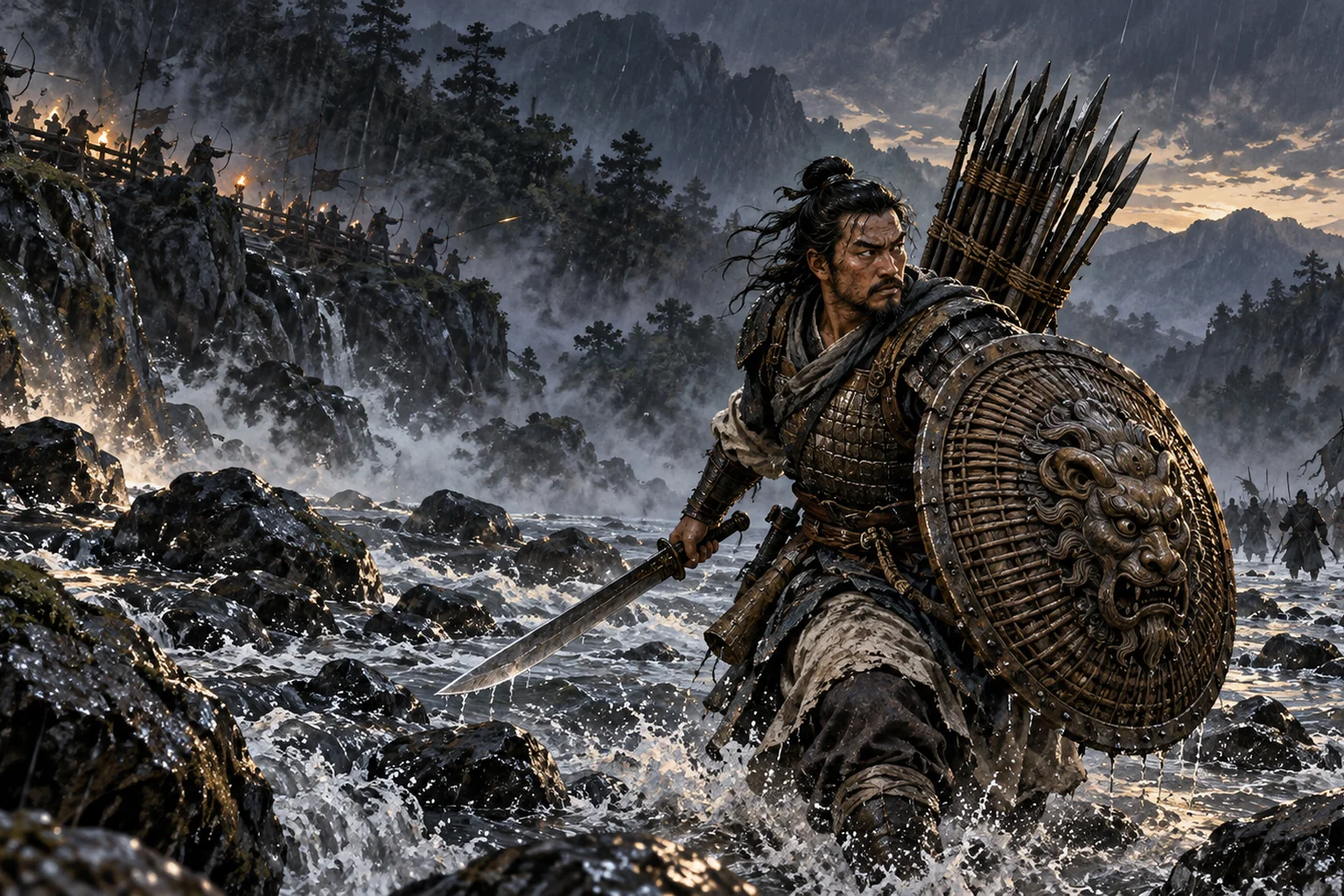
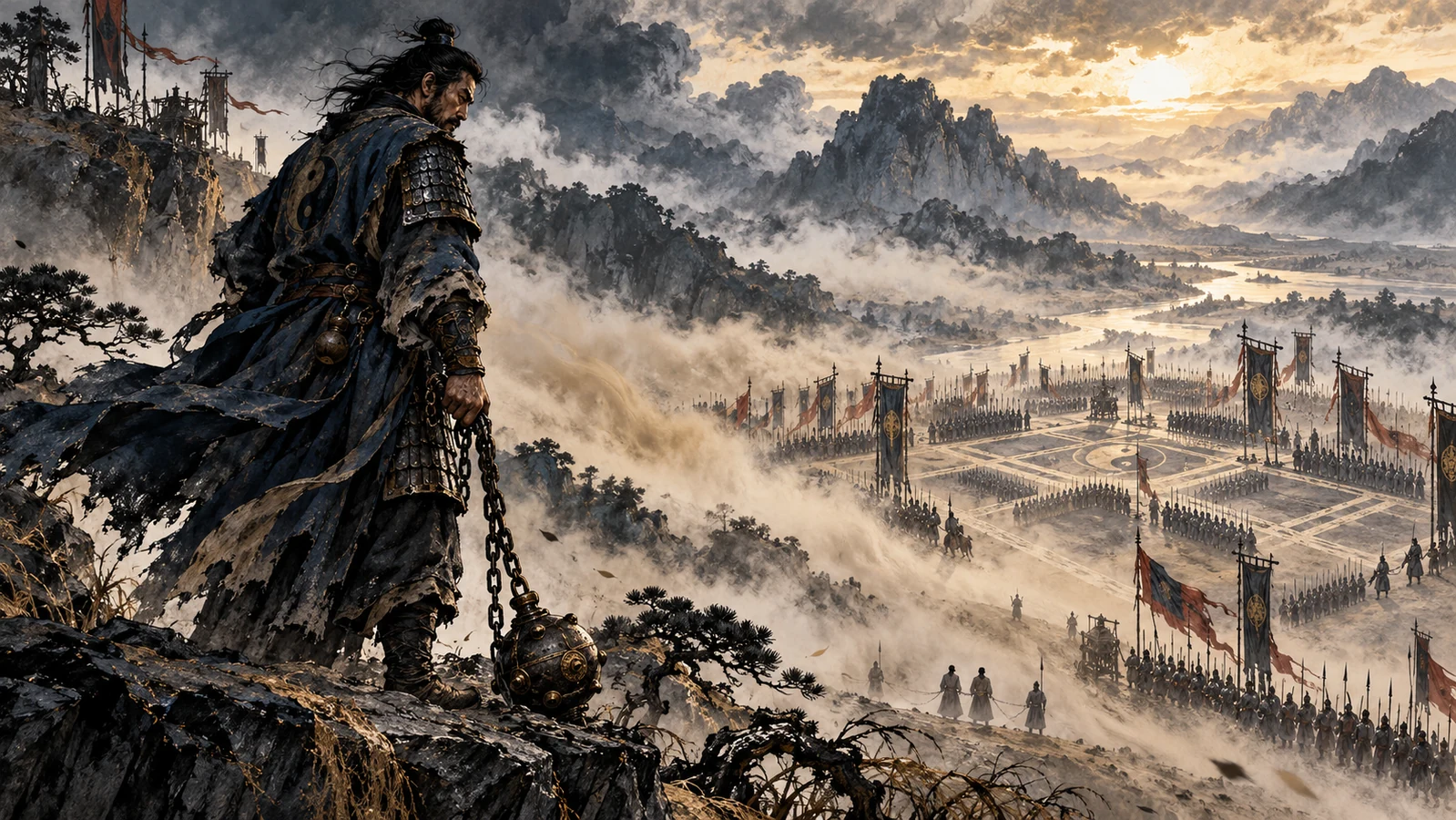
Fan Rui comes from Puzhou and has practiced the Quanzhen form of Daoism. The novel gives him both martial and ritual skills: he fights with a meteor hammer and can call up wind and sand. At Mangdang Mountain he leads about three thousand followers with Xiang Chong and Li Gun beside him.
His ambition points directly at the larger stronghold nearby. Fan Rui and his companions plan to take Liangshan. The name Demon King of Chaos fits the threat he presents when his mountain company meets Song Jiang’s force below Mangdang Mountain.
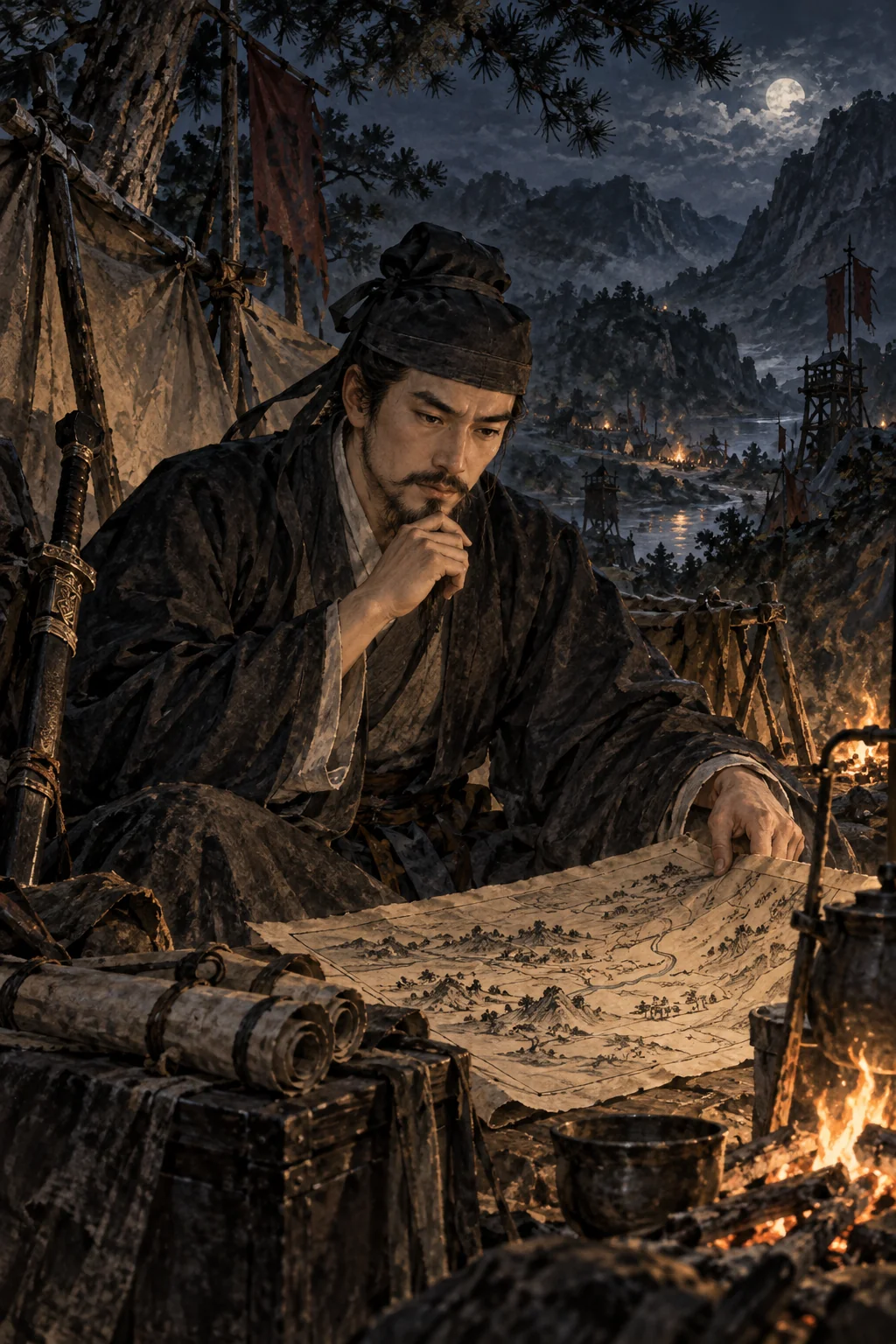
Fan Rui’s wind and sand obscure the field. Yet power alone does not tell him how the opposing formation works. Gongsun Sheng changes the pattern of the troops and turns the conditions of the fight against him.
The formation he cannot read
Xiang Chong and Li Gun enter the formation but lose their route through it. Both fall into prepared pits and are captured. Fan Rui sees his two closest fighters disappear from the field and retreats after much of his force has been broken.
Song Jiang does not kill the captives. He releases them and asks them to carry Liangshan’s invitation back up the mountain. Xiang Chong and Li Gun return to Fan Rui and urge him to accept it. Fan Rui comes down with them and submits.
The choice does more than move another band into Liangshan. Fan Rui asks Gongsun Sheng to teach him. The man who arrived trusting his command of wind and sand becomes the student of the man whose formation exposed its limits.
What defeat makes visible
Fan Rui’s defeat is public: his weather fails to secure the field, his companions are captured and the smaller mountain yields to the larger one. The novel then lets him respond without pretending the defeat did not happen. He changes his relation to the knowledge that beat him.
At the assembly, Fan Rui ranks sixty-first as the Earthly Correct Star and serves among the infantry commanders. His Daoist skill remains useful in later campaigns, including the contest of ritual arts around Qiao Daoqing. Learning does not erase the force he brought from Mangdang Mountain; it gives that force a different discipline.
Fan Rui survives the wars. In the final chapter, Zhu Wu studies Daoist practice with him, and the two seek out Gongsun Sheng. Fan Rui’s story closes far from the plan to conquer Liangshan: teacher, student and then teacher again.
What can defeat teach that victory keeps hidden?
What part of Fan Rui’s story stays with you?
Reading Fan Rui.
Who is Fan Rui in Water Margin?
Fan Rui is a leader of Mangdang Mountain; Daoist practitioner and Liangshan infantry officer, known as Demon King of Chaos. The novel places this character 61 in the assembly of the 108 heroes. That rank is not a judgment of moral worth.
Why does Fan Rui become Gongsun Sheng’s disciple?
At Mangdang Mountain, Gongsun Sheng’s formation defeats Fan Rui’s wind-and-sand magic and captures Xiang Chong and Li Gun. After the captives are released and return, Fan Rui submits to Liangshan and asks Gongsun Sheng to teach him Daoist methods.
Published · Updated
Written by Liangshan Lore, based on Water Margin (Shuihu Zhuan), traditionally attributed to Shi Nai’an. The novel follows an outlaw brotherhood in a fictionalized Song-dynasty setting. It is literature, not a record of each character’s historical life.
Chapter references below follow the 120-chapter Chinese edition. Other editions and English translations differ in chapter numbering, names, and endings. These are original English summaries, not quotations from a modern translation. The reflection above is our interpretation. Artwork is a concept illustration.
Continue in English.
These credited resources offer further reading, listening, publication context, or museum evidence. Chinese Lore is an English retelling with transcripts and audio, not a line-by-line translation; podcast episode numbers differ from novel chapters.
Chinese original · text & chapter references
Primary-text references for checking the plot and edition. These pages are in Chinese.