Weapons and Warfare in Water Margin
A single blade can decide a market quarrel. A hooked lance can break an imperial cavalry system. The scale of violence grows with Liangshan, and the skills that matter grow with it.
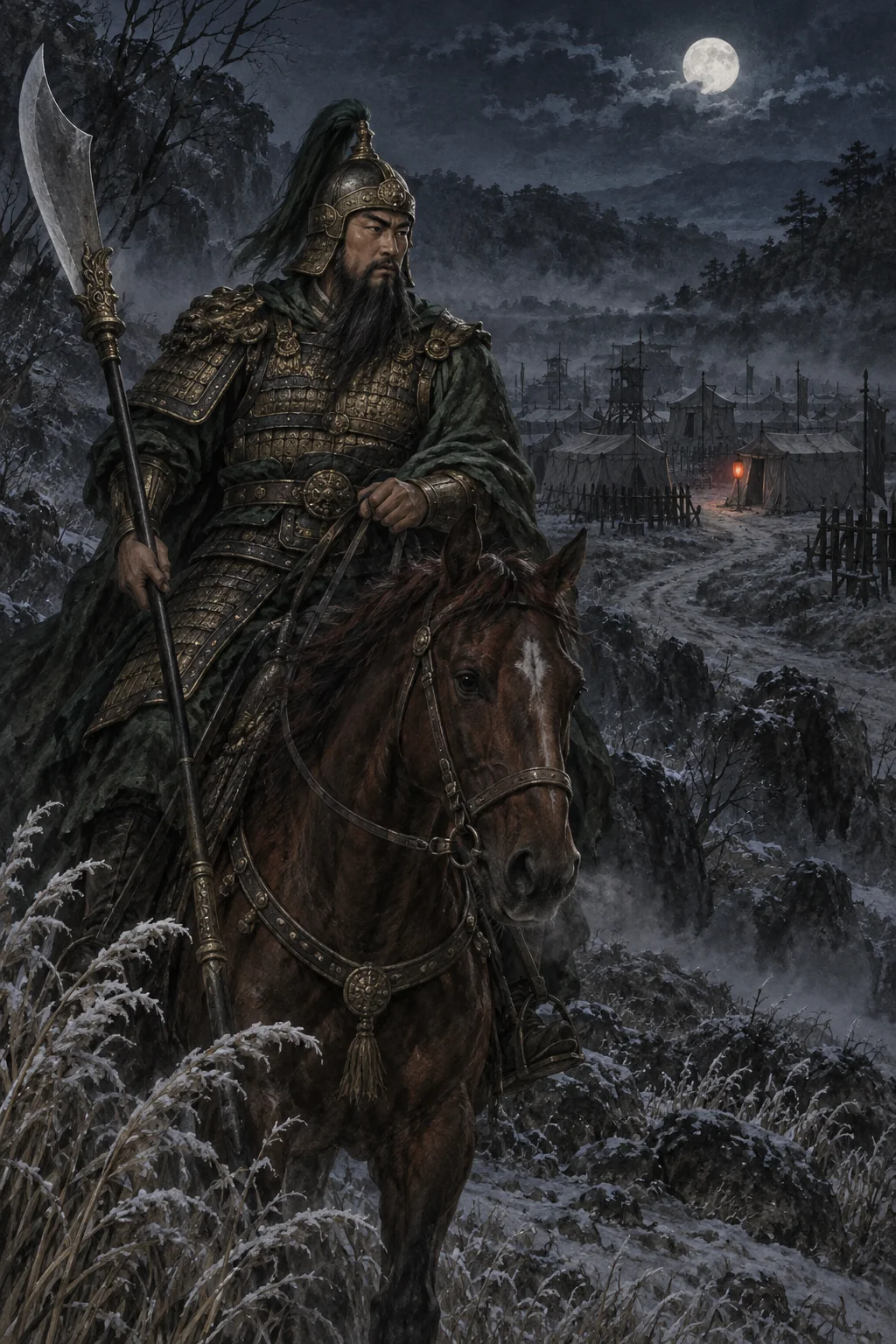
Weapons extend identity, but they do not work alone
Lin Chong is associated with the spear, Lu Zhishen with a heavy staff, Wu Song with close physical courage, Hua Rong with the bow, Li Kui with two axes, and Guan Sheng with a long crescent blade. The novel turns equipment into part of a recognizable silhouette.
Famous weapons still depend on timing, terrain, horse, strength, training, and deception. A weapon name is not a universal measure of who would win.
Duels display status and create narrative recognition
Individual contests can test a newcomer, delay a battle, or make two opponents respect one another. Descriptions often enlarge speed and power beyond ordinary realism. These scenes belong to martial fiction, not technical manuals.
Victory may bring office, recruitment, or temporary fame. It rarely settles the political problem surrounding the fight.
Large battles reward systems more than isolated strength
Huyan Zhuo’s linked cavalry threatens Liangshan because the horses operate as a coordinated formation. Wu Yong answers by arranging the theft that draws Xu Ning to the stronghold; Xu Ning trains hooked-lance units able to disrupt the cavalry.
Water forces, fire attacks, pits, false retreats, banners, cannon, and multi-unit formations repeatedly decide campaigns. Strategy often wins before the celebrated blow is struck.
Spectacle can hide who absorbs the violence
The novel makes combat vivid through names, movement, armor, noise, and reversal. The same scenes include burned towns, dead soldiers, frightened civilians, and defeated officers who can no longer return home.
Reading the spectacle fully means keeping both craft and consequence in view.
What disappears from view when a battle is remembered only through its most impressive fighter?
Which part of the story speaks to you? Tell us as we shape the complete 108-card collection.
Original English writing by Liangshan Lore, based on the Chinese novel Water Margin, traditionally attributed to Shi Nai’an. Plot references follow the 120-chapter Chinese edition; names, chapter numbering, and endings can vary between editions and translations. Sections marked “Our reading of the story” offer our interpretation. The characters and events belong to fiction; concept illustrations are not historical portraits.
Continue in English.
These credited resources offer further reading, listening, publication context, or museum evidence. Chinese Lore is an English retelling with transcripts and audio, not a line-by-line translation; podcast episode numbers differ from novel chapters. CUHK Press links introduce published English translations.
Chinese original · text & chapter references
Primary-text references for checking the plot and edition. These pages are in Chinese.
Guan ShengGreat Blade · illustrated character story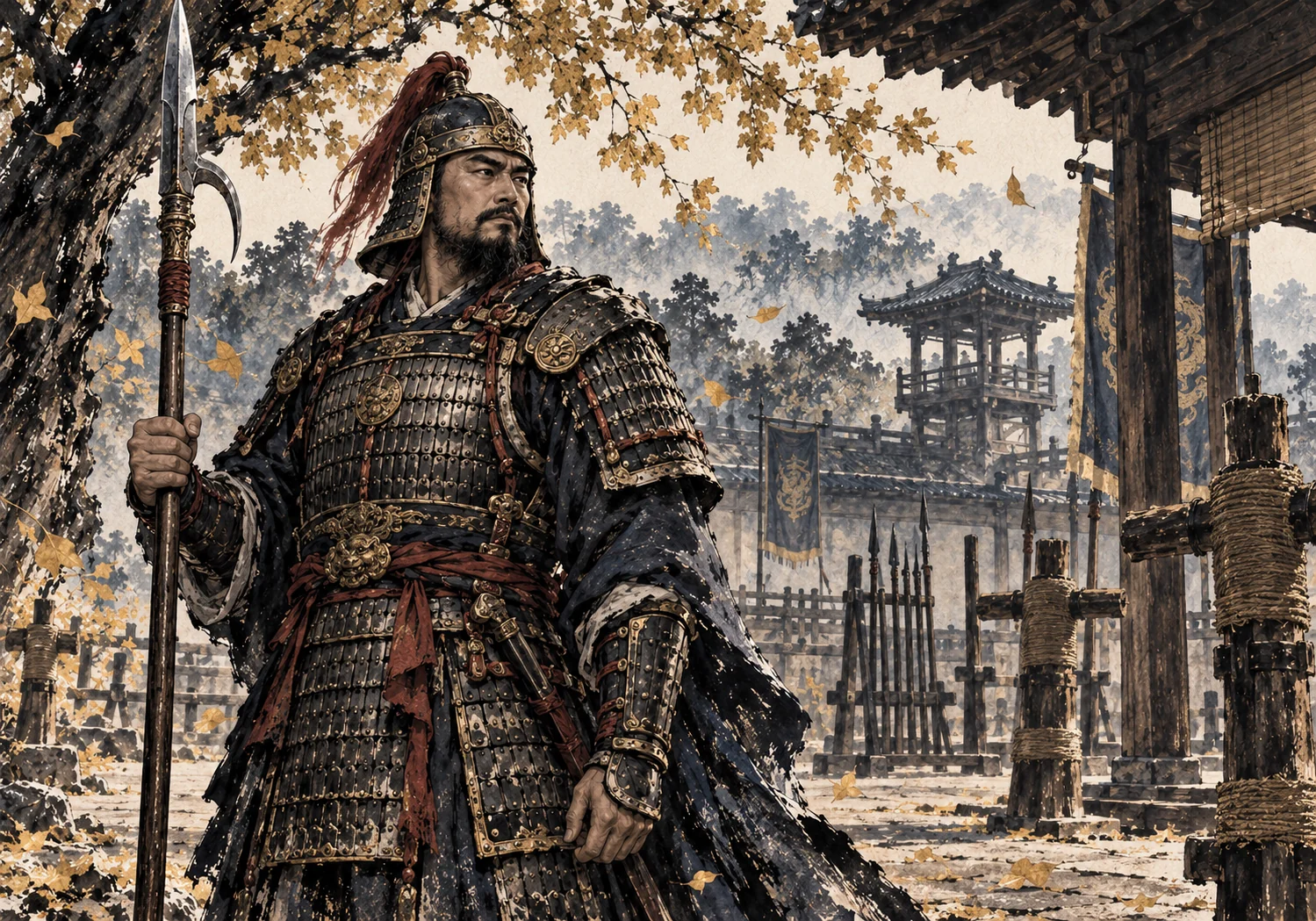 Xu NingGolden Lancer · illustrated character story