Inns, Wine, and Travel in Water Margin
A traveler enters for food and leaves with a friend, a warning, a drugged body, or a new direction. In Water Margin, the road has rooms—and those rooms remember names.
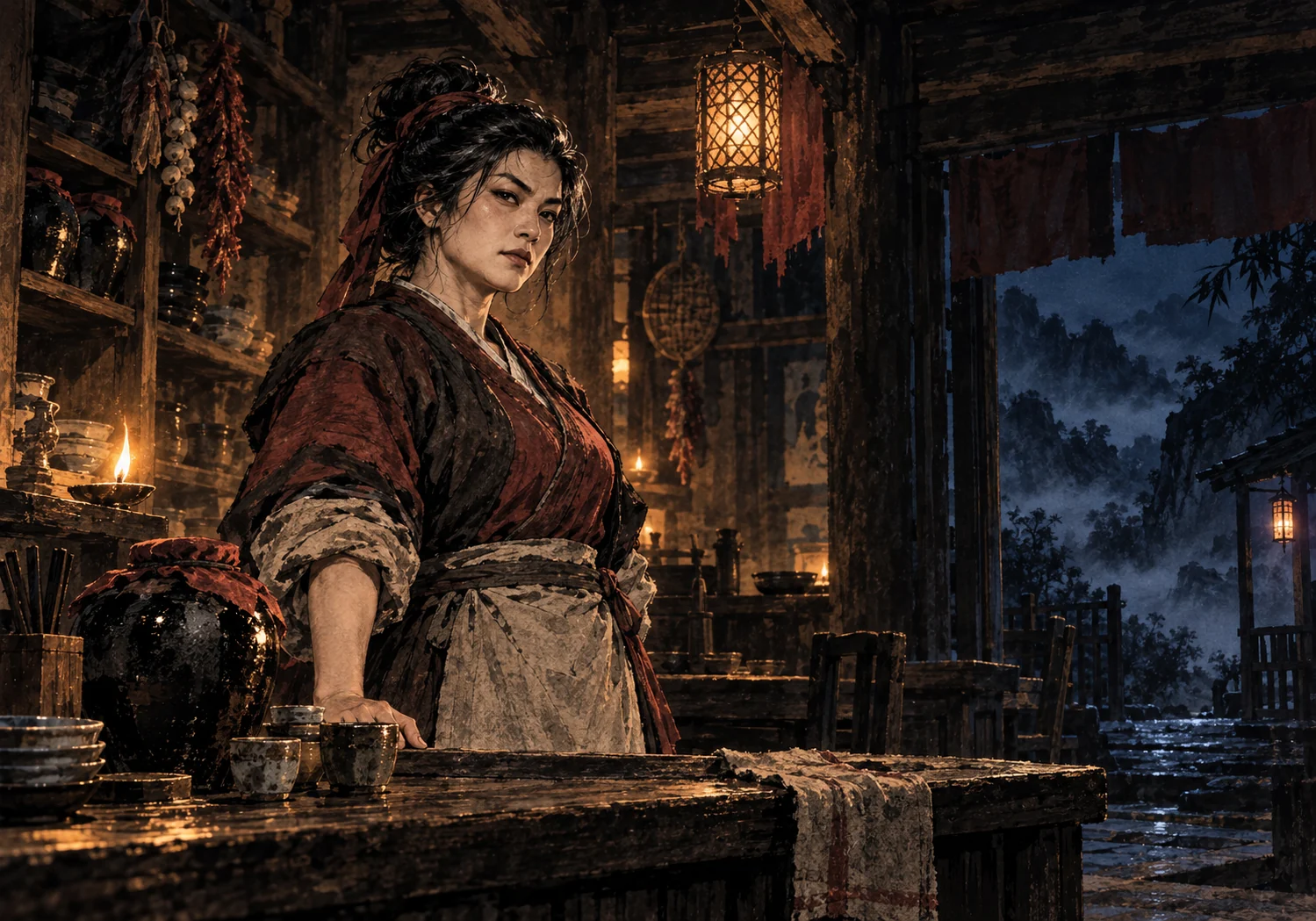
The inn sits between public road and private network
An inn must welcome strangers, which makes it useful for trade and dangerous for anyone being hunted. Owners can observe accents, clothing, weapons, and questions. A guest rarely knows whether the house serves ordinary business, official surveillance, or an outlaw network.
Liangshan later formalizes several inns as listening posts around the stronghold. Hospitality becomes infrastructure.
Wine can reveal character without explaining it
Wu Song’s drinking before Jingyang Ridge magnifies confidence and makes retreat harder once warnings appear. In the birthday-gift robbery, staged drinking convinces Yang Zhi’s convoy that a seller’s wine is safe before the drugged portion is introduced.
Wine creates fellowship, ceremony, and loss of restraint. Its meaning changes with who controls the cup and who understands the situation.
Hospitality may conceal robbery and murder
Sun Erniang’s Crossroads Slope inn drugs travelers. Li Li’s place at Jieyang Ridge is another trap in Song Jiang’s route. Recognition or the arrival of a mutual connection can turn a planned victim into an honored guest.
The reversal exposes a hard boundary: protection belongs to known networks. An anonymous traveler may receive none of the mercy later extended to a famous outlaw.
News travels through people before it travels through institutions
Letters matter, but rumor, nickname, face, and remembered generosity often move faster. Boatmen and innkeepers connect routes that official reports do not fully control.
The jianghu of the novel is less a separate realm than a web laid across ordinary commerce. Food, lodging, transport, and conversation make outlaw society possible.
When hospitality depends on recognition, what happens to the traveler nobody knows?
Which part of the story speaks to you? Tell us as we shape the complete 108-card collection.
Original English writing by Liangshan Lore, based on the Chinese novel Water Margin, traditionally attributed to Shi Nai’an. Plot references follow the 120-chapter Chinese edition; names, chapter numbering, and endings can vary between editions and translations. Sections marked “Our reading of the story” offer our interpretation. The characters and events belong to fiction; concept illustrations are not historical portraits.
Continue in English.
These credited resources offer further reading, listening, publication context, or museum evidence. Chinese Lore is an English retelling with transcripts and audio, not a line-by-line translation; podcast episode numbers differ from novel chapters. CUHK Press links introduce published English translations.
Chinese original · text & chapter references
Primary-text references for checking the plot and edition. These pages are in Chinese.
Sun ErniangThe Female Yaksha · illustrated character story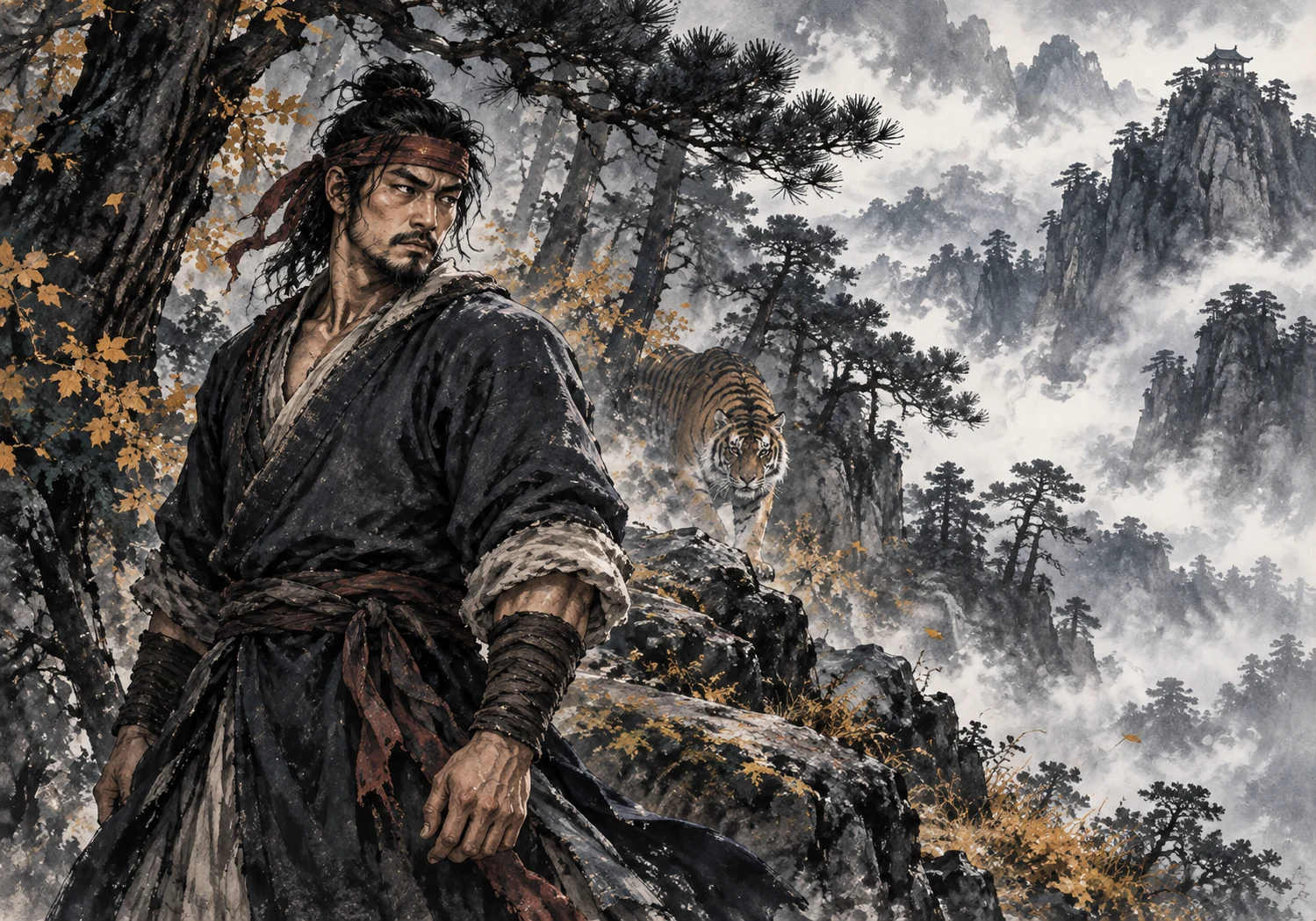 Wu SongTiger Slayer · illustrated character story