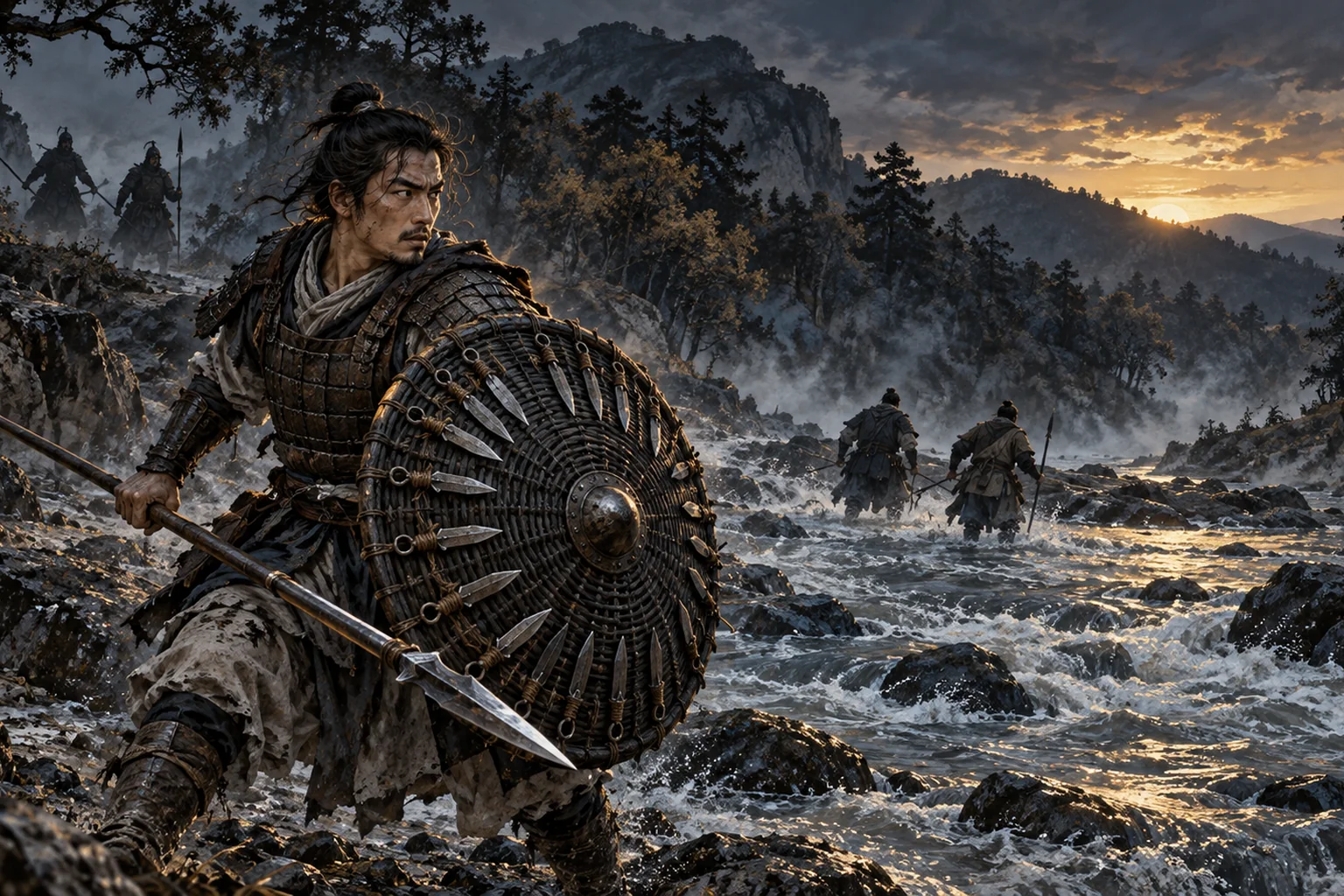
Yang Chun杨春
White Flower Serpent
He walks into another man’s custody. Later, one flying knife takes away his horse.
Chen Da has been captured after ignoring advice. Yang Chun first proposes a fight, then accepts a plan that places his own body in Shi Jin’s hands instead.
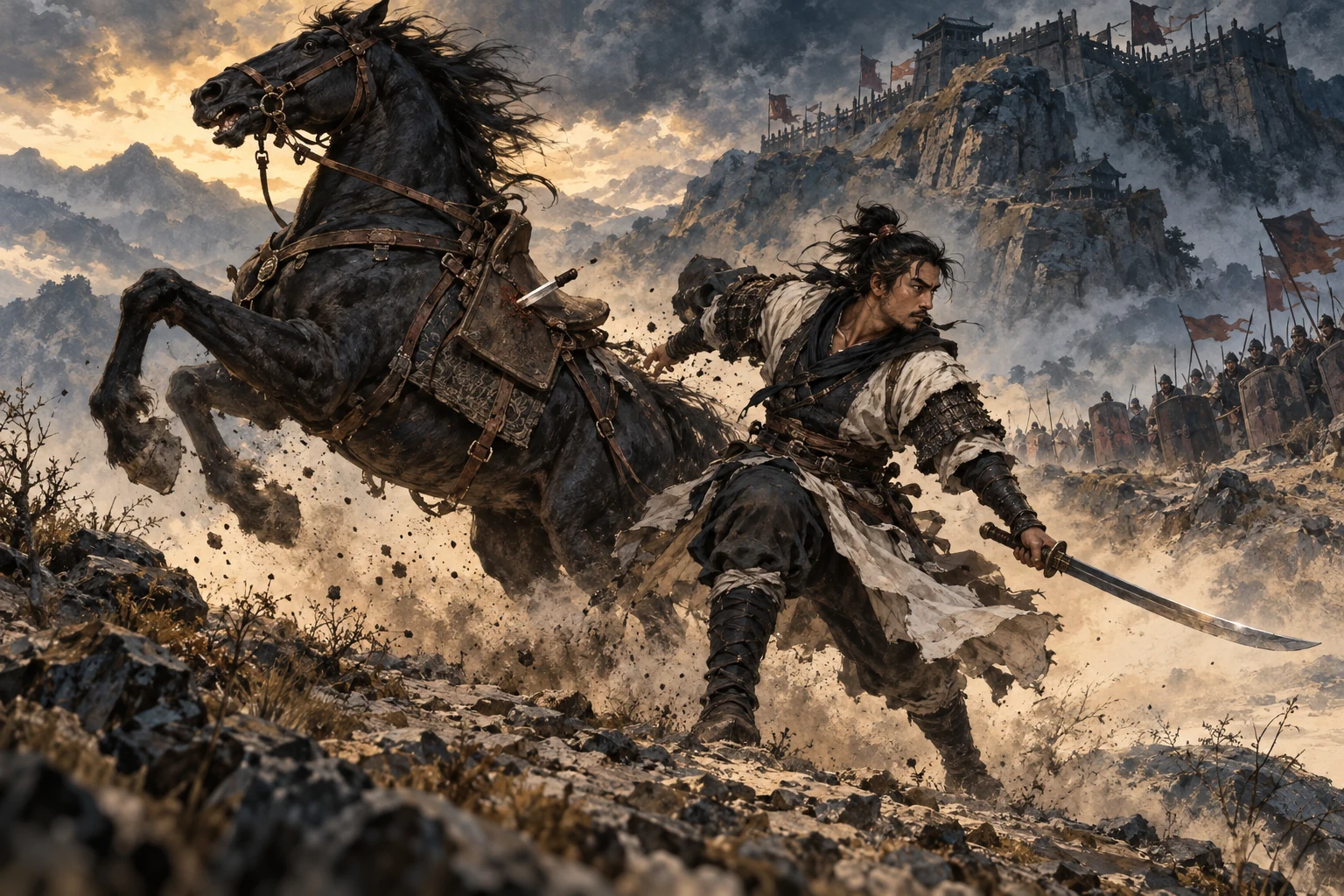
A companion returns without his rider
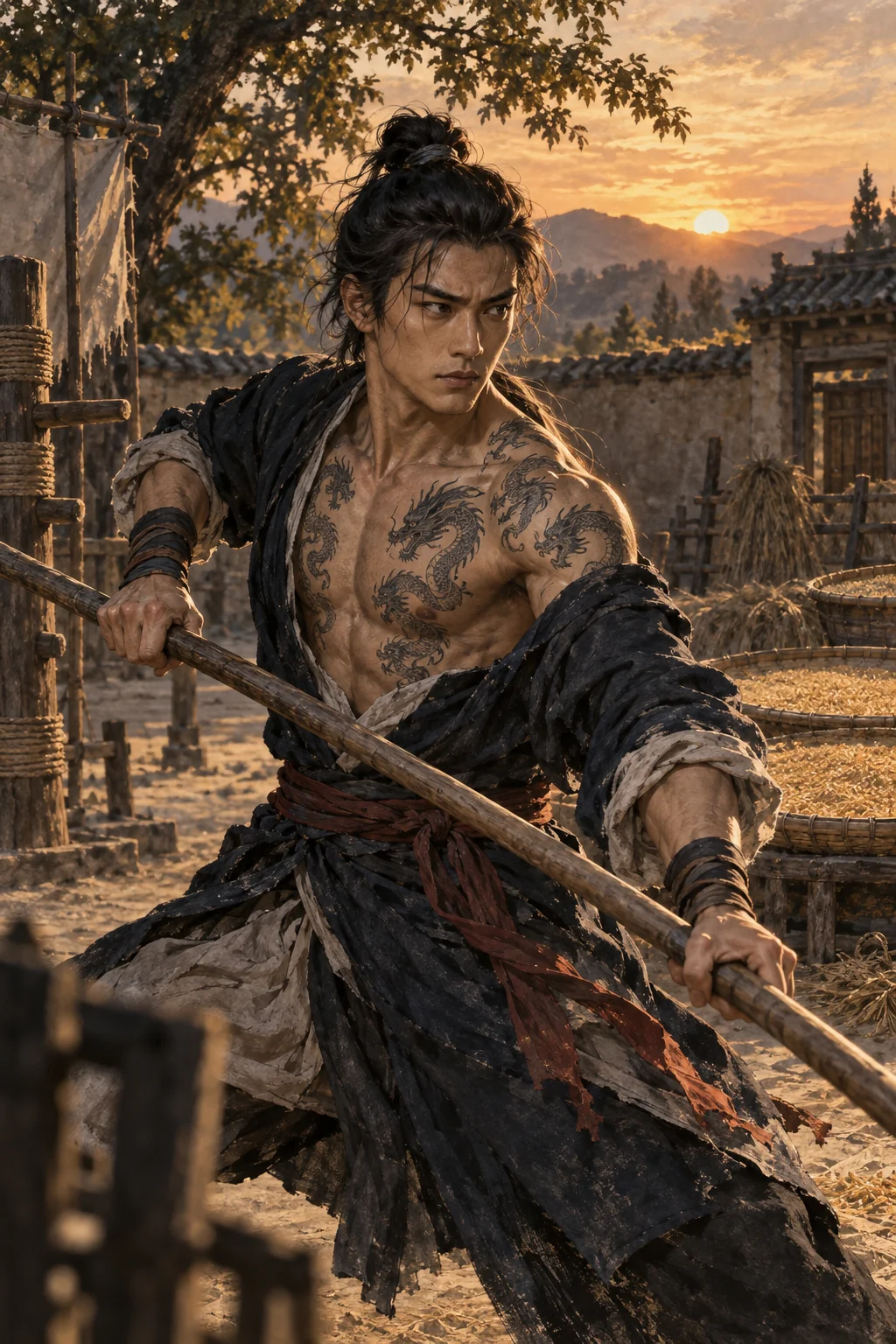
Yang Chun is the third chief of the band at Shaohua Mountain, beneath Zhu Wu and Chen Da. He carries a saber and is called the White Flower Serpent. The novel gives the name but does not turn him into a supernatural snake figure.
When the stronghold runs short of grain, Chen Da ignores Zhu Wu’s advice and rides toward Shi Family Village. His followers return with the empty horse and report that Shi Jin has captured him. Yang Chun’s first answer is direct: gather everyone and fight. Zhu Wu tells him that if Chen could not win, another attack will not solve the problem.
Zhu Wu offers a different plan and makes the risk explicit: if it fails, both men will die. Yang Chun agrees at once. They leave the mountain on foot and approach Shi Jin without an army. Outside the manor they kneel, asking to be handed over with the companion who would not listen to them.
The plan uses their own exposure
Shi Jin leads them into the rear hall. Yang Chun and Zhu Wu show no fear, kneel again and ask to be bound. The surrender is calculated, but the danger is real. Instead of claiming that Chen’s mistake has nothing to do with them, they make their own bodies the guarantee of the bond they describe.
Shi Jin releases Chen and feeds all three. Gifts and visits follow. When the authorities discover the relationship, Shi Jin burns his manor and fights out with the mountain chiefs; Chen Da and Yang Chun chase down and kill the two constables. The plan that saved one companion has opened a friendship, but that friendship also helps close Shi Jin’s former life.
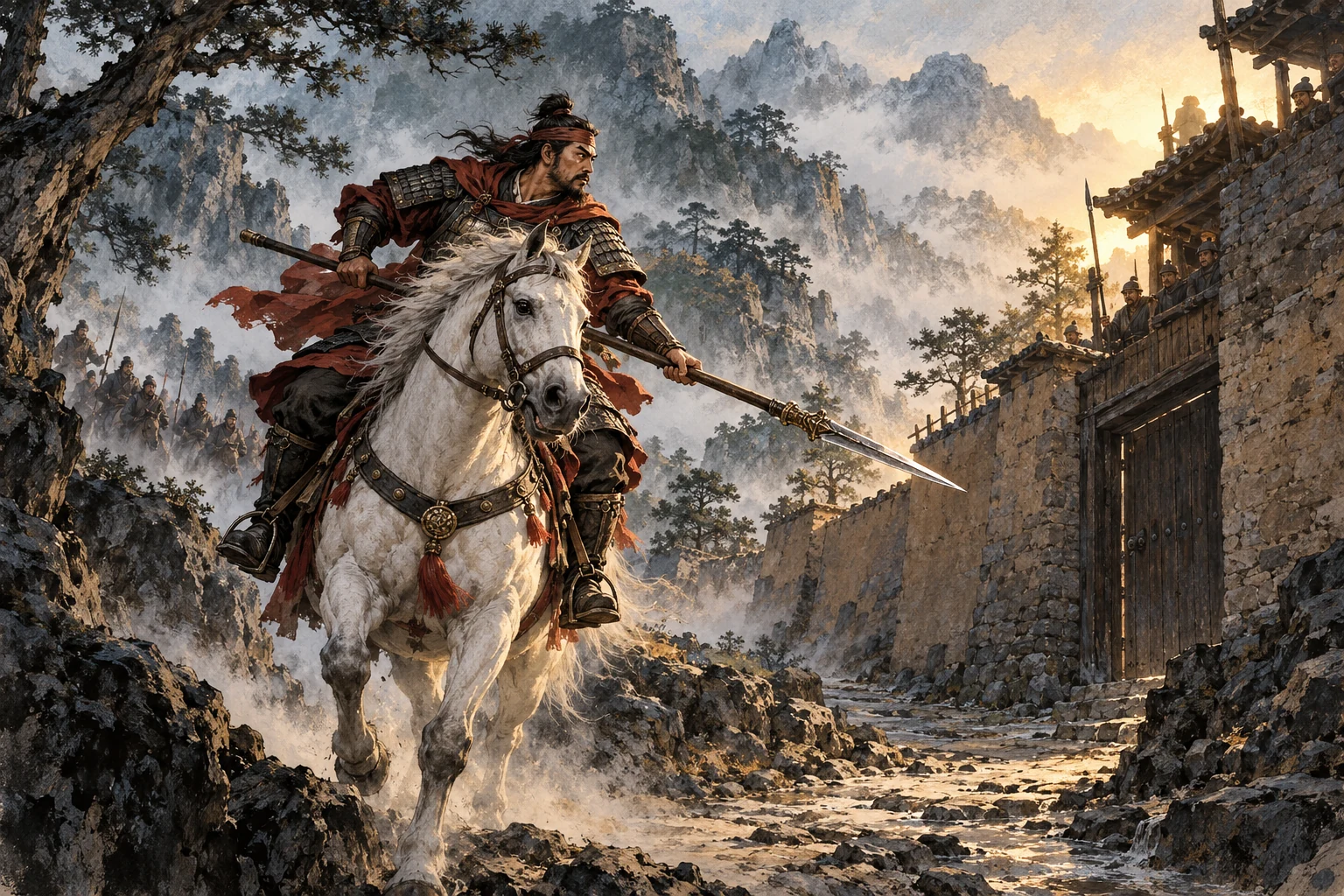
Years later the Shaohua company joins Liangshan after the rescue at Huazhou. In its first campaign, Shi Jin leads the four men against Fan Rui’s force at Mangdang Mountain. Xiang Chong and Li Gun drive through the formation behind shields; a flying knife strikes Yang Chun’s horse and leaves him fighting on foot as the line collapses.
Following is still a choice
Yang Chun does not devise the surrender plan, command the Shaohua band or lead the later scouting party. Yet the story repeatedly gives weight to whether he will enter another person’s course of action. At Shi Jin’s manor, agreement means accepting the same custody and possible death as the plan’s author.
At the great assembly he ranks seventy-third as the Earthly Hidden Star and serves among Liangshan’s sixteen light-cavalry officers and long-range scouts. The role depends on moving with a larger formation. Mangdang Mountain shows how quickly that relationship can break: one knife hits the horse, and the cavalryman is suddenly on foot while the army gives way.
At Yuling Pass, Lu Junyi sends Yang Chun with Shi Jin, Shi Xiu, Chen Da, Li Zhong and Xue Yong to scout ahead. Pang Wanchun shoots Shi Jin from the pass; arrows fall from both pine woods, and crossbowmen close the road beyond the bend. All six commanders and most of their troops are killed. Yang Chun’s last road ends beside the same two Shaohua companions whose danger he once chose to share.
When you did not make the plan, what makes its risk yours to carry?
What part of Yang Chun’s story stays with you?
Reading Yang Chun.
Who is Yang Chun in Water Margin?
Yang Chun is a saber-carrying chief of Shaohua Mountain and Liangshan light-cavalry scout, known as White Flower Serpent. The novel places this character 73 in the assembly of the 108 heroes. That rank is not a judgment of moral worth.
How does Yang Chun die in Water Margin?
During the Fang La campaign, Yang Chun is one of six commanders sent to scout Yuling Pass. Pang Wanchun’s force traps the party with arrows and crossbows, killing all six commanders and most of their troops.
Published · Updated
Written by Liangshan Lore, based on Water Margin (Shuihu Zhuan), traditionally attributed to Shi Nai’an. The novel follows an outlaw brotherhood in a fictionalized Song-dynasty setting. It is literature, not a record of each character’s historical life.
Chapter references below follow the 120-chapter Chinese edition. Other editions and English translations differ in chapter numbering, names, and endings. These are original English summaries, not quotations from a modern translation. The reflection above is our interpretation. Artwork is a concept illustration.
Continue in English.
These credited resources offer further reading, listening, publication context, or museum evidence. Chinese Lore is an English retelling with transcripts and audio, not a line-by-line translation; podcast episode numbers differ from novel chapters.
Chinese original · text & chapter references
Primary-text references for checking the plot and edition. These pages are in Chinese.