Cao Zheng曹正
Knife-Wielding Demon
He ties the knot so it can come undone.
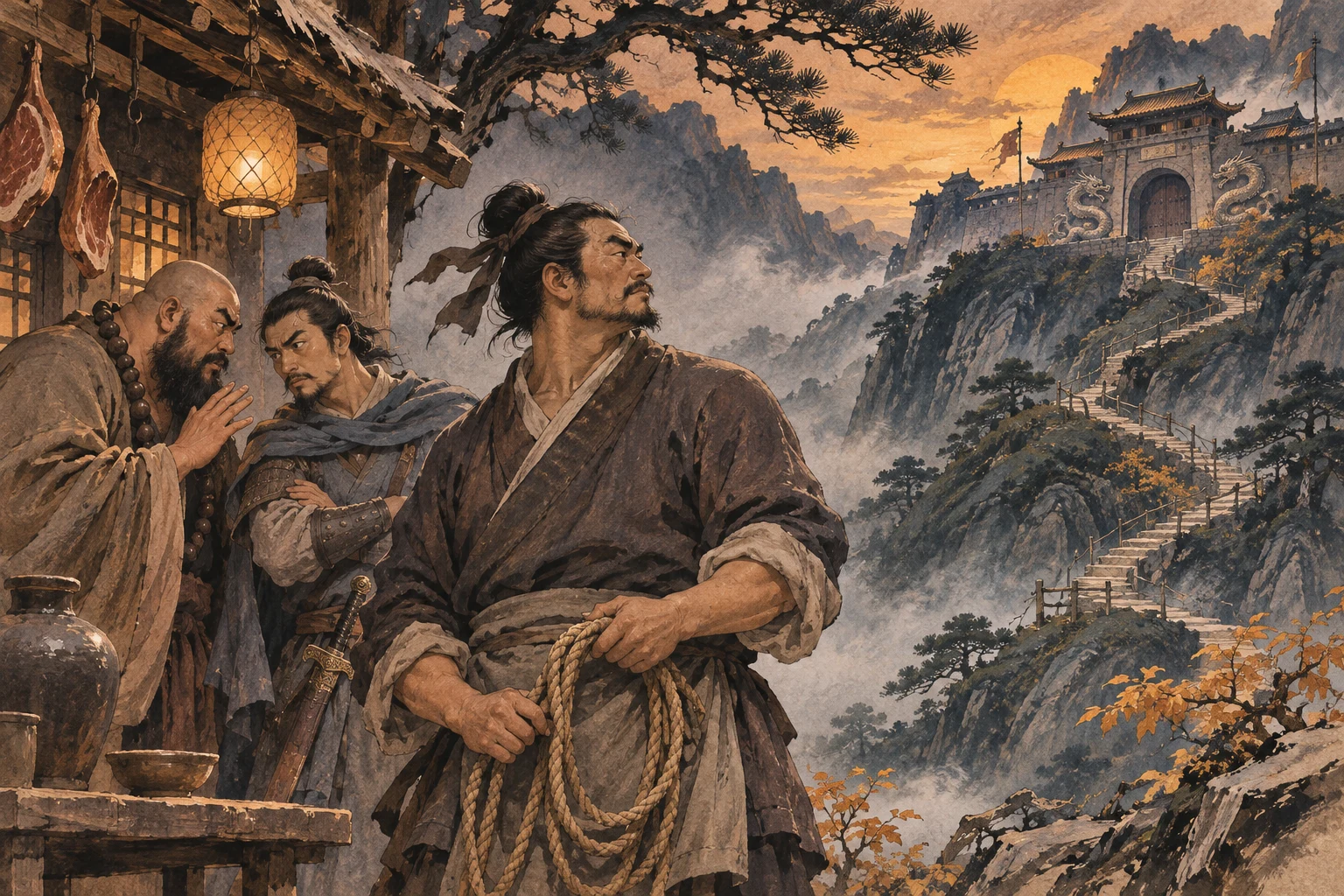
The gates of Two Dragon Mountain have stopped Lu Zhishen. Cao Zheng proposes bringing him back as a prisoner, with a rope that will fall away when the men reach the leader inside.
A customer who cannot pay
Yang Zhi arrives at a country inn after losing the birthday gifts he was guarding. He eats and drinks, then walks away without paying. When the young server follows him, Yang Zhi knocks him down. Cao Zheng pursues the departing customer with a staff.
The fight does not make Cao Zheng the stronger man. After several dozen exchanges he is struggling to defend himself. He stops the encounter to ask his opponent’s name. Learning that he faces Yang Zhi changes the reception: the unpaid meal becomes an invitation to return inside.
Cao Zheng identifies himself as Lin Chong’s pupil and a butcher from Kaifeng. A trading venture lost the money entrusted to him, leaving him unable to return home. He married into a local household and settled there. The woman at the stove is his wife; the injured server is her brother. This inn is a household’s livelihood before it becomes a meeting place for outlaws.
An entrance disguised as a delivery
Cao Zheng suggests nearby Two Dragon Mountain as a possible refuge. Yang Zhi meets Lu Zhishen there, but the monk has already been refused entry. Deng Long, the stronghold’s leader, has closed the fortified approaches after fighting him. The two men return to the inn to consult Cao Zheng.
Cao Zheng sees that more strength will not open the gates. He proposes dressing Yang Zhi as a villager and pretending that the inn’s people have captured a drunken Lu Zhishen. The rope is to be tied with slipknots. Cao Zheng will carry the monk’s staff, ready to hand it back once they reach Deng Long.
The party carries out the deception. Cao Zheng tells the guards that the monk threatened their village as well as the stronghold, presenting the supposed capture as help from obedient neighbors. The gates open, and the group passes through the three defended approaches to Baozhu Temple.
Inside, the attendants pull the rope ends and release the knots. Lu Zhishen takes his staff from Cao Zheng and kills Deng Long. Yang Zhi attacks the men beside him; Cao Zheng joins with his staff and demands surrender under threat of death. Lu Zhishen and Yang Zhi become the stronghold’s leaders. Cao Zheng takes the villagers home. The successful plan is also a violent seizure of power.
Interpretation: the man who gets them inside
Cao Zheng’s contribution begins with a limit. He cannot beat Yang Zhi, and he does not offer to storm a position that has stopped Lu Zhishen. Instead, he works out what the men guarding the gates will accept as a reason to open them. Clothing, a familiar local role and a convincing delivery change the encounter before a weapon is raised.
The rope carries the whole arrangement in miniature. It must look like restraint while remaining easy to release. Cao Zheng’s plan depends on other people trusting their assigned parts: the apparent prisoner, the disguised escort and the men holding the ends. That is our reading of the action, not an invented account of his private thoughts.
Calling the plan clever does not remove its consequences. Deng Long is killed and his followers submit under threat. Cao Zheng later belongs to Liangshan’s assembly at rank eighty-one. The casualty list in Chapter 119 names him among those killed in the campaigns. His best-known contribution remains the route he found for two more celebrated fighters, and the violence that followed when they arrived.
When a plan opens a door, how do you judge what it makes possible afterward?
What part of Cao Zheng’s story stays with you?
Reading Cao Zheng.
Who is Cao Zheng in Water Margin?
Cao Zheng is a butcher, innkeeper and planner of the Two Dragon Mountain takeover, known as Knife-Wielding Demon. The novel places this character 81 in the assembly of the 108 heroes. That rank is not a judgment of moral worth.
How does Cao Zheng help capture Two Dragon Mountain?
He proposes presenting Lu Zhishen as a captured drunk, tied with slipknots. Once the party passes the defenses and reaches Deng Long, the knots are released and Cao Zheng returns the monk’s staff. Lu Zhishen kills Deng Long and the stronghold changes hands.
Published · Updated
Written by Liangshan Lore, based on Water Margin (Shuihu Zhuan), traditionally attributed to Shi Nai’an. The novel follows an outlaw brotherhood in a fictionalized Song-dynasty setting. It is literature, not a record of each character’s historical life.
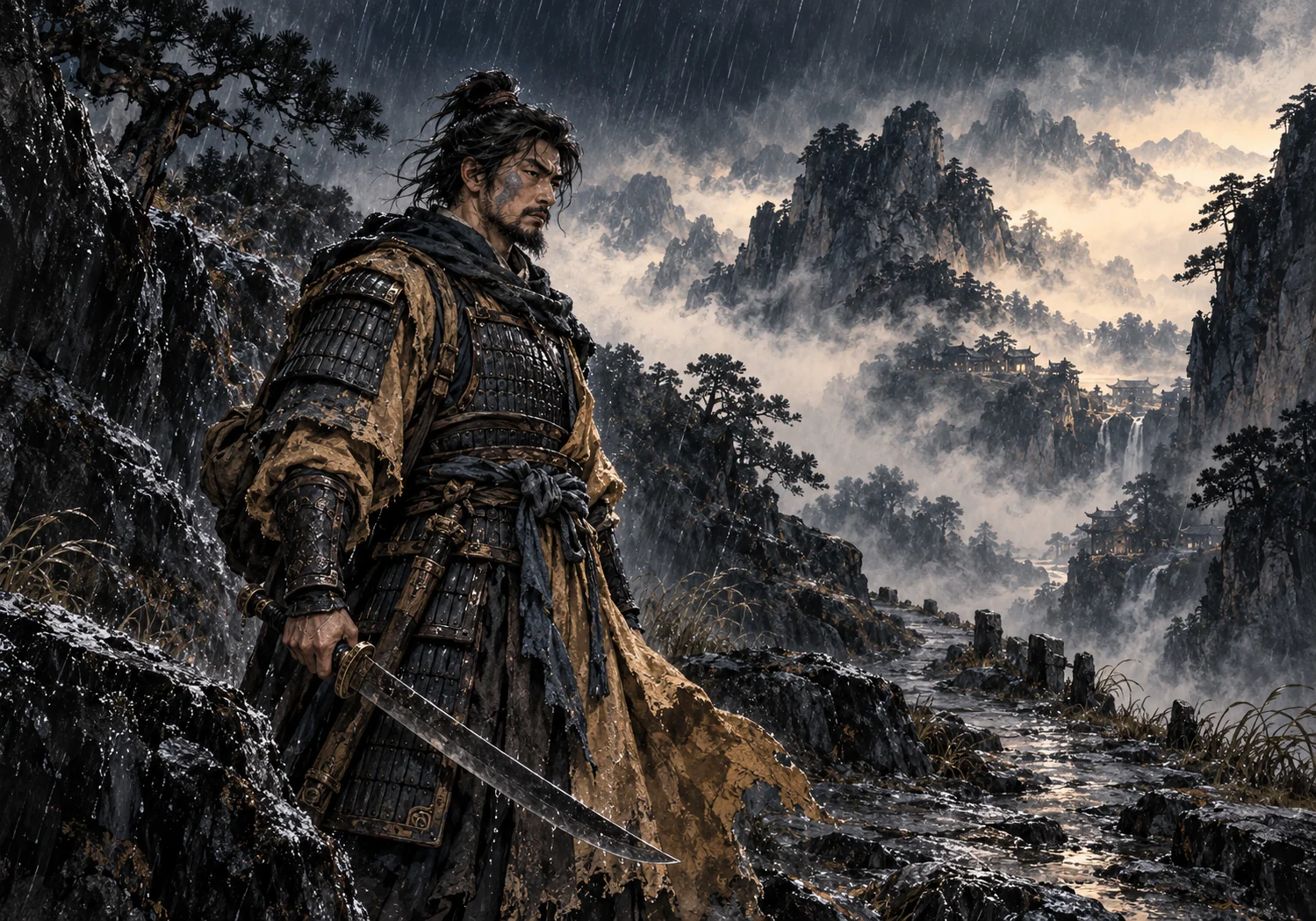
Chapter references below follow the 120-chapter Chinese edition. Other editions and English translations differ in chapter numbering, names, and endings. These are original English summaries, not quotations from a modern translation. The reflection above is our interpretation. Artwork is a concept illustration.
Continue in English.
These credited resources offer further reading, listening, publication context, or museum evidence. Chinese Lore is an English retelling with transcripts and audio, not a line-by-line translation; podcast episode numbers differ from novel chapters. CUHK Press links introduce published English translations.
Chinese original · text & chapter references
Primary-text references for checking the plot and edition. These pages are in Chinese.