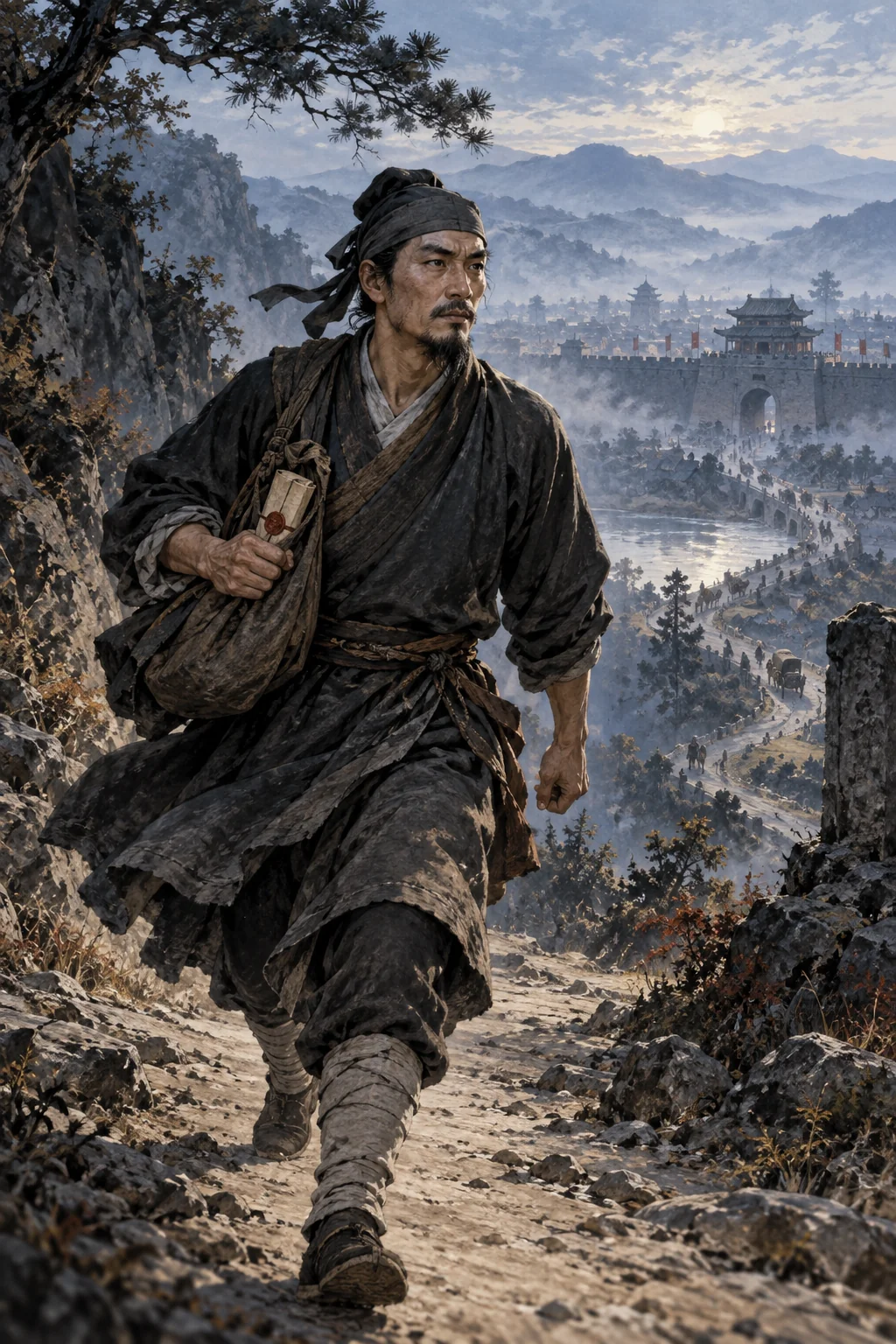
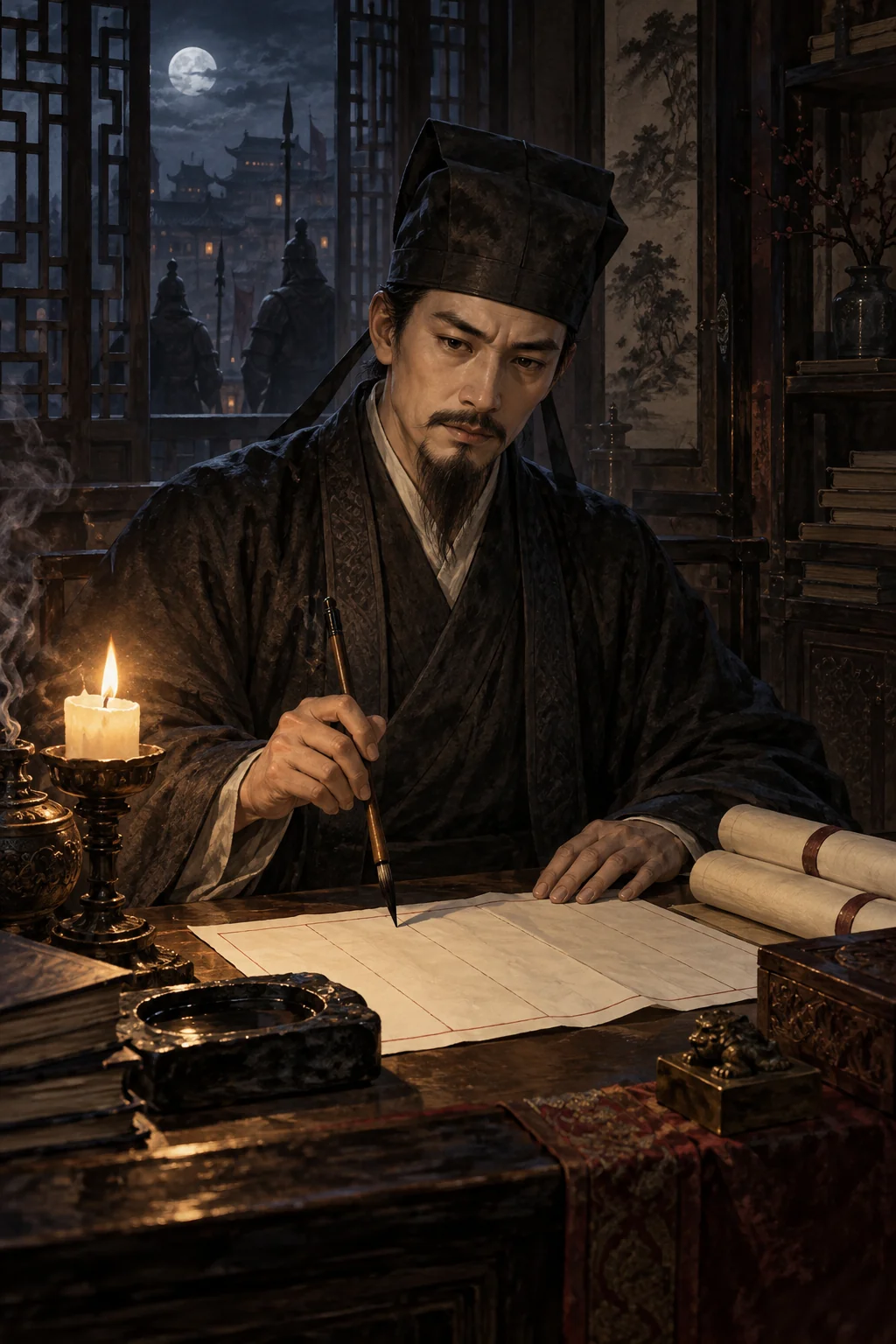
Yue He乐和
Iron Whistle
He works inside the prison. The message he carries is what opens it.
Yue He first appears as a Dengzhou jailer with access to two framed hunters. He cannot release them alone, but he can move their warning beyond the locked gate.
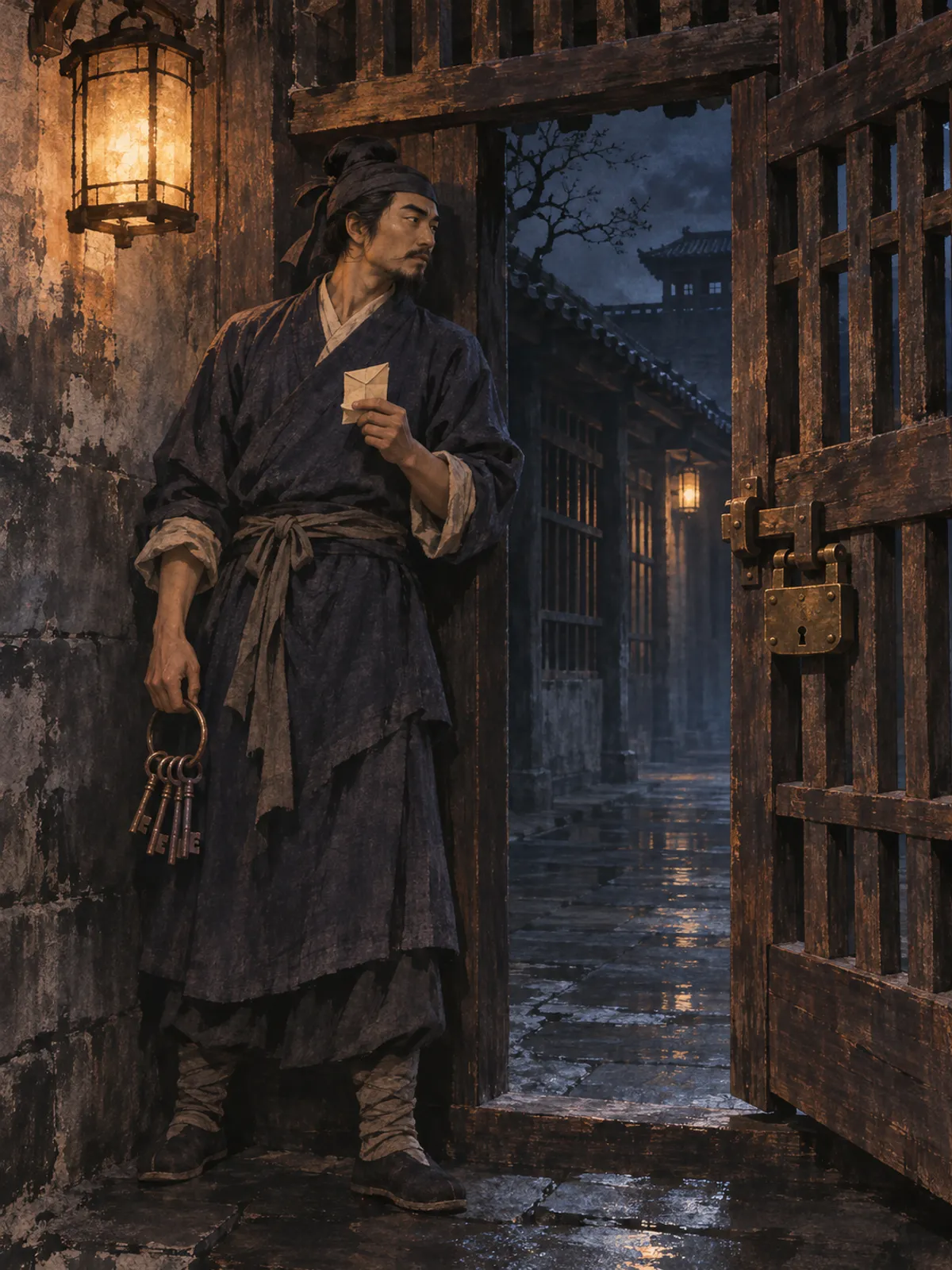
A jailer between the cell and the street
Yue He works as a minor jailer in Dengzhou. His elder sister is married to the military officer Sun Li, which places him inside the same extended family as the imprisoned hunters Xie Zhen and Xie Bao. When the brothers arrive under a false charge, they recognize the connection even though they have not met him before.
The novel describes Yue He as quick-minded and musically gifted: he learns songs and instruments readily and is known for his singing voice as Iron Whistle. The nickname concerns performance, not a supernatural power or a special weapon. His immediate usefulness comes from something less visible—he can enter a cell, hear a request and leave the prison again.
Yue He learns that the warden has accepted the Mao family’s money and that the hunters are in danger of being killed. He tells the brothers he cannot save them by himself. They ask him to carry word to Gu Dasao, their relative outside the east gate, who has the people and force needed to act.
The man at the inner gate
Yue He delivers the warning. Gu Dasao, Sun Xin, Sun Li and their associates organize a prison break; some join willingly, while Gu Dasao threatens Sun Li when he hesitates. Yue He passes the plan back to the prisoners and stands watch inside the front gate when the rescuers arrive.
The escape is armed and violent. The group kills the warden and guards, frees the Xie brothers and leaves Dengzhou together. Yue He’s message makes the rescue possible, but it does not make the operation bloodless or return him to an ordinary job. He goes with the fugitives toward Liangshan.
The same kind of access appears again at Daming. Disguised as Chai Jin’s servant, Yue He enters the prison during the Lantern Festival. Once fires and attacks begin outside, the two men free Lu Junyi and Shi Xiu and compel the jail officers Cai Fu and Cai Qing to come with them. Communication, disguise and knowledge of a prison become part of a citywide assault.
When a voice is useful to power
At the assembly, Yue He ranks seventy-seventh as the Earthly Music Star. He serves among the infantry officers who carry confidential reports. The assignment joins the two capacities his story has already shown: moving through guarded spaces and making information travel.
Those capacities do not guarantee his own freedom. After Yue He and Xiao Rang accompany Gao Qiu to the capital, they are kept at the grand marshal’s residence. Dai Zong and Yan Qing arrange their escape. A man repeatedly trusted to carry other people’s messages can still be confined by the institution using him.
Before the Fang La campaign, Prince Consort Wang asks Song Jiang to send Yue He to his household because he can sing. Song Jiang agrees, so Yue He remains in the capital while the army marches south. The ending says he grows old in the prince consort’s residence in ease. It is survival through a valued skill, but the text frames the transfer as a powerful patron asking for a useful person—not as Yue He choosing a final independent road.
When your voice opens doors for other people, who decides where that voice must stay?
What part of Yue He’s story stays with you?
Reading Yue He.
Who is Yue He in Water Margin?
Yue He is a jailer in Dengzhou, messenger and Liangshan infantry officer, known as Iron Whistle. The novel places this character 77 in the assembly of the 108 heroes. That rank is not a judgment of moral worth.
Why is Yue He called Iron Whistle?
The novel connects Yue He’s nickname to his strong singing voice and musical ability. It does not describe Iron Whistle as a supernatural power or a signature weapon.
Published · Updated
Written by Liangshan Lore, based on Water Margin (Shuihu Zhuan), traditionally attributed to Shi Nai’an. The novel follows an outlaw brotherhood in a fictionalized Song-dynasty setting. It is literature, not a record of each character’s historical life.
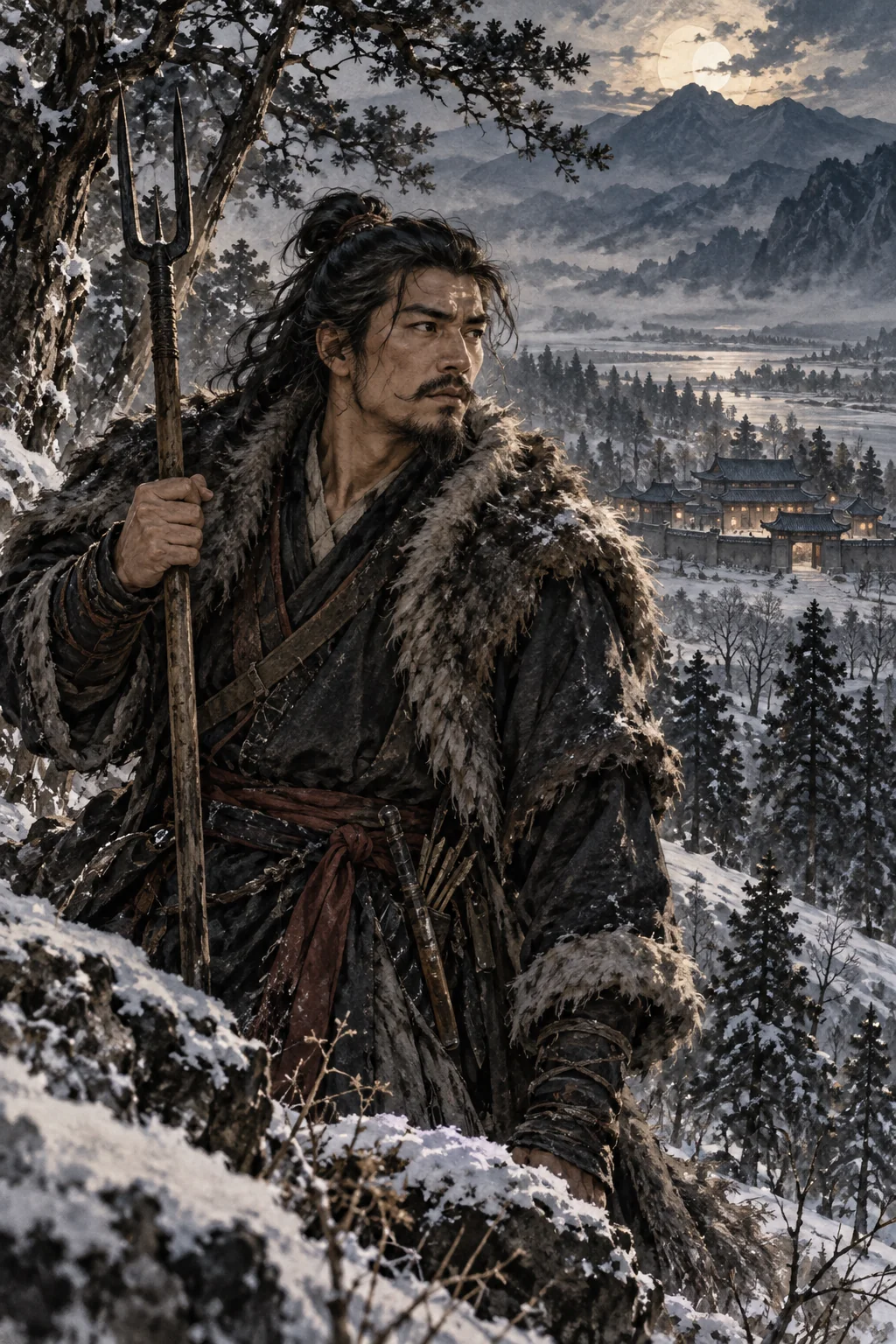
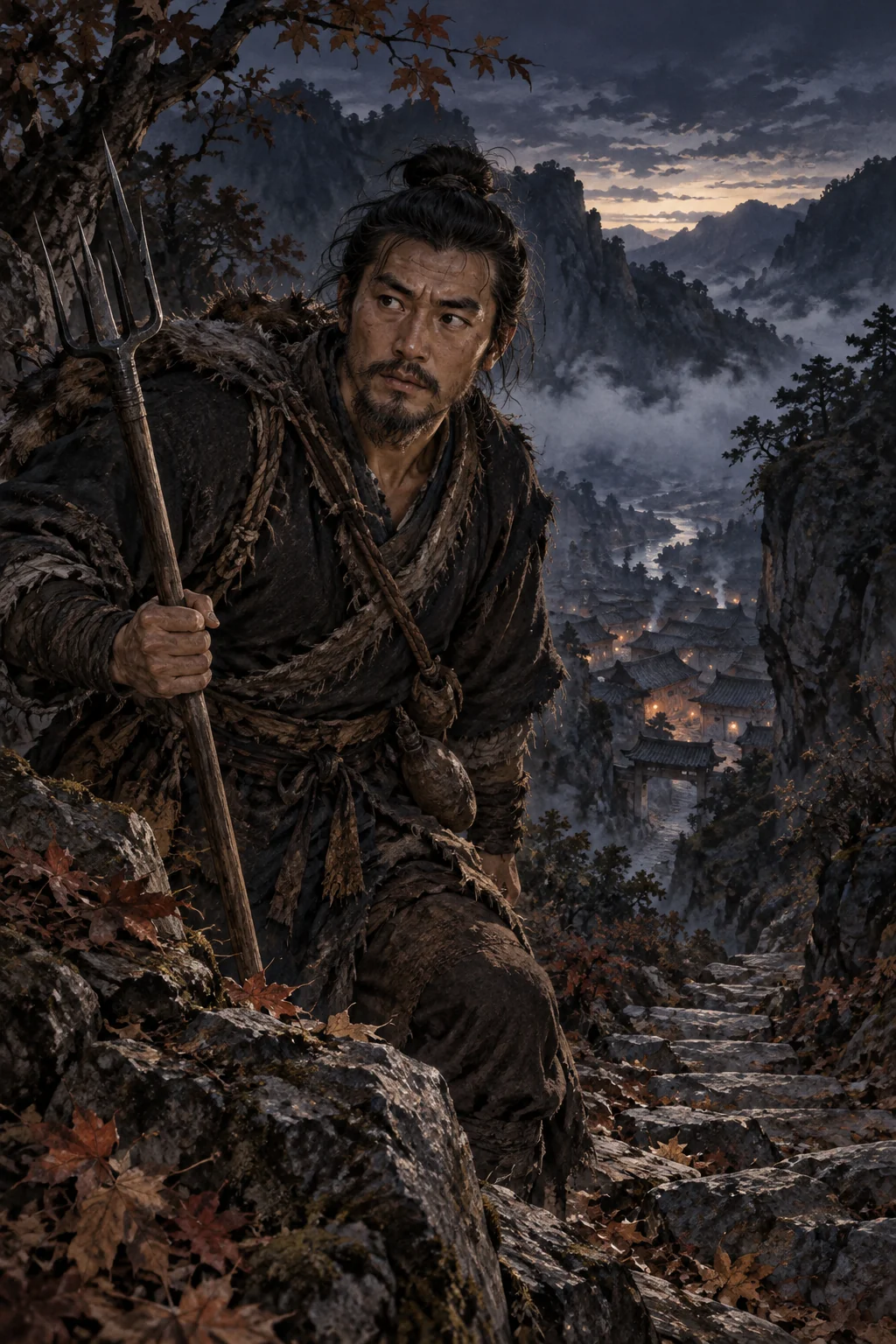
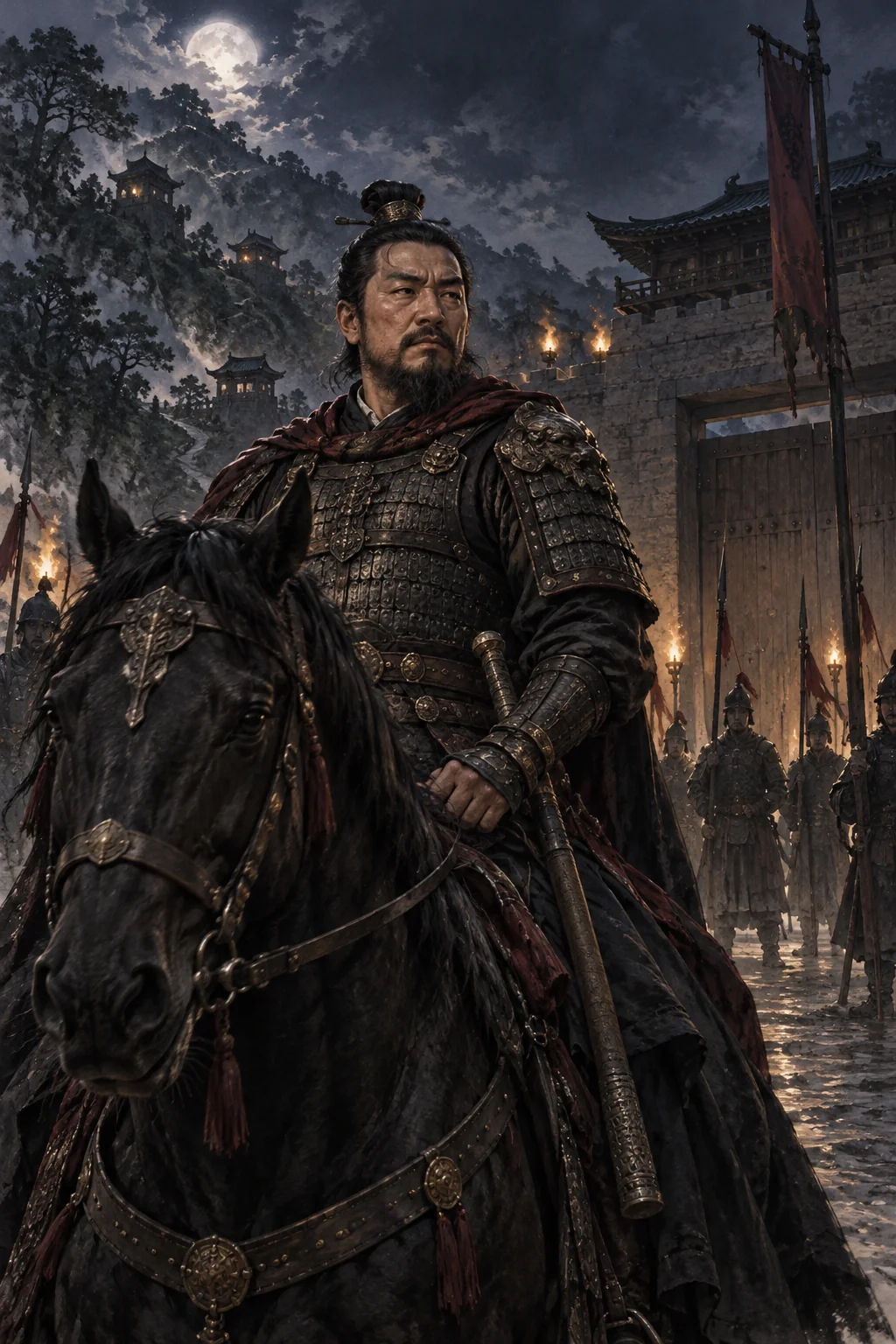
Chapter references below follow the 120-chapter Chinese edition. Other editions and English translations differ in chapter numbering, names, and endings. These are original English summaries, not quotations from a modern translation. The reflection above is our interpretation. Artwork is a concept illustration.
Continue in English.
These credited resources offer further reading, listening, publication context, or museum evidence. Chinese Lore is an English retelling with transcripts and audio, not a line-by-line translation; podcast episode numbers differ from novel chapters.
Chinese original · text & chapter references
Primary-text references for checking the plot and edition. These pages are in Chinese.