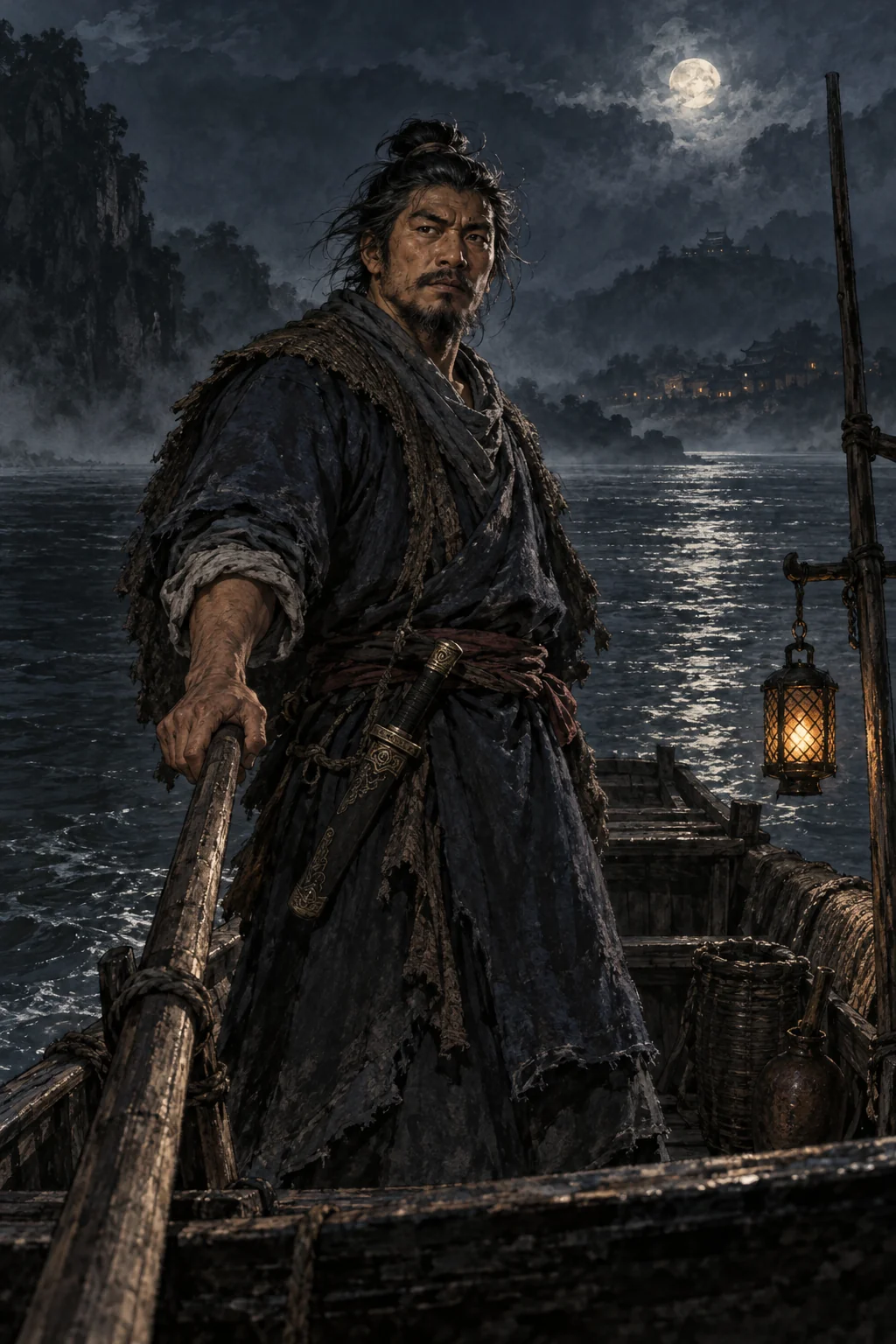
Mu Chun穆春
Little Unrestrained
He cannot stop the gift. He can close every door afterward.
Song Jiang gives silver to a traveling performer. Mu Chun steps out of the crowd to attack him: the stranger has ignored an order that nobody in Jieyang should pay.
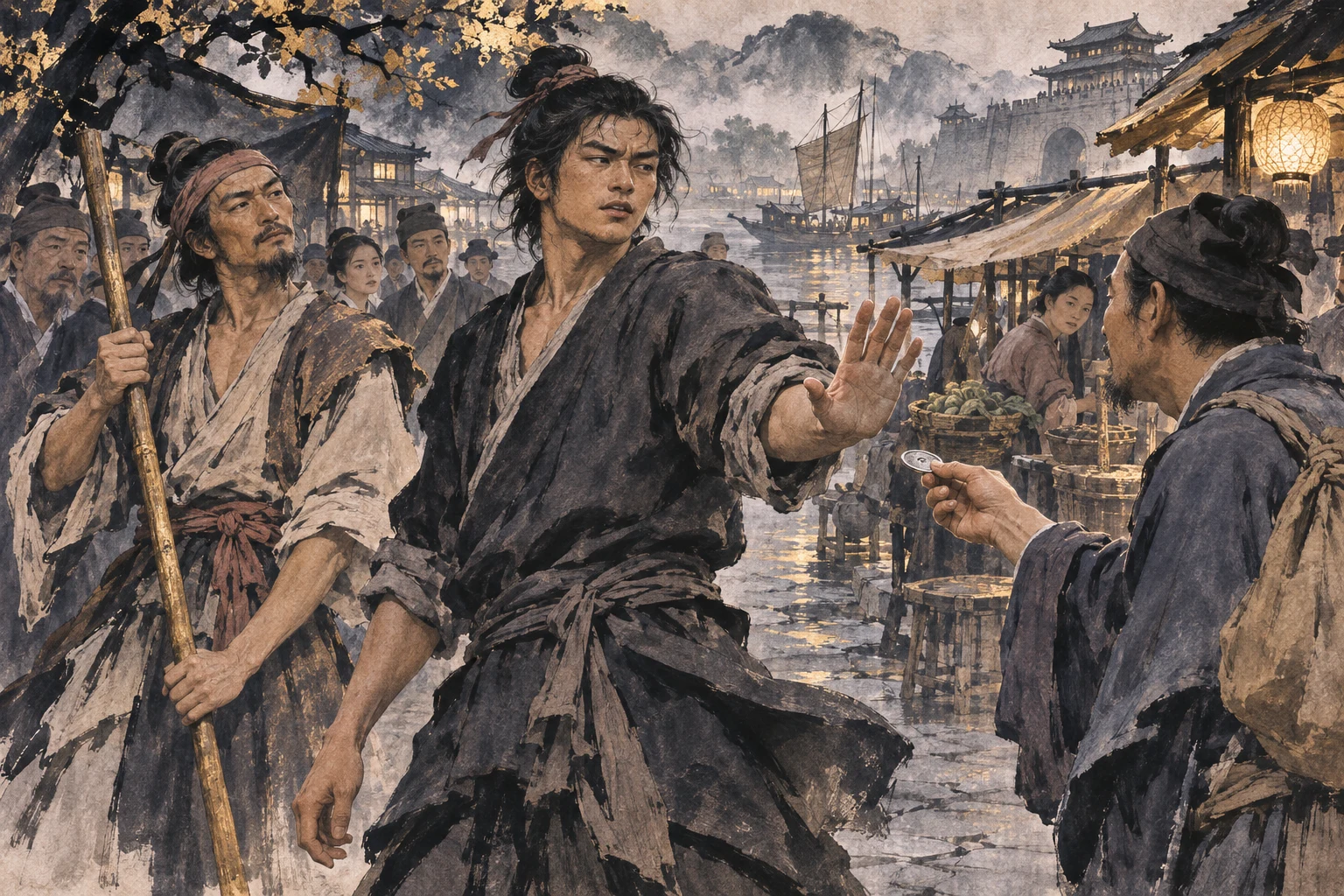
A crowd that has been told not to pay
The performer Xue Yong earns his living with martial demonstrations and medicine. At Jieyang, however, skill is not enough to earn a reward. He has failed to pay his respects to the Mu brothers, and Mu Chun has told the townspeople to give him nothing. Song Jiang, passing through under escort to Jiangzhou, gives him five taels of silver.
Mu Chun comes out of the crowd, grabs Song Jiang and strikes at him. Xue Yong intervenes, throws Mu Chun down and kicks him back to the ground when he tries to rise. The officers escorting Song Jiang stop the fight. Mu Chun leaves, but the end of the scuffle is not the end of his power.
The nearby wine shop refuses to serve Song Jiang and Xue Yong. Its keeper has been threatened with the destruction of the premises. Other shops and lodgings give the same answer. Mu Chun cannot reverse the gift, but he can make staying in the town dangerous for the man who gave it.
The household behind the closed doors
After dark, Song Jiang and his escorts find a household willing to give them food and shelter. It is the Mu family home. They hear Mu Chun return with armed men and describe how he has already had Xue Yong seized and beaten. He intends to have the performer bound and thrown into the river. His father tells him to stop; Mu Chun instead goes to wake his elder brother, Mu Hong.
Song Jiang escapes with his escorts through the rear of their lodging. The pursuit drives them to the river, where they board Zhang Heng’s boat. Escape from the shore brings another danger: the boatman himself means to rob them. Li Jun’s arrival interrupts the threat and identifies Song Jiang to the men around him.
Recognition changes the reception. The Mu household now welcomes the traveler it had pursued. Mu Chun brings Xue Yong to the gathering, and the men feast together. This is a reversal in treatment, not proof that the earlier threats were harmless. The same local connections that denied food and shelter now arrange hospitality.
Interpretation: who gets an open door?
Mu Chun’s first scene makes a small payment into a test of authority. For the performer, it is income; for Song Jiang, an act of generosity. Mu Chun treats it as an injury to the brothers’ standing. The conflict grows because he tries to control what other people may give to a stranger.
The later welcome leaves a difficult question. A famous name can open doors that remain closed to an unknown traveler. In our reading, this episode shows both the warmth and the narrowness of the novel’s personal networks. It does not supply Mu Chun with a private confession or an account of moral reform.
At Liangshan’s assembly, Mu Chun is ranked eightieth. He survives the final campaigns, while Mu Hong is listed among those who die from illness. Chapter 120 returns the younger brother to Jieyang as a civilian. The novel closes his story with that destination rather than a detailed account of his later conduct. Home is still there; the brother whose power once stood beside his is not.
What does hospitality mean when it depends on knowing a guest’s name?
What part of Mu Chun’s story stays with you?
Reading Mu Chun.
Who is Mu Chun in Water Margin?
Mu Chun is a jieyang local strongman and younger brother of Mu Hong, known as Little Unrestrained. The novel places this character 80 in the assembly of the 108 heroes. That rank is not a judgment of moral worth.
Does Mu Chun survive Water Margin?
Yes. In the 120-chapter text he survives the campaigns and returns to Jieyang as a civilian in Chapter 120. His elder brother Mu Hong dies from illness; they are different characters.
Published · Updated
Written by Liangshan Lore, based on Water Margin (Shuihu Zhuan), traditionally attributed to Shi Nai’an. The novel follows an outlaw brotherhood in a fictionalized Song-dynasty setting. It is literature, not a record of each character’s historical life.
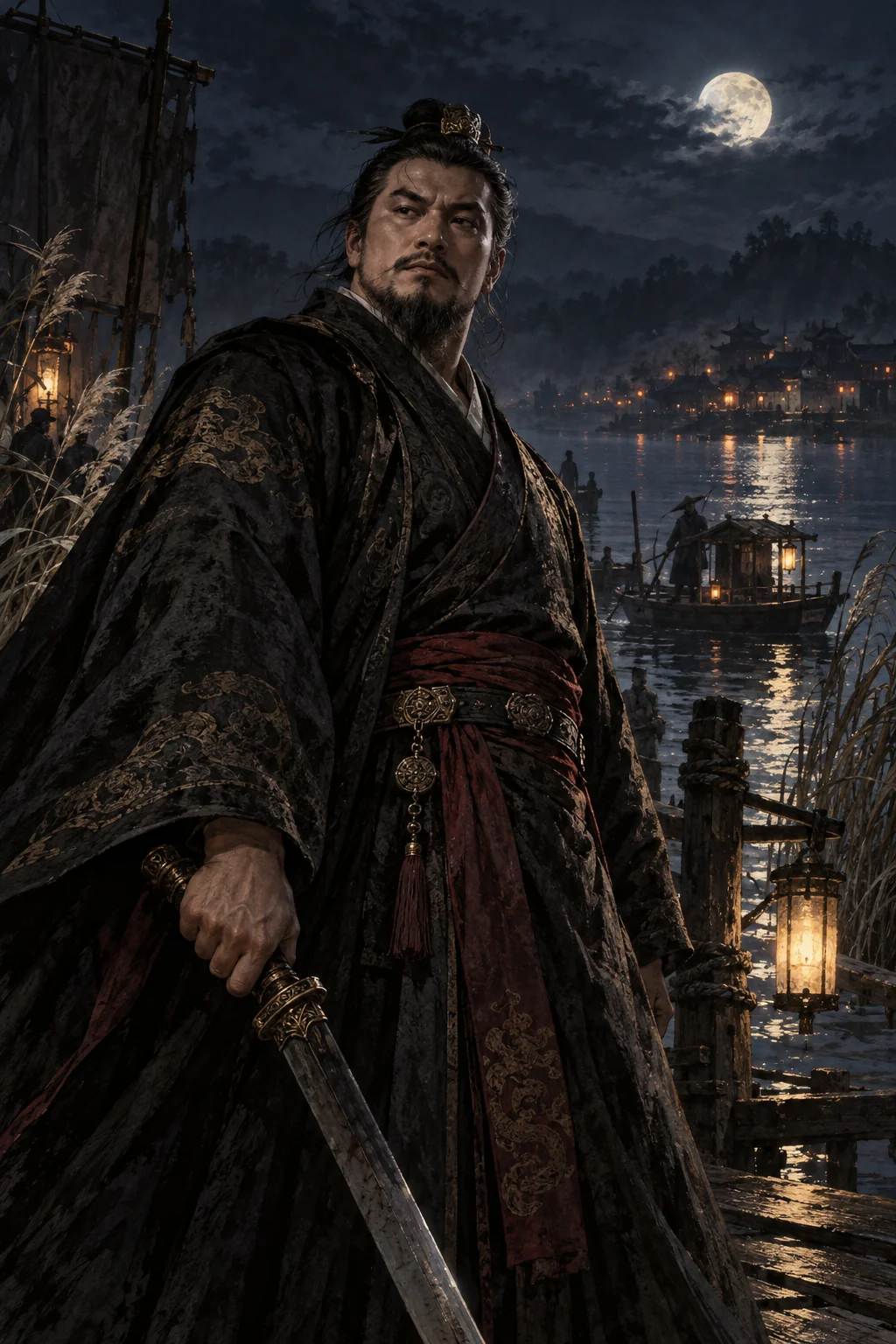
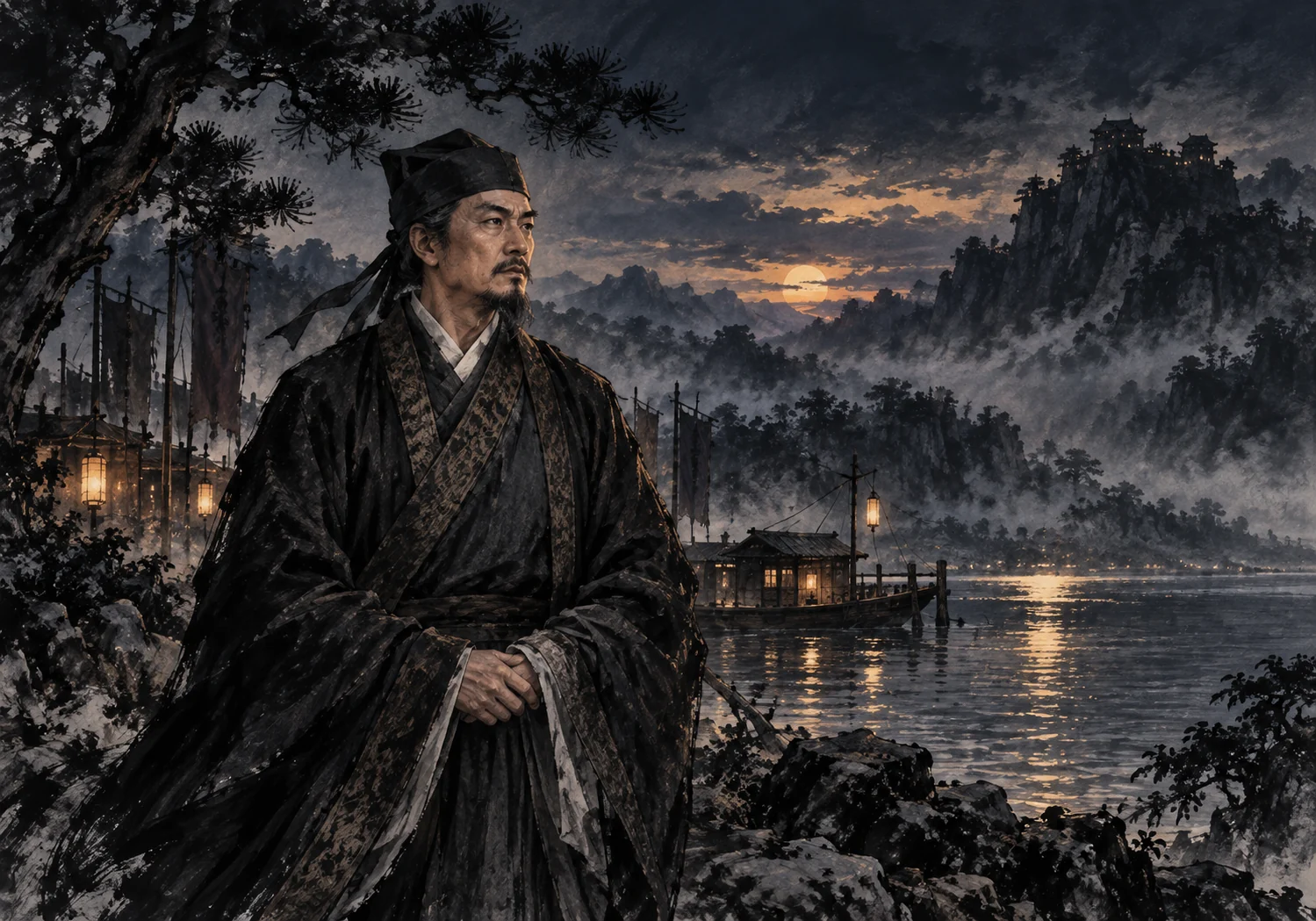
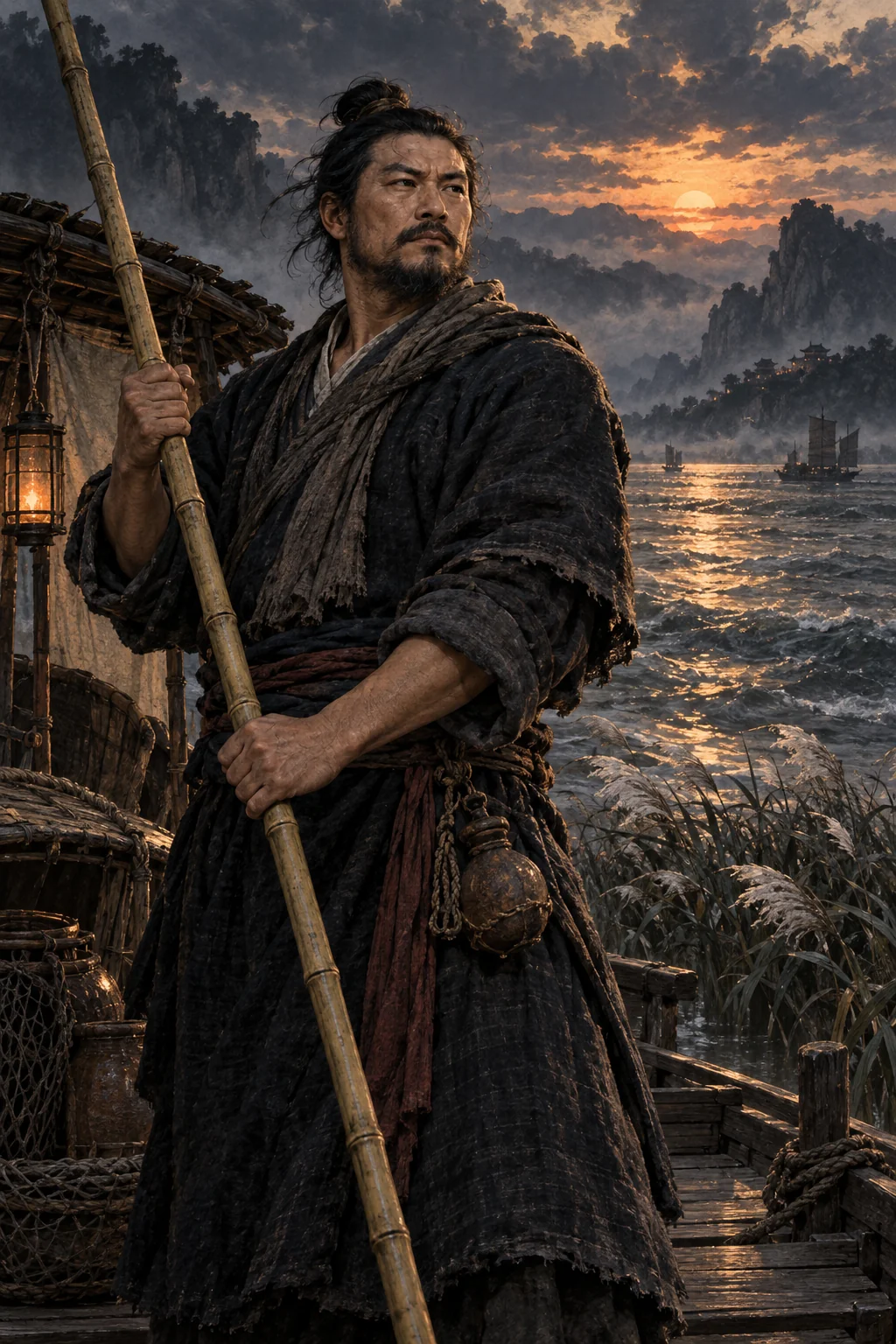
Chapter references below follow the 120-chapter Chinese edition. Other editions and English translations differ in chapter numbering, names, and endings. These are original English summaries, not quotations from a modern translation. The reflection above is our interpretation. Artwork is a concept illustration.
Continue in English.
These credited resources offer further reading, listening, publication context, or museum evidence. Chinese Lore is an English retelling with transcripts and audio, not a line-by-line translation; podcast episode numbers differ from novel chapters. CUHK Press links introduce published English translations.
Chinese original · text & chapter references
Primary-text references for checking the plot and edition. These pages are in Chinese.